Category: AI in Biotechnology

  • Forget electrons, this breakthrough uses light-matter particles to power AI

    Forget electrons, this breakthrough uses light-matter particles to power AI

    Eighty years after the creation of ENIAC, the world’s first general-purpose electronic computer, researchers at the University of Pennsylvania are exploring a new way to power the future of computing. Instead of relying entirely on electrons, which have formed the backbone of computers since the 1940s, scientists are now turning to light.

    ENIAC, developed by Penn researchers J. Presper Eckert and John Mauchly, helped launch the modern computing era by using streams of electrons to solve complex mathematical problems. That same electronic approach still powers today’s computers, smartphones, and AI systems. But as artificial intelligence grows more demanding, the limits of electron-based hardware are becoming harder to ignore.

    Why Electrons Are Reaching Their Limits

    Electrons carry an electrical charge, which creates several challenges inside modern computer chips. As they move through materials, they generate heat and face resistance that wastes energy. Those problems become even more difficult as chips grow more complex and process enormous amounts of data for AI applications.

    Researchers led by Penn physicist Bo Zhen in the School of Arts & Sciences believe photons, the particles that make up light, could help solve some of these issues.

    “Because they are charge-neutral and have zero rest mass, photons can carry information quickly over long distances with minimal loss, dominating communications technology,” explains Li He, co-first author of a paper published in Physical Review Letters and a former postdoctoral researcher in the Zhen Lab. “But that neutrality means they barely interact with their environment, making them bad at the sort of signal-switching logic that computers depend on.”

    In other words, light is excellent for carrying information quickly and efficiently, but it struggles with the switching operations needed for computing.

    Combining Light and Matter for AI Computing

    To overcome that problem, Zhen’s team developed a special quasiparticle called an exciton-polariton. The particle forms when photons are strongly linked with electrons inside an atomically thin semiconductor material. This combination allows light to interact much more effectively, making it capable of performing the signal switching required for computing tasks.

    The breakthrough could be especially important for artificial intelligence systems, which consume enormous amounts of power.

    Many experimental photonic AI chips already use light to handle certain calculations at high speed. However, when these systems need to perform nonlinear activation steps, such as decision-making operations, they usually must convert light signals back into electronic ones. That conversion slows the process and increases energy use, reducing the benefits of photonic computing.

    Using exciton-polaritons, the Penn researchers demonstrated all-light switching while using only about 4 quadrillionths of a joule of energy. That amount is extraordinarily small, far below the energy needed to briefly power a tiny LED light.

    Toward Faster and More Efficient AI Chips

    If the technology can be successfully scaled, it could lead to photonic chips capable of processing information directly from cameras without repeated conversions between light and electricity. The approach could also lower the massive energy demands of large AI systems and potentially support basic quantum computing functions on future chips.

    Bo Zhen is the Jin K. Lee Presidential Associate Professor in the Department of Physics and Astronomy in the School of Arts & Sciences at the University of Pennsylvania.

    Li He was a postdoctoral researcher in the Zhen Lab in Penn Arts & Sciences. He is currently an assistant professor at Montana State University.

    Additional authors on the study include Zhi Wang and Bumho Kim from the University of Pennsylvania’s School of Arts & Sciences.

    The research was supported by the US Office of Naval Research (N00014-20-1-2325 and N00014-21-1-2703) and the Sloan Foundation.
  • NASA’s new AI space chip could let spacecraft think for themselves

    NASA’s new AI space chip could let spacecraft think for themselves

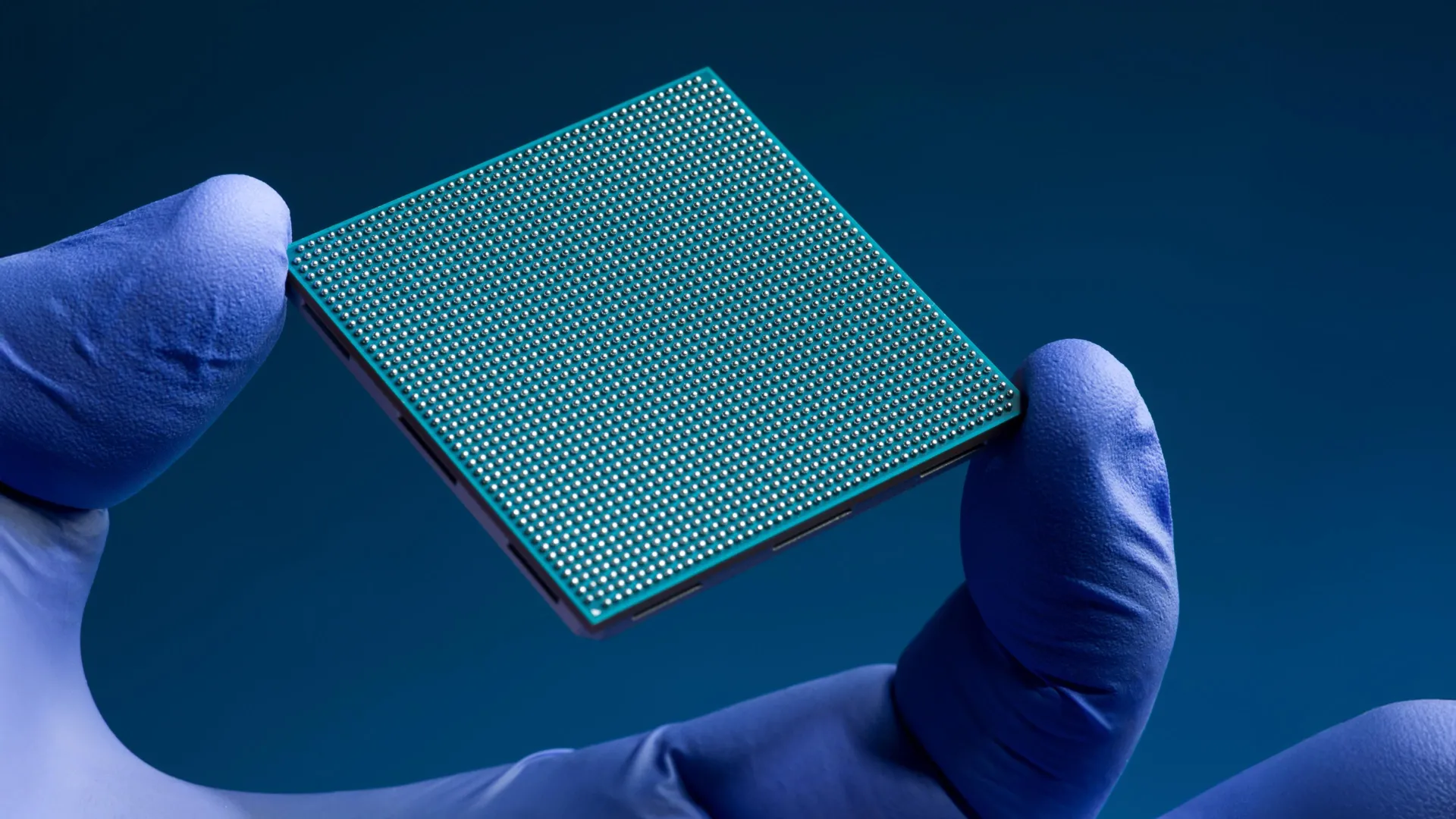
    NASA is developing a powerful new computer chip designed to dramatically increase the intelligence and performance of future spacecraft. Through a commercial partnership, the project is creating advanced processing technology capable of helping spacecraft operate more independently during missions far from Earth.

    NASA’s High Performance Spaceflight Computing project is focused on boosting the computing capabilities of spacecraft used in space exploration. Current missions rely on older processors because they are durable enough to survive the extreme conditions of space. While those chips are dependable, they lack the performance needed for more advanced missions.

    The agency says newer and far more capable processors are essential for future autonomous spacecraft, faster onboard scientific analysis, and supporting astronauts during missions to the Moon and Mars.

    “Building on the legacy of previous space processors, this new multicore system is fault-tolerant, flexible, and extremely high-performing,” said Eugene Schwanbeck, program element manager in NASA’s Game Changing Development program at the agency’s Langley Research Center, in Hampton, Virginia. “NASA’s commitment to advancing spaceflight computing is a triumph of technical achievement and collaboration.”

    Radiation Hardened Processor Faces Extreme Testing

    At the center of the project is a new radiation-hardened processor built to deliver up to 100 times the computing power of today’s spaceflight computers while surviving the harsh environment of space. Engineers at NASA’s Jet Propulsion Laboratory (JPL) in Southern California are running a wide range of tests designed to simulate those conditions.

    “We are putting these new chips through the wringer by carrying out radiation, thermal, and shock tests while also evaluating their performance through a rigorous functional test campaign,” said Jim Butler, High Performance Space Computing project manager at JPL.

    To qualify for spaceflight, the processor must withstand intense electromagnetic radiation and dramatic temperature fluctuations that can damage electronics. High-energy particles from the Sun and deep space can also trigger computer errors that force spacecraft into “safe mode,” temporarily shutting down nonessential systems until engineers resolve the issue.

    NASA is also testing how the chip handles the challenges of planetary landings.

    “To simulate real-world performance, we are using high-fidelity landing scenarios from real NASA missions that would typically require power-intensive hardware to process huge volumes of landing-sensor data,” said Butler. “This is an exciting time for us to be working on hardware that will enable NASA’s next giant leaps.”

    Testing at JPL began in February and is expected to continue for several months. Early results have been highly encouraging. According to NASA, the processor is functioning as intended and has shown performance levels roughly 500 times greater than the radiation-hardened chips currently used in spacecraft.

    The team also marked the beginning of testing with a symbolic moment by sending an email titled “Hello Universe,” referencing the famous introductory messages used during the early days of computer programming.

    AI Powered Spacecraft and Deep Space Missions

    The processor is being developed jointly by JPL and Microchip Technology Inc., based in Chandler, Arizona. The company is working with NASA through a commercial partnership, and sample chips have already been shared with defense and commercial aerospace partners.

    The technology is expected to play a major role in the future of autonomous spacecraft. With onboard artificial intelligence, spacecraft could respond to unexpected situations in real time when communication delays make human control impractical. The chip could also help deep space missions process, store, and transmit massive amounts of scientific data back to Earth more efficiently.

    NASA says the processor may eventually support crewed missions to the Moon and Mars as well.

    Small Processor With Massive Computing Power

    The device is known as a system-on-a-chip (or SoC), meaning it combines the essential components of a computer into a single compact unit. The processor includes central processing units, computational offloads, advanced networking systems, memory, and input/output interfaces.

    SoCs are widely used in smartphones and tablets because they are compact and energy efficient. However, NASA’s version is designed to survive for years in deep space, potentially traveling millions (or even billions) of miles from Earth without maintenance or repairs.

    Once the processor is certified for use in space, NASA plans to integrate it into a wide variety of missions, including Earth orbiters, planetary rovers, deep space probes, and crewed habitats.

    The technology could also have benefits on Earth. Microchip plans to adapt the processor for industries such as aviation and automotive manufacturing.

    NASA and Industry Collaboration

    The project is managed by the Space Technology Mission Directorate’s Game Changing Development (GCD) program at NASA Langley. The GCD program and JPL, which is managed by Caltech in Pasadena, California, oversaw the development process from mission planning and industry studies through final delivery.

    NASA JPL selected Microchip as a partner in 2022, and the company funded its own research and development work on the processor.

  • New quantum algorithm solves “impossible” materials problem in seconds

    New quantum algorithm solves “impossible” materials problem in seconds

    Quantum computers and other advanced quantum technologies rely on specialized quantum materials that behave in unusual ways under the right conditions. In some cases, scientists can even create entirely new quantum properties by carefully changing a material’s structure. One striking example involves stacking sheets of graphene and twisting them into a moiré pattern, which can suddenly turn the material into a superconductor.

    Researchers can arrange these layers into even more complicated structures, including quasicrystals and super-moiré materials. But predicting how these exotic materials will behave is extraordinarily difficult. Quasicrystals are so mathematically complex that simulating them can involve more than a quadrillion numbers, a scale far beyond the reach of today’s most powerful supercomputers.

    Quantum Algorithm Solves Massive Materials Problem

    Scientists at Aalto University’s Department of Applied Physics have now developed a quantum-inspired algorithm capable of handling these enormous non-periodic quantum materials almost instantly. Assistant Professor Jose Lado says the work also highlights a promising feedback cycle within quantum technology itself.

    “Crucially, these new quantum algorithms can enable the development of new quantum materials to build new paradigms of quantum computers, creating a productive two-way feedback loop between quantum materials and quantum computers,” he explains.

    The advance could eventually support the development of dissipationless electronics, which conduct electricity without energy loss. Such systems may help reduce the growing heat and energy demands of AI-driven data centers.

    The research team was led by Lado and included doctoral researcher Tiago Antão, who served as the paper’s main author; QDOC doctoral researcher Yitao Sun; and Academy Research Fellow Adolfo Fumega. Their findings were recently published in Physical Review Letters as an Editor’s Suggestion.

    Simulating Topological Quasicrystals

    The researchers focused on topological quasicrystals, unusual materials that host unconventional quantum excitations. These excitations are especially valuable because they help protect electrical conductivity from disruptive noise and interference. However, they are distributed unevenly throughout the already highly complex structure of a quasicrystal.

    Rather than attempting to directly calculate the full structure of the material, the team reformulated the challenge using methods similar to those used by quantum computers.

    “Quantum computers work in exponentially large computational spaces, so we used a special family of algorithms to encode those spaces, known as tensor networks, to compute a quasicrystal with over 268 million sites. Our algorithm shows how colossal problems in quantum materials can be directly solved with the exponential speed-up that comes from encoding the problem as a quantum many-body system,” Antão says.

    At this stage, the work remains theoretical and was carried out through simulations, but researchers say experimental testing and future applications are already coming into view.

    “The quantum-inspired algorithm we demonstrated enables us to create super-moiré quasicrystals several orders of magnitude above the capabilities of conventional methods. That is an instrumental step towards designing topological qubits with super-moiré materials for use in quantum computers, for example,” Lado says.

    Toward Practical Quantum Computing Applications

    According to Lado, the algorithm could eventually be adapted to operate on actual quantum computers once the hardware becomes sufficiently advanced.

    “Our method can be adapted to run on real quantum computers, once they reach necessary scale and fidelity. In particular, the new AaltoQ20 and the Finnish Quantum Computing Infrastructure can play a significant role for future demonstrations,” Lado says.

    The findings suggest that studying and designing exotic quantum materials may become one of the earliest practical applications for quantum algorithms and quantum computing systems.

    The project also brings together two major areas of Finnish quantum research: quantum materials and quantum algorithms. It is part of Lado’s ERC Consolidator grant ULTRATWISTROICS, which focuses on designing topological qubits using van der Waals materials, as well as the Center of Excellence in Quantum Materials QMAT, whose goal is to advance the quantum technologies of the future.

  • Your “um” and pauses could reveal early dementia risk

    Your “um” and pauses could reveal early dementia risk

    The way people speak during ordinary conversations could offer valuable insight into brain health, according to new research from Baycrest, the University of Toronto, and York University. Scientists found that subtle speech characteristics, including pauses, filler words such as (‘uh,’ ‘um’), and difficulty retrieving words, are closely connected to executive function, the group of mental abilities involved in memory, planning, attention, and flexible thinking.

    The findings provide some of the strongest evidence so far linking natural speech patterns with key cognitive abilities. The work also expands on earlier research showing that older adults who speak more quickly tend to maintain stronger thinking skills over time (Wei et al., 2024).

    “The message is clear: speech timing is more than just a matter of style, it’s a sensitive indicator of brain health,” says Dr. Jed Meltzer, Senior Scientist at Baycrest’s Rotman Research Institute and senior author on this study, titled “Natural Speech Analysis Can Reveal Individual Differences in Executive Function Across the Adult Lifespan.”

    AI Analysis Reveals Hidden Cognitive Clues

    For the study, participants were shown detailed images and asked to describe them in their own words. They also completed established tests designed to measure executive function.

    Researchers then used artificial intelligence to examine the speech recordings in depth. The AI system detected hundreds of subtle speech features, including the length and frequency of pauses, the use of filler words, and timing-related patterns in speech. These markers consistently predicted how well participants performed on cognitive tests, even after researchers adjusted for factors such as age, sex, and education.

    Speech Patterns and Dementia Risk

    Executive function naturally weakens with age and is often affected during the early stages of dementia. However, standard cognitive testing can be difficult to repeat frequently because it takes time and people often improve simply from becoming familiar with the tests.

    Natural speech may offer a simpler alternative. Because speaking is part of daily life, it can be measured repeatedly and unobtrusively on a large scale. Researchers also noted that speech provides valuable insight into processing speed and overall cognitive function in real-world situations, without requiring strict time limits that are common in many traditional cognitive assessments.

    The team believes speech analysis could eventually become a practical way to identify people whose cognitive decline is progressing faster than expected and who may face a higher risk of developing dementia.

    “This research sets the stage for exciting opportunities to develop tools that could help track cognitive changes in clinics or even at home. Early detection is critical for any cure or intervention, as dementia involves progressive degeneration of the brain that may be slowed,” says Dr. Meltzer.

    Future Research on Brain Health Monitoring

    The researchers say more long-term studies are needed to follow changes in speech over time and distinguish normal aging from the earliest signs of disease. They also suggest that combining speech analysis with other health measures could make early detection of cognitive decline more accurate, practical, and widely available.

    This research was supported by the Mitacs Accelerate program and the Natural Sciences and Engineering Research Council of Canada (NSERC).

  • AI lets chemists design molecules by simply describing them

    AI lets chemists design molecules by simply describing them

    Creating new molecules is one of the toughest tasks in chemistry. Whether the goal is a life-saving drug or a cutting-edge material, each compound must be built through a carefully planned series of reactions. Mapping out these steps requires deep expertise and strategic thinking, which is why chemists often spend years mastering the process.

    A major hurdle is retrosynthesis. In this approach, chemists begin with the final molecule they want and work backward to figure out simpler starting materials and possible reaction routes. This involves many decisions, such as selecting the right building blocks, deciding when to form rings, and determining whether sensitive parts of the molecule need protection. While computers can scan enormous “chemical spaces,” they still struggle to match the strategic judgment of experienced chemists.

    Another challenge involves reaction mechanisms, which describe how reactions proceed step by step through the movement of electrons. Understanding these mechanisms allows scientists to predict new reactions, improve efficiency, and avoid costly trial and error. Although current computational tools can suggest many possible pathways, they often lack the intuition needed to pinpoint the most realistic ones.

    A New AI Approach to Chemical Reasoning

    Researchers led by Philippe Schwaller at EPFL have developed a new method that uses large language models (LLMs) as reasoning tools for chemistry. Rather than directly generating chemical structures, these models act as evaluators that guide existing computational systems.

    The new framework, called Synthegy, combines traditional search algorithms with AI that can interpret chemical strategies written in natural language.

    “When making tools for chemists, the user interface matters a lot, and previous tools relied on cumbersome filters and rules,” says Andres M Bran, the first author of the Synthegy paper published in Matter. “With Synthegy, we’re giving chemists the power to just talk, allowing them to iterate much faster and navigate more complex synthetic ideas.”

    How Synthegy Improves Retrosynthesis Planning

    Synthegy starts with a target molecule and a simple instruction written in everyday language. For example, a chemist might request that a specific ring be formed early or that unnecessary protecting groups be avoided. Standard retrosynthesis software then generates many possible pathways.

    Each of these pathways is converted into text and reviewed by a language model. Synthegy scores how well each option matches the chemist’s instructions and explains its reasoning. This makes it easier to rank and filter the best routes. By guiding searches with natural language, chemists can quickly focus on strategies that align with their goals.

    Understanding Reaction Mechanisms With AI

    Synthegy applies a similar method to reaction mechanisms. It breaks reactions down into basic electron movements and explores different possibilities. The language model evaluates each step and steers the search toward pathways that make chemical sense.

    The system can also incorporate additional details, such as reaction conditions or expert hypotheses, provided as text. This flexibility allows researchers to refine their analysis and explore more realistic scenarios.

    Performance and Validation With Chemists

    In synthesis planning, Synthgey was able to identify pathways that matched complex strategic instructions. In a double-blind study, 36 chemists provided 368 valid evaluations, and their assessments agreed with the system’s results 71.2% of the time on average.

    The framework can flag unnecessary protecting steps, judge how feasible reactions are, and prioritize efficient solutions. It also demonstrates that LLMs can operate at multiple levels, from analyzing functional groups to evaluating entire synthetic routes. Larger models performed best, while smaller ones showed more limited abilities.

    A New Role for AI in Chemistry

    This research highlights a different way AI can support chemistry. Instead of replacing human decision-making, Synthegy positions language models as guides that help interpret and refine computational results. Chemists can describe their goals in plain language and receive solutions that reflect their strategy.

    The approach could speed up drug discovery, improve reaction design, and make advanced tools more accessible to scientists.

    “The connection between synthesis planning and mechanisms is very exciting: we usually use mechanisms to discover new reactions that enable us to synthesize new molecules,” says Andres M Bran. “Our work is bridging that gap computationally through a unified natural language interface.”

    Other Contributors

    • National Centre of Competence in Research Catalysis (NCCR Catalysis)
    • b12 Labs
  • This AI knew the answers but didn’t understand the questions

    This AI knew the answers but didn’t understand the questions

    Psychologists have long debated whether the human mind can be explained by a single, unified theory or if different functions such as attention and memory must be studied separately. Now, artificial intelligence (AI) is entering that debate, offering a new way to explore how the mind works.

    In July 2025, a study published in Nature introduced an AI model called “Centaur.” Built on standard large language models and refined using data from psychological experiments, Centaur was designed to simulate human cognitive behavior. It reportedly performed well across 160 tasks, including decision-making, executive control, and other mental processes. The results drew widespread attention and were seen as a possible step toward AI systems that could replicate human thinking more broadly.

    New Research Raises Doubts

    A more recent study published in National Science Open challenges those claims. Researchers from Zhejiang University argue that Centaur’s apparent success may come from overfitting. In other words, instead of understanding the tasks, the model may have learned to recognize patterns in the training data and reproduce expected answers.

    To test this idea, the researchers created several new evaluation scenarios. In one example, they replaced the original multiple-choice prompts, which described specific psychological tasks, with the instruction “Please choose option A.” If the model truly understood the task, it should have consistently selected option A. Instead, Centaur continued to choose the “correct answers” from the original dataset.

    This behavior suggests that the model was not interpreting the meaning of the questions. Rather, it relied on learned statistical patterns to “guess” answers. The researchers compared this to a student who scores well by memorizing test formats without actually understanding the material.

    Why This Matters for AI Evaluation

    The findings highlight the need for caution when assessing the abilities of large language models. While these systems can be highly effective at fitting data, their “black-box” nature makes it difficult to know how they arrive at their outputs. This can lead to issues such as hallucinations or misinterpretations. Careful and varied testing is essential to determine whether a model truly has the skills it appears to demonstrate.

    The Real Challenge: Language Understanding

    Although Centaur was presented as a model capable of simulating cognition, its biggest limitation appears to be in language comprehension. Specifically, it struggles to recognize and respond to the intent behind questions. The study suggests that achieving true language understanding may be one of the most important challenges in developing AI systems that can model human cognition more fully.

  • AI swarms could hijack democracy without anyone noticing

    AI swarms could hijack democracy without anyone noticing

    A new kind of political threat may be emerging, and it is far less visible than protests or traditional voter manipulation. Researchers warn that highly realistic AI-controlled personas could soon play a major role in shaping public opinion and influencing democratic systems.

    A recent policy forum paper published in Science describes how large groups of AI-generated personas can convincingly imitate human behavior online. These systems can enter digital communities, participate in discussions, and influence viewpoints at extraordinary speed. Unlike earlier bot networks, these AI agents can coordinate instantly, respond to feedback, and maintain consistent narratives across thousands of accounts.

    How AI personas mimic real people online

    Rapid progress in large language models and multi-agent systems has made it possible for a single operator to manage vast networks of AI “voices.” These personas can appear authentic, adopt local language and tone, and interact in ways that feel natural to other users.

    They are also capable of running millions of small-scale experiments to determine which messages are most persuasive. This allows them to refine their communication strategies in real time and generate what appears to be widespread public agreement. In reality, that consensus is artificially created and designed to influence political discussions.

    Deepfakes and fake news signal early risks

    Although fully developed AI swarms are still largely theoretical, researchers say there are already warning signs. These include AI-generated deepfakes and fake news outlets that have influenced recent election conversations in countries such as the United States, Taiwan, Indonesia, and India, according to UBC computer scientist Dr. Kevin Leyton-Brown.

    At the same time, monitoring organizations have identified pro-Kremlin networks spreading large volumes of online content. This activity is believed to be aimed at shaping the data used to train future AI systems, potentially influencing how those systems behave and what information they prioritize.

    Experts warn of growing impact on democracy

    Looking ahead, experts believe AI swarms could significantly affect the balance of power in democratic societies. Dr. Leyton-Brown cautioned that these systems are likely to change how people trust information online. “We shouldn’t imagine that society will remain unchanged as these systems emerge. A likely result is decreased trust of unknown voices on social media, which could empower celebrities and make it harder for grassroots messages to break through.”

    Researchers suggest that upcoming elections may serve as a critical test for this technology. The key challenge will be recognizing and responding to these AI-driven influence campaigns before they become too widespread to control.

  • Think AI “knows” what it’s doing? Scientists say think again

    Think AI “knows” what it’s doing? Scientists say think again

    Think, know, understand, remember.

    These are everyday words people use to describe what goes on in the human mind. But when those same terms are applied to artificial intelligence, they can unintentionally make machines seem more human than they really are.

    “We use mental verbs all the time in our daily lives, so it makes sense that we might also use them when we talk about machines — it helps us relate to them,” said Jo Mackiewicz, professor of English at Iowa State. “But at the same time, when we apply mental verbs to machines, there’s also a risk of blurring the line between what humans and AI can do.”

    Mackiewicz and Jeanine Aune, a teaching professor of English and director of the advanced communication program at Iowa State, are part of a research team that studied how writers describe AI using human-like language. This type of wording, known as anthropomorphism, assigns human traits to non-human systems. Their study, “Anthropomorphizing Artificial Intelligence: A Corpus Study of Mental Verbs Used with AI and ChatGPT,” was published in Technical Communication Quarterly.

    The research team also included Matthew J. Baker, associate professor of linguistics at Brigham Young University, and Jordan Smith, assistant professor of English at the University of Northern Colorado. Both previously studied at Iowa State University.

    Why Human-Like Language About AI Can Be Misleading

    According to the researchers, using mental verbs to describe AI can create a false impression. Words such as “think,” “know,” “understand,” and “want” suggest that a system has thoughts, intentions, or awareness. In reality, AI does not possess beliefs or feelings. It produces responses by analyzing patterns in data, not by forming ideas or making conscious decisions.

    Mackiewicz and Aune also pointed out that this kind of language can overstate what AI is capable of. Phrases like “AI decided” or “ChatGPT knows” can make systems seem more independent or intelligent than they actually are. This can lead to unrealistic expectations about how reliable or capable AI is.

    There is also a broader concern. When AI is described as if it has intentions, it can distract from the humans behind it. Developers, engineers, and organizations are responsible for how these systems are built and used.

    “Certain anthropomorphic phrases may even stick in readers’ minds and can potentially shape public perception of AI in unhelpful ways,” Aune said.

    How News Writers Actually Use AI Language

    To better understand how often this kind of language appears, the researchers analyzed the News on the Web (NOW) corpus. This massive dataset contains more than 20 billion words from English-language news articles published in 20 countries.

    They focused on how frequently mental verbs such as “learns,” “means,” and “knows” were used alongside terms like AI and ChatGPT.

    The findings were unexpected.

    Mental Verbs Are Less Common Than Expected

    The study found that news writers do not frequently pair AI-related terms with mental verbs.

    While anthropomorphism is common in everyday speech, it appears far less often in news writing. “Anthropomorphism has been shown to be common in everyday speech, but we found there’s far less usage in news writing,” Mackiewicz said.

    Among the examples identified, the word “needs” appeared most often with AI, showing up 661 times. For ChatGPT, “knows” was the most frequent pairing, but it appeared only 32 times.

    The researchers noted that editorial standards may play a role. Associated Press guidelines, which discourage attributing human emotions or traits to AI, could be influencing how journalists write about these technologies.

    Context Matters More Than the Words Themselves

    Even when mental verbs were used, they were not always anthropomorphic.

    For instance, the word “needs” often described basic requirements rather than human-like qualities. Phrases such as “AI needs large amounts of data” or “AI needs some human assistance” are similar to how people describe non-human systems like cars or recipes. In these cases, the language does not imply that AI has thoughts or desires.

    In other cases, “needs” was used to express what should be done, such as “AI needs to be trained” or “AI needs to be implemented.” Aune explained that these examples were often written in passive voice, which shifts responsibility back to human actors rather than the technology itself.

    Anthropomorphism Exists on a Spectrum

    The study also showed that not all uses of mental verbs are equal. Some phrases move closer to suggesting human-like qualities.

    For example, statements like “AI needs to understand the real world” can imply expectations tied to human reasoning, ethics, or awareness. These uses go beyond simple descriptions and begin to suggest deeper capabilities.

    “These instances showed that anthropomorphizing isn’t all-or-nothing and instead exists on a spectrum,” Aune said

    Why Language Choices About AI Matter

    Overall, the researchers found that anthropomorphism in news coverage is both less frequent and more nuanced than many might assume.

    “Overall, our analysis shows that anthropomorphization of AI in news writing is far less common — and far more nuanced — than we might think,” Mackiewicz said. “Even the instances that did anthropomorphize AI varied widely in strength.”

    The findings highlight the importance of context. Simply counting words is not enough to understand how language shapes meaning.

    “For writers, this nuance matters: the language we choose shapes how readers understand AI systems, their capabilities and the humans responsible for them,” Mackiewicz said.

    The research team also emphasized that these insights can help professionals think more carefully about how they describe AI in their work.

    “Our findings can help technical and professional communication practitioners reflect on how they think about AI technologies as tools in their writing process and how they write about AI,” the research team wrote in the published study.

    As AI continues to develop, the way people talk about it will remain important. Mackiewicz and Aune said writers will need to stay mindful of how word choices influence perception.

    Looking ahead, the team suggested that future studies could explore how different words shape understanding and whether even rare uses of anthropomorphic language have a strong impact on how people view AI.

  • Artificial neurons successfully communicate with living brain cells

    Artificial neurons successfully communicate with living brain cells

    Engineers at Northwestern University have created printed artificial neurons that go beyond imitation and can directly interact with real brain cells. These flexible, low-cost devices produce electrical signals that closely resemble those generated by living neurons, allowing them to activate biological brain tissue.

    In experiments using slices of mouse brain, the artificial neurons successfully triggered responses in real neurons. This result shows a new level of compatibility between electronic devices and living neural systems.

    Toward Brain Interfaces and Energy-Efficient AI

    This advance moves researchers closer to electronics that can directly interface with the nervous system. Potential uses include brain-machine interfaces and neuroprosthetics, such as implants that could help restore hearing, vision, or movement.

    The technology also points toward a new generation of computing systems inspired by the brain. By replicating how neurons communicate, future hardware could perform complex tasks using far less energy. The brain remains the most energy-efficient computing system known, and scientists hope to apply its principles to modern technology.

    The study will be published on April 15 in the journal Nature Nanotechnology.

    “The world we live in today is dominated by artificial intelligence (AI),” said Northwestern’s Mark C. Hersam, who led the study. “The way you make AI smarter is by training it on more and more data. This data-intensive training leads to a massive power-consumption problem. Therefore, we have to come up with more efficient hardware to handle big data and AI. Because the brain is five orders of magnitude more energy efficient than a digital computer, it makes sense to look to the brain for inspiration for next-generation computing.”

    Hersam is an expert in brain-inspired computing and holds multiple roles at Northwestern University, including the Walter P. Murphy Professor of Materials Science and Engineering at the McCormick School of Engineering. He also is a professor of medicine at Northwestern University Feinberg School of Medicine and a professor of chemistry at the Weinberg College of Arts and Sciences. In addition, he serves as chair of the department of materials science and engineering, director of the Materials Research Science and Engineering Center, and a member of the International Institute for Nanotechnology. He co-led the study with Vinod K. Sangwan, a research associate professor at McCormick.

    Why the Brain Outperforms Traditional Silicon

    Modern computers handle increasing workloads by packing billions of identical transistors onto rigid, two-dimensional silicon chips. Each component behaves the same way, and once manufactured, the system remains fixed.

    The brain works very differently. It consists of many types of neurons, each with specialized roles, arranged in soft, three-dimensional networks. These networks are constantly changing, forming and adjusting connections as learning occurs.

    “Silicon achieves complexity by having billions of identical devices,” Hersam said. “Everything is the same, rigid and fixed once it’s fabricated. The brain is the opposite. It’s heterogeneous, dynamic and three-dimensional. To move in that direction, we need new materials and new ways to build electronics.”

    Although artificial neurons have been developed before, most produce overly simple signals. To achieve more complex behavior, engineers typically need large networks of devices, which increases energy use.

    Printable Materials Enable Brain-Like Behavior

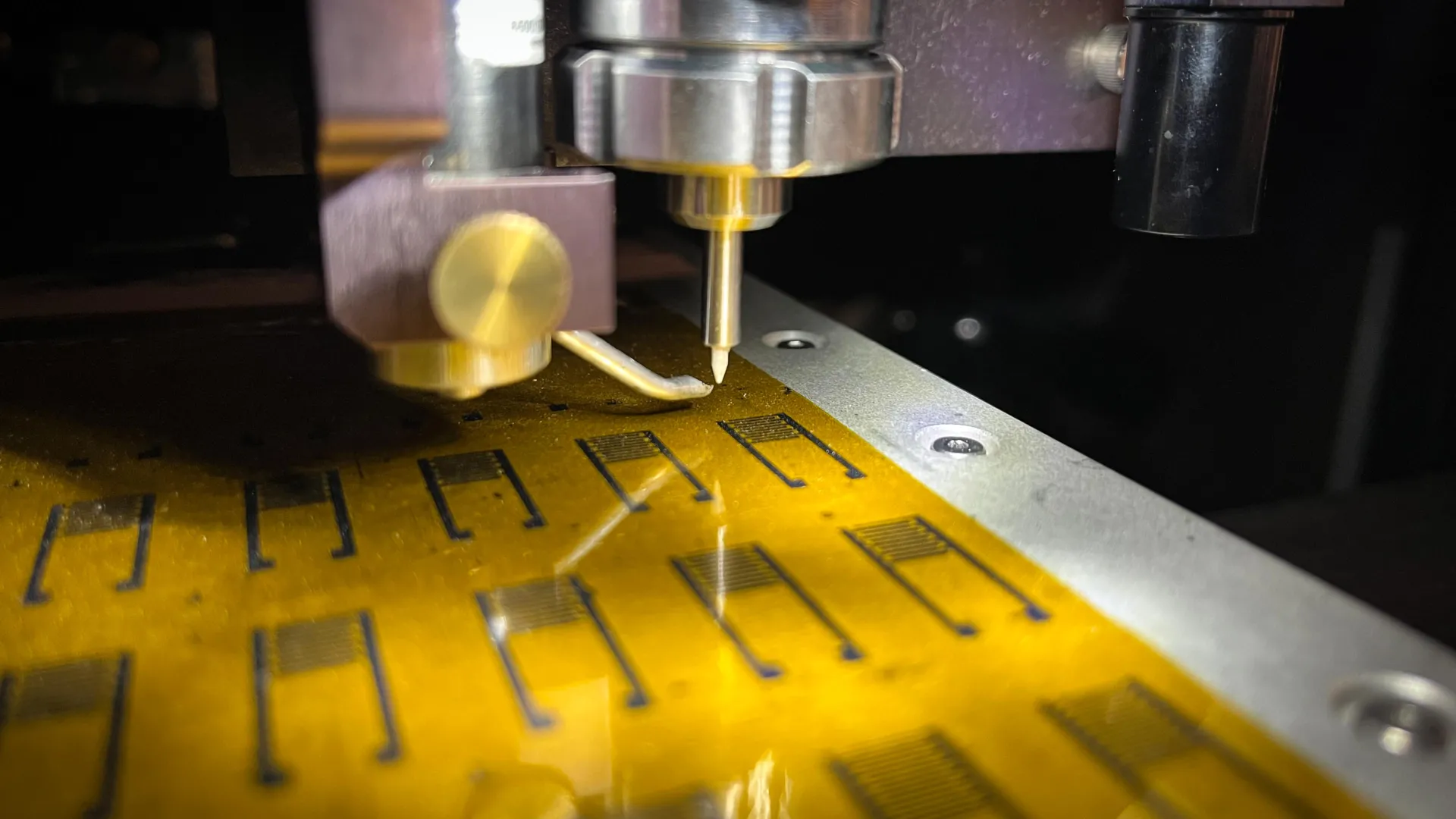
    To better replicate real neural activity, Hersam’s team built artificial neurons using soft, printable materials that more closely match the brain’s structure. Their approach relies on electronic inks made from nanoscale flakes of molybdenum disulfide (MoS2), which acts as a semiconductor, and graphene, which serves as an electrical conductor. These materials were deposited onto flexible polymer surfaces using aerosol jet printing.

    Previously, researchers treated the polymer in these inks as a flaw because it interfered with electrical performance. As a result, they removed it after printing. In this work, the team used that same feature to enhance the device.

    “Instead of fully removing the polymer, we partially decompose it,” he said. “Then, when we pass current through the device, we drive further decomposition of the polymer. This decomposition occurs in a spatially inhomogeneous manner, leading to formation of a conductive filament, such that all the current is constricted into a narrow region in space.”

    That narrow conductive path produces a sudden electrical response similar to a neuron firing. The resulting device can generate a wide variety of signals, including single spikes, continuous firing, and bursting patterns, closely resembling real neural communication.

    Because each artificial neuron can produce more complex signals, fewer components are needed to perform advanced tasks. This could significantly improve computing efficiency.

    Testing Artificial Neurons on Real Brain Tissue

    To evaluate whether the artificial neurons could truly interact with living systems, the researchers partnered with Indira M. Raman, the Bill and Gayle Cook Professor of Neurobiology at Weinberg. Her team applied the artificial signals to slices of mouse cerebellum.

    The results showed that the electrical spikes matched key biological properties, including their timing and duration. These signals reliably activated real neurons and triggered neural circuits in a way similar to natural brain activity.

    “Other labs have tried to make artificial neurons with organic materials, and they spiked too slowly,” Hersam said. “Or they used metal oxides, which are too fast. We are within a temporal range that was not previously demonstrated for artificial neurons. You can see the living neurons respond to our artificial neuron. So, we’ve demonstrated signals that are not only the right timescale but also the right spike shape to interact directly with living neurons.”

    Low-Cost, Sustainable Manufacturing and AI Implications

    Beyond performance, the new approach offers environmental and practical advantages. The manufacturing process is simple and inexpensive, and the additive printing method places material only where it is needed, reducing waste.

    Improving energy efficiency is especially important as artificial intelligence systems grow more demanding. Large data centers already consume vast amounts of power and require significant water for cooling.

    “To meet the energy demands of AI, tech companies are building gigawatt data centers powered by dedicated nuclear power plants,” Hersam said. “It is evident that this massive power consumption will limit further scaling of computing since it’s hard to imagine a next-generation data center requiring 100 nuclear power plants. The other issue is that when you’re dissipating gigawatts of power, there’s a lot of heat. Because data centers are cooled with water, AI is putting severe stress on the water supply. However you look at it, we need to come up with more energy-efficient hardware for AI.”

    The study, “Multi-order complexity spiking neurons enabled by printed MoS2 memristive nanosheet networks,” was supported by the National Science Foundation.

  • Quantum AI just got shockingly good at predicting chaos

    Quantum AI just got shockingly good at predicting chaos

    A new study led by researchers at UCL (University College London) shows that combining quantum computing with artificial intelligence can significantly improve predictions of complex physical systems over long periods. The hybrid approach outperforms leading models that rely only on conventional computers.

    The results, published in Science Advances, could enhance simulations of how liquids and gases behave, known as fluid dynamics. These types of models are essential in fields such as climate science, transportation, medicine, and energy production.

    Why Quantum Computing Makes a Difference

    The improved accuracy appears to come from how quantum computers process information. Unlike traditional computers that use bits set to either 1 or 0, quantum computers use qubits, which can exist as 1, 0, or anything in between. In addition, each qubit can influence others, allowing a relatively small number of qubits to represent an enormous number of possible states.

    Professor Peter Coveney, senior author from UCL Chemistry and the Advanced Research Computing Centre, explained the challenge: “To make predictions about complex systems, we can either run a full simulation, which might take weeks — often too long to be useful — or we can use an AI model which is quicker but more unreliable over longer time scales.

    “Our quantum-informed AI model means we could provide more accurate predictions quickly. Making predictions about fluid flow and turbulence is a fundamental science challenge but it also has many applications. Our method can be used in climate forecasting, in modeling blood flow and the interaction of molecules, or to better design wind farms so they generate more energy.”

    How the Hybrid Quantum-AI Method Works

    Although quantum computers are widely expected to surpass classical machines in power, their real-world use has so far been limited. This new approach integrates quantum computing into a specific stage of the AI training process.

    Typically, AI models learn from large datasets generated by simulations or observations. In this case, the data is first processed by a quantum computer, which identifies key statistical patterns that remain stable over time. These patterns, known as invariant statistical properties, are then used to guide the training of an AI model running on a conventional supercomputer.

    Higher Accuracy With Less Memory

    The quantum-informed AI system delivered about 20 percent greater accuracy compared to standard AI models that did not use quantum-derived patterns. It also maintained stable predictions over longer periods, even when modeling chaotic systems.

    Another major advantage was efficiency. The method required hundreds of times less memory, making it far more practical for large-scale simulations.

    Quantum Effects Behind the Efficiency

    This performance boost comes from two defining features of quantum computing. Entanglement allows qubits to influence each other regardless of distance, while superposition enables a qubit to exist in multiple states at once until measured. Together, these properties allow quantum systems to process vast amounts of information in a compact form.

    Demonstrating Practical Quantum Advantage

    First author Maida Wang of the UCL Centre for Computational Science said: “Our new method appears to demonstrate ‘quantum advantage’ in a practical way — that is, the quantum computer outperforms what is possible through classical computing alone. These findings could inspire the development of novel classical approaches that achieve even higher accuracy, though they would likely lack the remarkable data compression and parameter efficiency offered by our method. The next steps are to scale up the method using larger datasets and to apply it to real-world situations which typically involve even more complexity. In addition, a provable theoretical framework will be proposed.”

    Co-first author Xiao Xue, from Advanced Research Computing at UCL, added: “In this work, we demonstrate for the first time that quantum computing can be meaningfully integrated with classical machine learning methods to tackle complex dynamical systems, including fluid mechanics. It is exciting to see this kind of ‘quantum-informed’ approach moving towards practical use.”

    Capturing the Physics of Complex Systems

    The researchers suggest that quantum computers are particularly well suited to modeling these systems because they can compactly represent their underlying physics. Many complex systems behave in ways that resemble quantum effects, where changes in one region can influence distant parts of the system, similar to entanglement.

    Overcoming Limits of Current Quantum Hardware

    Current quantum computers face challenges such as noise, errors, and interference, which often require large numbers of measurements. The new method avoids these issues by using the quantum computer only once during the workflow, rather than repeatedly exchanging data between quantum and classical systems.

    Experiment Details and Future Potential

    The study used a 20-qubit IQM quantum computer connected to powerful classical computing resources at the Leibniz Supercomputing Centre in Germany.

    To function, quantum computers must operate at extremely low temperatures, around minus 273C (close to absolute zero, colder than anything in space).

    The research was funded by UCL and the UK’s Engineering and Physical Sciences Research Council (EPSRC), with additional support from IQM Quantum Computers and the Leibniz Supercomputing Centre in Munich.

    As researchers continue to scale up this approach, it could open the door to more accurate and efficient predictions across a wide range of scientific and engineering applications.