Category: AI in Biotechnology

  • Scientists recreate a bizarre quantum effect that stops a particle cold

    Scientists recreate a bizarre quantum effect that stops a particle cold

    A particle does not have to pass through a magnetic field to be influenced by it. That surprising feature of quantum physics has now been recreated by researchers at the University of Oxford, who used a hybrid quantum computer to demonstrate how an invisible magnetic influence can bring a simulated particle’s movement to a complete stop.

    The experiment reproduced a phenomenon known as the Aharonov-Bohm effect, in which a charged particle traveling around a region containing magnetic flux experiences a measurable change in its quantum state, even though its path never takes it through the magnetic field itself.

    The Oxford team achieved this using a quantum system that combines qubits, the basic units of quantum information, with quantum oscillators, which represent vibrating motion. Their findings, published in Nature Physics, demonstrate how this combination could help scientists investigate fundamental interactions between matter and fields that are increasingly difficult to simulate using conventional computers.

    A Strange Quantum Effect Predicted in 1959

    In everyday physics, a charged particle responds to the electric and magnetic fields it encounters. Quantum mechanics, however, reveals that particles can behave in ways that have no straightforward counterpart in our ordinary experience.

    In 1959, physicists Yakir Aharonov and David Bohm predicted that a charged particle could be affected by magnetic flux even if it traveled entirely outside the region containing the magnetic field. Rather than experiencing a conventional magnetic force along its path, the particle would undergo a change in its quantum phase.

    Quantum phase describes an aspect of a particle’s wave behavior that influences how different possible paths interfere with one another. Although the phase itself is not directly visible, differences in phase can produce measurable effects.

    The prediction became known as the Aharonov-Bohm effect and was eventually verified in experiments involving real electrons. It remains one of the clearest demonstrations that the quantum world operates according to rules that go beyond the familiar laws of classical physics.

    Researchers are now exploring how this phenomenon behaves in more complex theoretical systems known as lattice gauge theories.

    These theories describe how matter interacts with fields associated with fundamental forces. They represent space as a grid, with matter located at individual points and fields associated with the connections between them. Such models are particularly important in particle physics and high-energy physics, where scientists study the basic particles and interactions that make up the universe.

    The challenge is that the mathematics becomes extraordinarily demanding as these systems grow more complicated. Even powerful conventional computers can struggle to calculate how all the interacting components evolve.

    Quantum computers offer a different approach. Instead of attempting to calculate every aspect of a quantum system using classical computing methods, scientists can construct another quantum system that follows the same underlying rules. They can then observe its behavior directly, an approach known as quantum simulation.

    How Scientists Built the Quantum Experiment

    The Oxford project began in 2022, when lead author Dr. Sebastian Saner, Dr. Oana Bazavan, and their colleagues started developing a way to simulate lattice gauge theories using a hybrid quantum system. They collaborated with Dr. Alejandro Bermudez of the Instituto de Física Teórica in Madrid.

    Their experimental design relied on two different quantum components that performed separate functions.

    The first consisted of qubits encoded in the internal states of trapped ions, which are electrically charged atoms held in place using electromagnetic fields. These qubits represented the gauge fields in the theoretical model.

    The second component used quantum oscillators, created by the vibrations of those same trapped ions. These oscillators represented matter.

    By combining the two, the researchers constructed a simple loop that served as a basic building block of a lattice gauge theory. Two oscillators represented matter at two different locations, while two qubits represented the fields connecting those locations.

    Although the arrangement was small, it was sufficient to reproduce an important interaction between matter and magnetic flux.

    Quantum Entanglement Creates a Surprising Solution

    The researchers next placed the two qubits into an entangled quantum state. Entanglement is a phenomenon in which quantum systems become linked in ways that cannot be fully explained by classical physics.

    Within the team’s simulated lattice gauge theory, this entangled state represented magnetic flux passing through the center of the loop.

    Initially, the researchers had planned to introduce the magnetic flux as a fixed background condition. However, creating the necessary interaction would have required capabilities that their quantum hardware did not possess.

    Encoding the flux directly into the qubits provided a practical alternative. More importantly, it allowed the magnetic flux to become part of the evolving quantum system rather than remaining an unchanging external influence.

    “For us, the exciting step was to encode the magnetic flux in a gauge field that was itself dynamical,” says Dr. Saner. “Rather than having matter evolve in a fixed background, the matter and gauge field become part of the same quantum dynamics.”

    What began as a technical workaround ultimately enabled the researchers to explore a more interesting version of the phenomenon, one in which matter and the field could participate together in the quantum dynamics.

    A Quantum Effect That Stops Particle Motion

    With their simulated loop in place, the scientists examined how a matter particle moved between locations through a process known as quantum tunneling.

    Quantum tunneling allows particles to move between states in ways that would not be possible under ordinary classical rules.

    When the researchers ran their simulation without magnetic flux, the particle could tunnel freely around the loop.

    Introducing the simulated flux produced a strikingly different result.

    The particle had two possible paths around the loop, but the magnetic flux changed their relative quantum phases. As a result, the two paths interfered destructively, meaning their quantum contributions canceled each other out.

    This interference completely suppressed the tunneling, leaving the simulated particle frozen in its original state.

    The outcome demonstrated the Aharonov-Bohm effect within a lattice gauge theory containing a dynamical field. Rather than simply reproducing the familiar behavior of a particle moving around a fixed magnetic influence, the experiment showed how the phenomenon can emerge when matter and the field are both represented by interacting quantum components.

    A New Tool for Exploring Fundamental Physics

    The Oxford findings were published alongside a related study by researchers at the University of Maryland, led by Professor Norbert Linke.

    The Maryland team also used a hybrid quantum system, but their experiment focused on simulating the Yukawa potential, a mathematical description of an interaction relevant to nuclear and particle physics.

    Although the two research groups developed their methods independently, they later coordinated the submission of their studies to Nature Physics.

    Together, the experiments demonstrate how hybrid quantum computers could become valuable tools for investigating fundamental interactions that are difficult to reproduce using classical simulations.

    By combining different types of quantum components, researchers can build systems in which matter and fields are represented in ways that more closely reflect the physics they want to study.

    The Oxford experiment provides an example of that potential. A phenomenon first predicted in 1959 and later observed with electrons has now been recreated in a quantum simulator where the field itself participates in the dynamics, offering scientists another way to explore the unusual rules governing the quantum world.


  • Physicists discover “astonishing” property of light that defies expectations

    Physicists discover “astonishing” property of light that defies expectations

    Scientists have discovered a surprising ability of light that allows it to develop spinning patterns as it moves through empty space, without relying on special lenses, mirrors, or materials. The finding reveals that light possesses a hidden geometric structure that can influence its behavior in ways researchers previously thought were difficult to achieve.

    The discovery comes from an international team led by researchers at the University of East Anglia (UEA) in the United Kingdom, working with scientists in South Africa. Their experiments demonstrate that carefully prepared light can be controlled through its own internal geometry, offering a new approach to manipulating how light spins and twists.

    The findings challenge long-standing assumptions about how different properties of light interact. They could eventually lead to more sensitive medical tests, faster and more secure communications, and advanced quantum technologies that use light to transmit and protect information.

    Why the Direction of Light’s Spin Matters

    One of the most intriguing aspects of the discovery involves chirality, a scientific term describing the difference between left-handed and right-handed structures.

    Human hands provide a familiar example. Although they are mirror images of each other, a left hand cannot be perfectly superimposed on a right hand. Many molecules have a similar property, including compounds used in medicines. Two versions of the same molecule can have nearly identical chemical structures yet produce very different effects in the body.

    Scientists can distinguish these molecular forms by studying how they interact with light that has a particular rotational behavior. Traditionally, producing and controlling such light has often involved specialized materials, carefully designed surfaces, or powerful lenses that focus beams extremely tightly.

    The research demonstrates that appropriately prepared light can develop this behavior naturally as it travels, without requiring those additional optical components.

    “Our work shows that light can naturally develop this handed behavior all on its own,” said Dr. Kayn Forbes from UEA’s School of Chemistry, Pharmacy and Pharmacology.

    “You just have to prepare it in the right way.

    “Most people think of light as traveling in straight lines. But scientists can also create structured light — light whose brightness, shape, and direction are carefully arranged.

    “One extreme example is light that twists as it travels, forming a corkscrew shape known as an optical vortex. Each twist can carry information, making this kind of light valuable for high-speed internet, secure communications, and advanced sensors.

    “Light can also spin as it travels, depending on how it is polarized. This spin can be left-handed or right-handed — another form of chirality.”

    Scientists Discover How Light Develops a Hidden Spin

    Light can exhibit different kinds of rotational behavior. An optical vortex, for example, has a wave pattern that twists around its direction of travel, much like a corkscrew. Light also has a property known as polarization, which describes how its electric field oscillates. Certain polarization patterns produce a form of rotation called spin.

    Physicists have long studied the relationship between these two properties. However, the interactions responsible for the newly observed effect were generally considered extremely weak and difficult to detect without specialized experimental conditions.

    The researchers found that the situation changes when a beam of light is prepared in a particular balanced configuration.

    Under those conditions, the beam can initially have no spin, yet distinct regions with spinning behavior emerge as it travels through free space. The effect does not require the light to pass through engineered materials or additional optical devices.

    “It starts off with no spin at all,” explained MSc student Light Mkhumbuza, who carried out key experiments. “But as the beam travels forward, spinning regions appear and separate out — almost as if the spin was hiding and then revealed itself.”

    Rather than creating spin through an external optical component, the researchers demonstrated how the beam’s existing internal structure can determine where spinning regions develop during propagation.

    The Hidden Geometry That Controls Light

    To explain this unexpected behavior, the researchers turned to topology, a mathematical field concerned with properties that remain unchanged when objects are continuously stretched, bent, or reshaped.

    Dr. Isaac Nape, from the University of the Witwatersrand in Johannesburg, South Africa, offered a simple way to understand the concept.

    “To explain it, imagine a mug and a doughnut,” he said. “You can morph one into the other without tearing it, because they both have one hole. That hole is a topological feature.”

    The researchers found that structured light possesses its own topological characteristics, encoded in the arrangement of its polarization.

    This underlying pattern acts like a mathematical fingerprint. Even as the light beam changes shape while traveling, its topological structure remains, influencing how different regions of the beam evolve.

    As a result, the arrangement of the light itself can determine where its left-handed and right-handed spinning patterns become visible.

    The discovery gives scientists a way to guide this behavior by designing the beam’s initial structure, rather than depending on specialized materials to produce the desired effect.

    “This gives us a completely new tuning knob for light. By adjusting its topology, we can decide how and where chirality appears,” said Dr. Nape.

    Potential Breakthroughs in Medicine and Communications

    The ability to control light through its geometry could eventually make several important optical technologies simpler, more affordable, and more versatile.

    One particularly promising application involves medical diagnostics and pharmaceutical research. Because many biologically important molecules have left-handed and right-handed forms, carefully structured light could help scientists identify these differences with greater sensitivity. Such tools could be valuable for evaluating drug safety and detecting biological markers associated with disease.

    The same principles could support smaller optical sensors capable of identifying chemicals or biological substances without requiring large, sophisticated laboratory instruments.

    Communications technology could also benefit. By encoding information into different twisting and spinning patterns, researchers may be able to increase the amount of data carried by individual light beams. This could contribute to faster optical communications, improved information security, and future quantum networks.

    Other potential uses include manipulating microscopic particles, cells, and molecules with light, as well as developing more resilient quantum systems. Topological properties may help protect delicate quantum information against certain forms of noise and interference.

    “The implications are wide-ranging,” said Dr. Forbes. “This work could lead to simpler and more sensitive medical tests, especially in drug development.

    “It could also be used to pack more information into laser beams — boosting data capacity for communications, including future quantum networks.

    “And because the effect doesn’t rely on fragile materials or precision-engineered surfaces, it could be easier and cheaper to use in real-world technologies.

    “This research could lay the foundations for a new generation of light-based technologies, by showing that light’s behavior can be controlled using its own internal geometry,” he added.

    These applications remain possibilities for future development, but the underlying discovery provides researchers with another way to design and control the behavior of light.

    A Hidden Property of Light Finally Revealed

    For decades, scientists have relied on increasingly sophisticated optical equipment to produce and manipulate unusual forms of light. The findings suggest that some of these behaviors can instead arise from carefully designed structures already encoded within a light beam.

    By showing how topology governs the emergence of spinning regions during propagation, the team has revealed a previously underappreciated connection between light’s geometry and its physical behavior.

    The discovery also illustrates how much remains to be learned about something as familiar and extensively studied as light.

    “For something so familiar, light is proving to be far richer, stranger and more powerful than anyone imagined,” said Dr. Forbes.

    “And astonishingly, this new behavior has been there all along — just waiting to be seen.”

    The research, ‘Topological Control of Chirality and Spin with Structured Light’, was published in the journal Light: Science & Applications.

  • This new qubit could be 100 times less error-prone in superfluid quantum computer breakthrough

    This new qubit could be 100 times less error-prone in superfluid quantum computer breakthrough

    Researchers at the University of Surrey have proposed a new kind of qubit that could help address one of the biggest obstacles in quantum computing: keeping error rates low as systems become larger.

    The concept uses superfluid helium, a form of helium with unusual quantum properties, to create a qubit that may be less sensitive to some of the disturbances that affect today’s leading quantum computers.

    Why Quantum Computers Struggle With Errors

    Quantum computers rely on qubits to store and process information in ways that conventional computers cannot. Many current systems use superconducting circuits, but these are highly sensitive to electromagnetic noise and stray electrical charges – similar to the static electricity that can make hair cling to a balloon.

    Even very small disturbances can disrupt the fragile quantum information stored in a qubit. As more qubits are added, controlling those errors becomes increasingly difficult, making scalability one of the central challenges in quantum computing.

    In a study published in npj Quantum Information, researchers from Surrey’s Quantum Sciences Group describe a different approach built around superfluid helium-3 – an unusual form of liquid helium that can flow without friction.

    Their proposed device, called the Superfluid Helium Oscillator Quantum (SHOQ) device, would use charge-neutral superfluid helium. Because the helium carries no electric charge, the design could be naturally protected from certain types of electromagnetic noise.

    A Qubit With Much Lower Predicted Error Rates

    According to the researchers, this is the first reported design for a qubit based on a superfluid. Their calculations suggest the SHOQ device could have error rates about 100 times lower than conventional superconducting qubits.

    Dr. Priya Sharma, Daphne Jackson Fellow in Hybrid Quantum Systems at the University of Surrey’s School of Mathematics and Physics, and lead author of the study, said:

    “We are not the first to think about the individual components behind this idea, but what we have done for the first time is bring them together in a microfluidic device and work out the specific details that could enable the device to function as a qubit.

    “The maths tells us that it should work. We have taken what we already know about superfluid helium and quantum technologies and turned that into an educated design, with the parameters and specifications needed to build one. The next step is to make a prototype and put those predictions to the test.”

    Rather than replacing existing quantum computing hardware, the researchers say the SHOQ device could potentially be integrated with superconducting quantum technology.

    That could allow different types of qubits to perform different jobs within the same system, depending on their strengths.

    A Possible Role as Quantum Memory

    One longer-term possibility is to use the SHOQ device as a form of quantum memory. In that setup, a superfluid based qubit could store quantum information while other hardware carries out calculations.

    Dr. Eran Ginossar, Associate Professor at the University of Surrey’s Department of Physics and Advanced Technology Institute, and co-author of the study, said:

    “We don’t necessarily need one type of qubit to do everything. Combining different quantum technologies could allow us to take advantage of the strengths of each.

    “Superfluid helium gives us a fundamentally different type of quantum hardware to explore. If the predicted performance can be demonstrated experimentally, it could eventually work alongside existing superconducting technologies as part of a larger quantum system.”

    The Next Step Is Building a Prototype

    The team now plans to build a prototype to find out whether the predicted performance can be reproduced in a real device. That effort is being supported by an IAA Commercialisation Fellowship awarded to Dr. Priya Sharma.

    The SHOQ device would need to operate at extremely low temperatures, but researchers have already reached the necessary conditions in previous experiments involving superfluid helium-3.

    The project was led by the University of Surrey in collaboration with Professor Jens Koch at Northwestern University in the United States. Koch was one of the researchers involved in developing the transmon – a superconducting qubit design that is now widely used in quantum computing.

  • This light-powered AI can spot deepfakes with nearly 98% accuracy

    This light-powered AI can spot deepfakes with nearly 98% accuracy

    Researchers at the University of California, Los Angeles (UCLA) have created a new optical-neural processor that uses light to help identify deepfake videos quickly and accurately. Unlike conventional systems that typically examine videos one after another using digital hardware, the UCLA technology can analyze 15 or more video streams at the same time.

    The key difference is that part of the detection process takes place through the physical propagation of light. This allows many videos to be evaluated simultaneously during a single optical pass rather than requiring each one to move separately through a conventional digital processing pipeline.

    The technology is detailed in the study “Scalable, Energy-Efficient Optical-Neural Architecture for Multiplexed Deepfake Video Detection,” published in eLight. The researchers designed the optical AI system to serve as a high-throughput, attack-resilient first layer of defense for screening large amounts of manipulated and AI-generated video.

    The Growing Challenge of Deepfake Detection

    Rapid improvements in generative AI have made synthetic videos increasingly realistic, increasing the need for detection systems that are both accurate and capable of operating at large scale.

    Many advanced deepfake detectors depend on enormous amounts of digital computation. A single analysis can require hundreds of billions of floating-point operations, and videos are often processed sequentially. As more content must be checked, both the processing time and energy requirements can rise proportionally.

    Digital detection systems face another problem. Attackers can deliberately alter fake videos in subtle ways designed to confuse a detector and make manipulated footage appear authentic.

    Professor Aydogan Ozcan and his UCLA team developed a hybrid digital-optical system intended to address both challenges.

    A lightweight digital encoder first collects compact information about each video, including spatial, spectral, and temporal features. That information is transformed into a phase pattern and displayed on a programmable spatial light modulator.

    The resulting optical wavefront then travels through a free-space-based, passive optical decoder. At the other end, paired optical detectors directly produce an authenticity score for each video.

    In effect, the system replaces a computationally demanding digital decoding network with a physical process that can handle many streams in parallel.

    Nearly 98% Accuracy Across 15 Videos at Once

    In experiments using visible light, the processor examined 15 Celeb-DF videos simultaneously during each optical pass.

    It achieved an average detection accuracy of 97.79%, along with a sensitivity of 99.86% and a specificity of 95.72%. Sensitivity measures how successfully the system identifies manipulated videos, making the particularly high sensitivity important for a screening tool designed to keep fake content from slipping through.

    The 99.86% sensitivity translated to an average false-negative rate of ~0.14%. In other words, only a very small fraction of manipulated videos were incorrectly classified as authentic.

    The researchers also pushed the system further by increasing its capacity to 18 videos in a single optical pass. Even at that level, average detection accuracy remained at 96.13%.

    More Optical Layers Boost Performance

    The team found that the processor could also become more capable by increasing the physical depth of its passive optical decoder without substantially increasing energy use or inference latency.

    When researchers added two optimized passive diffractive layers while testing more difficult deepfake manipulations, detection accuracy improved by ~6.8%.

    These phase-only diffractive layers can be manufactured as passive, static optical structures/surfaces. They perform additional calculations through the diffraction of light, meaning they do not require additional electrical power while the system is performing an inference.

    That approach could allow more sophisticated processing without the same energy costs that typically accompany larger digital neural networks.

    Testing the System Against Google VEO-3 Videos

    The researchers did not limit their experiments to conventional face swapping deepfakes. They also challenged the processor with videos produced using Google’s VEO-3 model.

    Newer generative AI systems can create footage that lacks many of the obvious artifacts associated with earlier deepfake technology, making them a more difficult target for detectors trained primarily on older forms of manipulation.

    With only minimal fine-tuning, the optical processor achieved 94.80% accuracy and 97.61% sensitivity on previously unseen VEO-3 videos during experiments.

    The results suggest that the approach could potentially adapt as generative AI technology continues to evolve.

    A Deepfake Detector Designed to Be Harder to Fool

    The optical system also showed resistance to black-box adversarial attacks and provides inherent protection against white-box attacks.

    Part of that security comes from the way the detector physically performs its calculations. Because some of the inference process takes place through diffraction, important parameters of the optical model are effectively embedded within the hardware.

    Those parameters can be difficult for an attacker to measure, reproduce, or reverse engineer. That makes reconstructing the detector and designing carefully tailored adversarial changes that can evade it considerably more difficult.

    The processor also continued working reliably when videos were affected by image noise, blur, JPEG compression, and experimental misalignments. According to the researchers, those results illustrate how optical computation could provide a more secure and dependable foundation for some artificial intelligence systems.

    A First Line of Defense Against Deepfakes

    Rather than replacing sophisticated digital detectors entirely, the UCLA processor is designed to work as a highly sensitive first stage of a larger detection system.

    Massive volumes of video could initially pass through the parallel optical processor. Content identified as suspicious could then be sent to more computationally demanding digital models for a more detailed final assessment.

    Such a system could combine the strengths of both approaches. Optical processing could provide parallel operation, low decoder energy requirements, high sensitivity, resistance to adversarial attacks, and the ability to adapt to newer AI video generators, while conventional digital systems could provide deeper analysis when necessary.

    The researchers say this combination could eventually be useful for large-scale content moderation, media authentication, surveillance, and other security-critical AI applications.

    The authors of this work are Parnian Ghapandar Kashani and Dr. Shiqi Chen, who contributed equally, and Professor Aydogan Ozcan. The researchers are affiliated with the UCLA Electrical and Computer Engineering Department, the UCLA Bioengineering Department, and the California NanoSystems Institute.

  • Quantum computing’s “dark horse” just proved it can go universal

    Quantum computing’s “dark horse” just proved it can go universal

    A practical quantum computer must eventually be able to handle any type of quantum algorithm, much like a conventional laptop can run many different kinds of software. Researchers have now demonstrated a new way to reach that level of flexibility using unusual quantum objects known as non-Abelian anyons.

    Scientists from the University of Chicago Pritzker School of Molecular Engineering (UChicago PME), Harvard, Stony Brook University, and Quantinuum created and tested a full set of operations based on non-Abelian anyons. Their results provide the first experimental demonstration that this approach can support the broad range of operations required for universal quantum computing.

    “We demonstrated a so-called universal gate set — meaning that if you store information in these emergent versions of quarks, and you move them around, you can do any quantum computation you might want to do,” said Ruben Verresen, assistant professor of molecular engineering at UChicago PME and a co-author of the new study published in Nature.

    A Possible Shortcut Around Costly Quantum Error Correction

    The strategy could do more than help create a general-purpose quantum computer. It may also offer a more efficient route toward reliable quantum machines.

    Quantum computers are extremely vulnerable to errors, so researchers typically protect information by distributing it across many physical qubits. These error correction methods can preserve data, but they usually do not provide every operation needed to perform universal quantum computation on that protected information.

    To fill the gap, engineers often rely on specially prepared resources called “magic states.” Producing them usually requires an intensive purification process known as distillation, which can consume a large fraction of a quantum computer’s available qubits. The new results suggest that non-Abelian anyons may offer a way around that expensive step.

    “Non-Abelian codes are a dark horse in the race to quantum error correction,” said Henrik Dreyer, managing director and scientific lead at Quantinuum’s Munich office and a co-author of the study. “In this work we show the first universal gate set in a non-Abelian code, which demonstrates that fault-tolerant computations can in principle be done without resorting to magic state distillation or cultivation, which are the most expensive operations in standard quantum error correction codes.”

    Why Non-Abelian Anyons Are Different

    Ordinary qubits encode information using two basic states, along with quantum combinations of those states. Non-Abelian anyons work in a fundamentally different way.

    These anyons do not appear as ordinary standalone particles in nature. Instead, scientists create them inside quantum circuits by entangling many conventional qubits into a collective state that behaves as though it were a new type of particle with its own unusual rules.

    “The way I think about these codes is they’re creating little universes — alternative universes, but ones that reflect some of the properties of our own,” Verresen said.

    Each non-Abelian anyon carries an internal state that changes when one anyon is moved around another in a process known as braiding. The sequence of those braiding operations matters (that’s what non-Abelian means), allowing information to be encoded and manipulated in ways that are unavailable to ordinary particles.

    Because the information is spread across many entangled qubits rather than stored in a single location, it can also be naturally protected from some of the small disturbances that frequently disrupt conventional qubits. Braiding the anyons can also perform computational operations.

    Why Braiding Alone Was Not Enough

    In 2024, a research team that included Verresen used a Quantinuum trapped-ion computer to create anyons associated with a symmetry group called D4 — the rotations and reflections that leave a square unchanged — demonstrating this form of non-Abelian order on quantum hardware for the first time.

    That experiment showed that the unusual particles could be created and manipulated, but braiding them alone was not sufficient to carry out every operation required for universal quantum computing.

    “In that work, we didn’t demonstrate that those emergent forces were enough to do quantum computation,” said Verresen. “That particular universe we created was not powerful enough.”

    Fusion Unlocks Universal Quantum Operations

    For the new study, the researchers switched to another symmetry known as S3 — the rotations and mirror-image flips that leave an equilateral triangle unchanged — and created the corresponding anyons on Quantinuum’s H2 trapped-ion processor using 54 entangled qubits.

    The S3 system had the properties needed for universal quantum computation, but only when braiding was combined with another operation called fusion. During fusion, two anyons are brought together and the resulting state is measured.

    The underlying concept was proposed theoretically in 2003 by Carlos Mochon, then a student of John Preskill at Caltech. Turning that theoretical idea into an experiment that could actually run on quantum hardware, however, required extensive additional theoretical and experimental work.

    The researchers used pairs of anyons to encode “topological qutrits” which store three possible levels of quantum information instead of the two levels used by ordinary qubits.

    By combining different braiding and fusion operations, the team demonstrated three key tools: one entangling gate produced through braiding and two different measurements created through fusion. Together, those operations can in principle produce any quantum operation, including operations that braiding alone could not achieve.

    Beyond their possible computing applications, these unusual quantum states could also help researchers investigate fundamental aspects of physics.

    “It is gratifying to see ideas we have spent our PhD work thinking about realized in the lab, and it has been made possible by remarkable advances in quantum hardware over the past few years,” said Anasuya Lyons and Chiu Fan Bowen Lo, graduate students at Harvard University in the group of Ashvin Vishwanath who helped lead the work.

    Toward Fault-Tolerant Quantum Computers

    The researchers also demonstrated that non-Abelian anyons could directly produce a magic state using topological operations — sidestepping the costly distillation process used in most quantum systems.

    The experiment did not yet include active error correction. Instead, the researchers focused on testing the individual building blocks of the method and confirming that they could create a magic state consistent with theoretical expectations.

    “So far, we’ve ignored the question of error correction. Here, it’s more like a proof of principle,” Verresen said.

    The next major step will be combining these operations with active error correction. If that can be achieved, non-Abelian anyons could eventually become a practical basis for large-scale, fault-tolerant quantum computers. Verresen is already working with other PME researchers on new techniques for stabilizing non-Abelian quantum memories.

  • MIT’s tiny flying robot gets 450% faster with AI

    MIT’s tiny flying robot gets 450% faster with AI

    Tiny flying robots may one day help rescuers search for people trapped beneath collapsed buildings after earthquakes. Because of their small size, these robotic insects could potentially move through narrow spaces that larger drones cannot enter while avoiding walls, debris, and falling objects.

    Until recently, however, aerial microrobots have been far less nimble than the insects that inspired them. They typically moved slowly and followed relatively simple flight paths.

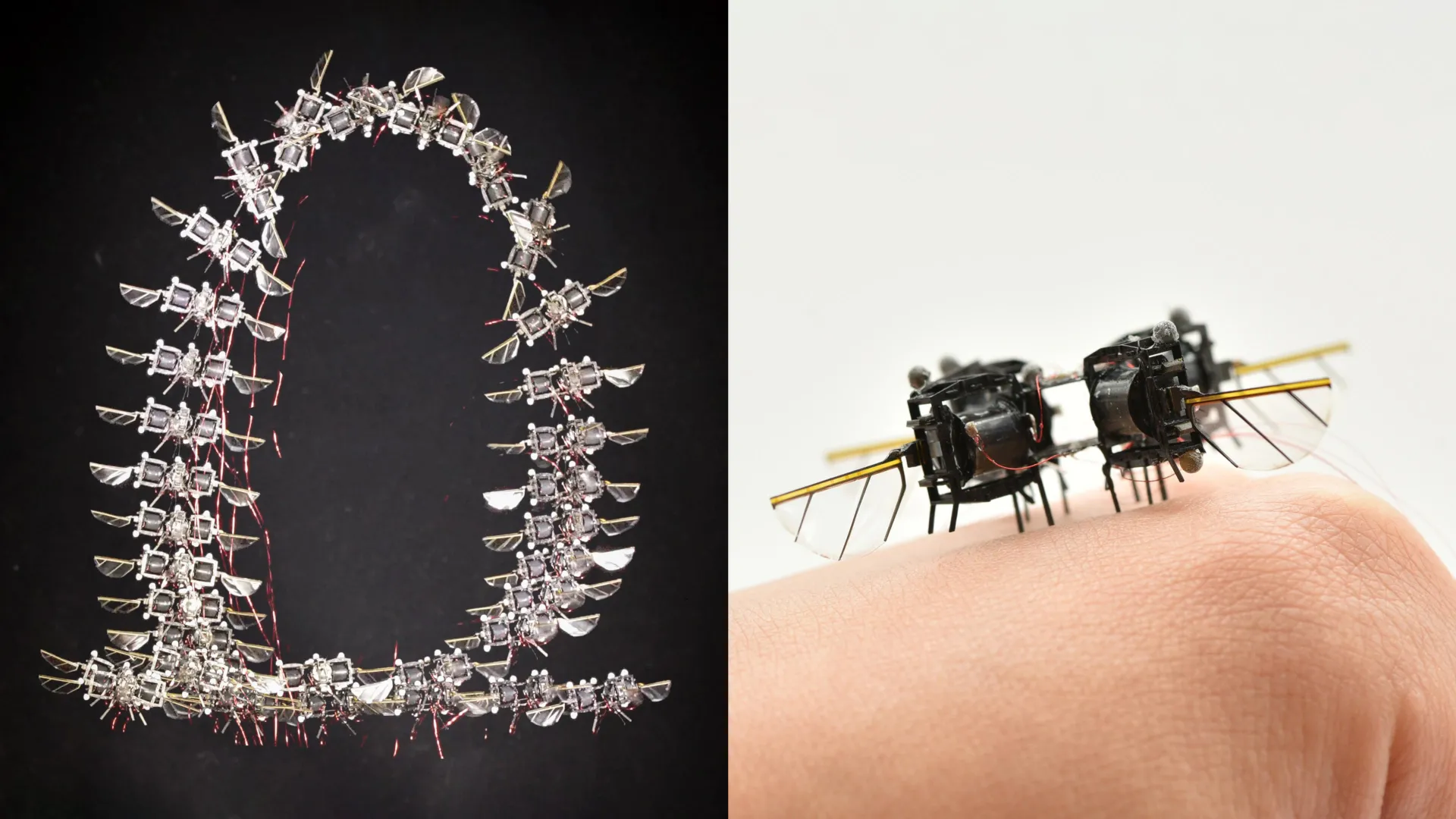
    Researchers at MIT have now demonstrated a new approach that gives an insect-scale flying robot much greater speed and agility. The team developed an AI-based controller that allows the robotic bug to perform demanding aerial maneuvers, including repeated body flips.

    Using a two-part control system designed to balance performance with computational efficiency, the researchers increased the robot’s speed by about 450 percent and its acceleration by about 250 percent compared with their previous best results.

    The robot was agile enough to complete 10 consecutive somersaults in 11 seconds, even while wind disturbances tried to knock it away from its intended path.

    “We want to be able to use these robots in scenarios that more traditional quadcopter robots would have trouble flying into, but that insects could navigate. Now, with our bioinspired control framework, the flight performance of our robot is comparable to insects in terms of speed, acceleration, and the pitching angle. This is quite an exciting step toward that future goal,” says Kevin Chen, an associate professor in the Department of Electrical Engineering and Computer Science (EECS), head of the Soft and Micro Robotics Laboratory within the Research Laboratory of Electronics (RLE), and co-senior author of a paper on the robot.

    Chen is joined on the paper by co-lead authors Yi-Hsuan Hsiao, an EECS MIT graduate student; Andrea Tagliabue PhD ’24; and Owen Matteson, a graduate student in the Department of Aeronautics and Astronautics (AeroAstro); as well as EECS graduate student Suhan Kim; Tong Zhao MEng ’23; and co-senior author Jonathan P. How, the Ford Professor of Engineering in the Department of Aeronautics and Astronautics and a principal investigator in the Laboratory for Information and Decision Systems (LIDS). The research was published in Science Advances.

    AI Gives the Robot a Smarter Flight Controller

    Chen’s group has spent more than five years developing robotic insects.

    The team recently created a more durable version of their tiny robot, which is about the size of a microcassette and weighs less than a paperclip. This newer design has larger flapping wings that support more agile flight. The wings are driven by soft artificial muscles that contract rapidly enough to produce extremely fast wingbeats.

    The physical design had improved, but the robot’s controller remained a major limitation. This controller acts as the robot’s “brain,” determining where the robot is and deciding how it should move. In earlier versions, a human had to tune the controller by hand.

    For the robot to fly with the speed and aggressiveness of a real insect, the researchers needed a system that could handle uncertainty while rapidly solving complex control problems.

    A controller powerful enough to do that would normally demand too much computation to operate in real time, especially because the aerodynamics of such a lightweight flying machine are highly complex.

    To solve this problem, Chen’s group collaborated with How’s team to develop a two-step AI-driven control system. The design combines the robustness needed for difficult, high-speed maneuvers with enough computational efficiency to work in real time.

    “The hardware advances pushed the controller so there was more we could do on the software side, but at the same time, as the controller developed, there was more they could do with the hardware. As Kevin’s team demonstrates new capabilities, we demonstrate that we can utilize them,” How says.

    Teaching a Tiny Robot to Plan Difficult Maneuvers

    The first part of the system uses what is known as a model-predictive controller. This type of controller relies on a dynamic mathematical model to predict how the robot will behave and determine the best sequence of actions for safely following a desired flight path.

    Although this method requires substantial computing power, it can plan difficult movements such as aerial flips, sharp turns, and aggressive changes in body angle. The planner also takes into account limits on the amount of force and torque the robot can produce, helping it avoid movements that could lead to a crash.

    Repeated flips are particularly challenging. To perform one somersault after another, the robot must slow down in exactly the right way so that it begins each new flip under the proper conditions.

    “If small errors creep in, and you try to repeat that flip 10 times with those small errors, the robot will just crash. We need to have robust flight control,” How says.

    The researchers then used this expert planner to train a “policy” built on a deep-learning model through a process called imitation learning. The policy serves as the robot’s real-time decision-making system, determining how and where it should fly.

    In effect, imitation learning allows the team to capture the behavior of the more computationally demanding controller in a faster AI model that can operate quickly enough for real-time flight.

    A major part of the challenge was generating enough useful training data to teach the policy how to handle aggressive maneuvers without creating an unnecessarily large data set.

    “The robust training method is the secret sauce of this technique,” How explains.

    During flight, the AI-based policy receives information about the robot’s position and converts it into real-time commands controlling factors such as thrust force and torques.

    Insect-Like Speed and Agility

    Experiments showed that the two-step control system dramatically improved the robot’s performance. The insect-scale machine flew 447 percent faster and achieved a 255 percent increase in acceleration.

    It also completed 10 somersaults in only 11 seconds while remaining within about 4 or 5 centimeters of its planned flight path.

    “This work demonstrates that soft and microrobots, traditionally limited in speed, can now leverage advanced control algorithms to achieve agility approaching that of natural insects and larger robots, opening up new opportunities for multimodal locomotion,” says Hsiao.

    The team also demonstrated a movement known as a saccade. In insects, this involves pitching the body sharply, rapidly moving to a new position, and then pitching in the opposite direction to stop. This quick acceleration and braking can help insects determine their position and maintain clear vision.

    “This bio-mimicking flight behavior could help us in the future when we start putting cameras and sensors on board the robot,” Chen says.

    Toward Autonomous Flying Microrobots

    One major goal for future research is to equip the microrobots with onboard cameras and sensors. That could eventually allow them to fly outdoors without depending on a sophisticated external motion capture system.

    The team also plans to investigate whether onboard sensing could help groups of the robots avoid crashing into one another and coordinate their movements while navigating.

    “For the micro-robotics community, I hope this paper signals a paradigm shift by showing that we can develop a new control architecture that is high-performing and efficient at the same time,” says Chen.

    This research is funded, in part, by the National Science Foundation (NSF), the Office of Naval Research, Air Force Office of Scientific Research, MathWorks, and the Zakhartchenko Fellowship.

  • Scientists find that “perfect” systems may be surprisingly fragile

    Scientists find that “perfect” systems may be surprisingly fragile

    Perfection may not always be the best recipe for stability, especially in complex systems such as electrical grids, ecosystems, and advanced materials.

    For years, researchers often worked from the assumption that networks should perform more reliably when their individual parts behave as similarly as possible. Real systems, however, rarely look that tidy. Power generators operate differently from one another, neurons vary in form and behavior, species occupy different roles in ecosystems, and the components inside engineered materials are not always perfectly uniform.

    Physicists at Northwestern University now say those differences may sometimes be an advantage rather than a defect.

    Why Disorder Can Improve Stability

    In a new study, the researchers created a mathematical framework designed to determine when variation, which scientists often describe as disorder, can actually make a network more stable. Their results suggest that many physical, engineered, and biological systems can become more resilient when their components, or the connections between them, are not identical.

    That finding challenges the idea that uniformity should always be the goal. Instead, carefully introducing differences into a system could help engineers design more resilient power grids, architected materials and other interconnected technologies. The work also may help explain why irregularity is so common in natural systems, including neural, biological and ecological networks.

    The study was published Sept. 17 in the journal Science. The researchers also developed a website that allows users to explore the framework visually. By adjusting different parameters, users can watch network components interact, synchronize and form organized patterns.

    “Previous studies found a growing number of cases in which disorder (also called heterogeneity, irregularity or asymmetry) across a network’s nodes can actually improve stability and desirable behavior,” said Northwestern’s Adilson Motter, who led the work. “We have seen this in important real-world systems, including power grids, metamaterials and brain computation. But we didn’t know how widespread this effect was or which kinds of systems could benefit from it. Our new study answers those questions, explains why these differences can improve stability and even reveals why scientists overlooked this effect for so long.”

    Motter is the Charles E. and Emma H. Morrison Professor of Physics and Astronomy at Northwestern’s Weinberg College of Arts and Sciences and director of the Center for Network Dynamics. Northwestern postdoctoral researcher Arthur Montanari and graduate student Pietro Zanin, both members of the Motter group, are the study’s co-first authors.

    Why Older Network Models Missed the Effect

    Many interconnected systems survive only if they can recover from disturbances. A strong gust can break apart a flock. A sudden spike in electricity demand can strain a power grid. An impact can deform a material.

    Scientists often represent these systems as networks made up of individual components, called nodes, that are connected by links. In an electrical grid, generators act as the nodes and transmission lines form the links between them. In an ecological network, species are the nodes while their relationships (competition, cooperation, and predation) form the links.

    Traditionally, researchers have focused heavily on how those nodes are connected. Many studies also rely on simplified mathematical models, including the widely used Kuramoto model, that represent each node with only a single variable.

    Those simplified approaches have produced valuable insights, but they can leave out important behavior found in real-world systems, where individual components and their interactions can be far more complicated.

    “Real systems are rarely uniform,” Montanari said. “Birds differ in personalities, neurons vary in shape, and even our social relationships can be asymmetric. These differences might appear random, but they can profoundly affect how the whole system behaves.”

    Earlier research had already suggested that such differences could sometimes be beneficial. In a 2020 Nature Physics study, Motter’s team showed that electrical generators could synchronize more successfully when they operated somewhat differently from one another. A 2025 Nature Communications study led by Montanari found comparable effects in models involving flocking behavior and drone swarms.

    What remained unclear was whether these examples represented rare exceptions or pointed to a much broader rule.

    “Disorder can stabilize networks, but only when the node dynamics are rich enough,” Motter said. “Simplified models can inadvertently strip away the very stabilizing effect we want to capture.”

    Finding the Right Amount of Disorder

    To investigate the question more broadly, the researchers developed a mathematical framework that could account for more realistic network behavior.

    They first examined systems close to a stable condition. Next, they calculated what happened after small disturbances were introduced. If those disturbances gradually disappeared, the system returned to stability. If they grew larger, the system moved toward instability.

    The team then compared networks whose components were identical with networks containing differences among their components or connections. This allowed the researchers to identify the general circumstances in which heterogeneity can outperform uniformity.

    Motter and his colleagues tested the framework using models of power grids, neurons, flocks, architected materials and ecological networks.

    They found that disorder can improve stability in two main ways. Differences can exist among the nodes themselves, or they can appear in the links connecting those nodes. The effect also depends on both the location and the amount of variation.

    A moderate level of disorder might make a network more stable, while excessive variation could eventually push that same system in the opposite direction.

    “If you make the system more homogeneous, you lose stability,” Montanari said. “But if you increase disorder too much, you also lose stability. Our framework can help pinpoint the level of disorder that helps the system achieve optimal stability.”

    Random Variation Can Sometimes Be Enough

    The researchers also discovered that beneficial differences do not always need to be carefully designed in advance.

    In many of their models, randomly introduced variation produced greater stability than the best completely uniform configuration. That means simply allowing some degree of diversity within a system can sometimes provide an advantage.

    There was an important exception when the variation occurred in the links connecting nodes rather than within the nodes themselves. In those cases, even networks with relatively simple node dynamics could gain stability from disorder.

    Why Nature May Favor Imperfect Networks

    The findings could help researchers better understand existing complex systems, particularly ecological networks, while also providing engineers with new strategies for designing systems from the ground up.

    One longstanding ecological puzzle is that older mathematical models predicted large, complicated ecosystems should be inherently unstable. Nature, however, contains many ecosystems that are both highly diverse and persistent.

    “Since the 1970s, mathematical models have predicted that large, complex ecosystems should destabilize and collapse,” Montanari said. “Yet very large and highly diverse ecosystems persist in nature. Our findings suggest that variation among mutually beneficial interactions, such as those between pollinators and flowers, could help explain this paradox.”

    The same principle could eventually influence the design of advanced materials.

    Architected materials are often built from repeating, nearly identical units. The new findings suggest engineers might be able to create different or improved behaviors by deliberately varying the shapes, sizes, orientations, and physical properties of those units.

    To do that effectively, researchers would need to treat these materials as mechanical networks and use models detailed enough to preserve the system’s true dynamics. Computational techniques could then be used to search for combinations of variation that provide the greatest benefit.

    “When disorder enhances stability, the next challenge is figuring out how best to design it,” Motter said.

    The study, “Disorder-promoted stability,” was supported by the Army Research Office (grant number W911NF-22-2-0109) and the National Science Foundation (grant number DMS-2308341). The study also acknowledges the stimulating research environment provided by the NSF-Simons National Institute for Theory and Mathematics in Biology (NSF grant number DMS-2235451 and Simons Foundation grant number MP-TMPS-00005320).

  • The shape behind the Einstein problem just revealed strange new physics

    The shape behind the Einstein problem just revealed strange new physics

    A mathematical shape that drew global attention for solving a decades-old puzzle is now revealing an unexpected connection to physics. Researchers have found that structures based on the shape can make light form unusual chiral patterns, pointing to new ways of exploring how geometry can influence optical behavior.

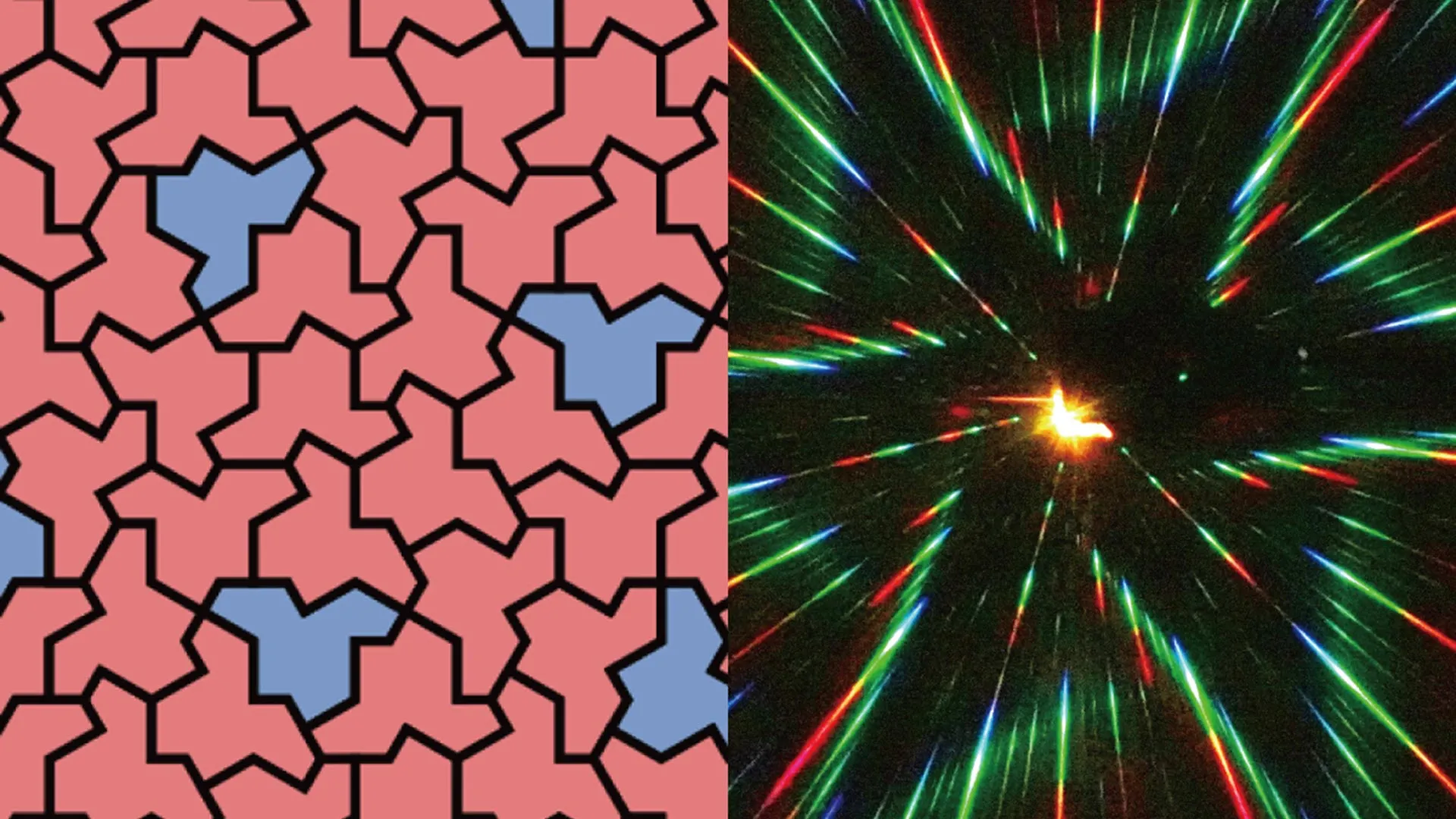
    In a study published in Nature Communications, researchers from the Institute of Industrial Science, The University of Tokyo, and collaborating institutions built optical structures inspired by the “Smith hat.” This unusual shape is known for solving the so-called Einstein problem in mathematics. When the team illuminated the structures with laser light, they observed diffraction effects unlike those seen in conventional quasicrystals.

    The Shape That Solved the Einstein Problem

    The Einstein problem asks whether a single tile shape, known as a “monotile,” can cover an entire surface without creating a repeating pattern.

    Familiar tilings such as checkerboards and honeycombs repeat in a regular way. An aperiodic monotile, by contrast, can fill a surface without ever settling into a repeating arrangement.

    In 2023, researchers discovered the first such monotile, the Smith hat. The finding attracted widespread attention because it provided a long-sought solution to the mathematical problem.

    “What is especially fascinating about the hat tile is that, although the resulting pattern appears irregular at first glance, it is actually constructed from the honeycomb lattice,” says lead author Yuto Moritake. “We wanted to see whether this unique shape could also produce any unexpected physical phenomena.”

    Turning a Mathematical Pattern Into an Optical Structure

    To test that possibility, the researchers created nanoscale versions of the pattern on silicon nitride films using electron beam lithography.

    When laser light was directed at the structures, the resulting diffraction patterns formed distinctive pinwheel-like shapes. These patterns directly revealed the chiral character of the aperiodic structure.

    Chirality refers to a form of handedness in which a structure and its mirror image cannot be perfectly matched. In this case, the unusual arrangement of the monotile pattern caused the light itself to display a chiral response.

    “We found that the diffraction patterns themselves become chiral because the structure lacks mirror symmetry,” explains senior author Masaya Notomi. “This kind of optical response is fundamentally different from that observed in conventional quasicrystalline materials.”

    Light Responds to Direction and Polarization

    The researchers also found that the diffraction pattern changed depending on both the direction and polarization of the incoming light.

    When the physical structures were mirrored, their optical behavior reversed as well. This showed that the response of the light was directly tied to the symmetry of the underlying pattern, revealing a new type of symmetry-controlled optical behavior.

    “These results open a new direction of research on the fusion of quasiperiodic order and chirality,” remarks Moritake. “Monotile patterns provide a platform for exploring optical phenomena that emerge from the interplay of symmetry, chirality, and aperiodicity.”

    From Abstract Mathematics to New Optical Physics

    The researchers say structures inspired by monotiles could eventually contribute to technologies designed to manipulate light, control polarization, and support advanced optical devices.

    More broadly, the findings show how a discovery that began as an abstract mathematical puzzle can lead to unexpected physical effects. The Smith hat was first celebrated for solving a question about how shapes can cover a surface. Now, its unusual geometry may also help researchers uncover new ways to control and study light.

  • AI uncovers hidden Ozempic side effects across 400,000 Reddit posts

    AI uncovers hidden Ozempic side effects across 400,000 Reddit posts

    Artificial intelligence is giving researchers a new way to listen to what patients are saying about popular GLP-1 drugs. After analyzing more than 400,000 Reddit posts, a University of Pennsylvania team identified several symptoms reported by people using semaglutide (Ozempic, Wegovy, and Rybelsus) and tirzepatide (Mounjaro and Zepbound) that may not be fully represented in clinical trials or official regulatory information.

    The study, published recently in Nature Health, examined more than five years of posts from nearly 70,000 Reddit users. Two categories stood out as particularly deserving of further investigation: reproductive symptoms, including changes in menstrual cycles, and problems involving body temperature, such as chills and hot flashes.

    The findings do not establish that the medications caused these symptoms. Instead, researchers say the massive collection of spontaneous patient reports may reveal signals worth examining more closely.

    “Some of the side effects we found, like nausea, are well known, and that shows that the method is picking up a real signal,” says Sharath Chandra Guntuku, Research Associate Professor in Computer and Information Science (CIS) at Penn Engineering and the study’s senior author. “The underreported symptoms are leads that came from patients themselves, unprompted, and clinicians could potentially pay attention to them.”

    What Patients Report Outside Clinical Trials

    Clinical trials are designed to determine whether treatments work and to identify important safety problems, but they cannot necessarily capture every symptom that matters to patients once a medication is being used by a much larger population.

    “Clinical trials generally identify the most dangerous side effects of drugs,” adds Lyle Ungar, Professor in CIS and a co-author on the study. “But they can fail to find what symptoms patients are most concerned about; even though social media is not necessarily representative, a large collection of posts may reflect additional concerns.”

    The distinction is important. The study found associations in what people discussed online, not proof that GLP-1 drugs were responsible for those experiences.

    “We can’t say that GLP-1s are actually causing these symptoms,” notes Neil Sehgal, the study’s first author and a doctoral student in CIS advised by Guntuku and Ungar. “But nearly 4% of the Reddit users in our sample reported menstrual irregularities, which would be even higher in a female-only sample. We think that’s a signal worth investigating.”

    Using Social Media as an Early Health Signal

    The idea of mining online conversations for clues about drug safety predates today’s AI boom. In 2011, Ungar participated in one of the earliest efforts to use material created by internet users to identify possible adverse effects from medications.

    Social media can capture experiences that patients discuss with one another but may never formally report to a doctor, drug manufacturer, or regulator.

    “Online patient communities work a lot like a neighborhood grapevine,” says Ungar. “People who are living with these medications are swapping notes with each other in real time, sharing experiences that rarely make it into a doctor’s office visit or an official report.”

    Since then, online patient communities have expanded enormously. That has made social media a potentially valuable source for studying how medications affect people in everyday life, although gaining access to platform data has become more difficult.

    Traditional clinical research remains essential, the researchers emphasize, but online conversations can provide information far more quickly when millions of people begin using a drug.

    “Clinical trials are the gold standard, but by design, they are slow,” says Guntuku. “This is not a replacement for trials, but it can move much faster, and that speed matters when a drug goes from niche to mainstream almost overnight.”

    AI Makes Massive Social Media Analysis Possible

    One of the biggest obstacles has always been scale.

    Guntuku describes the approach as “computational social listening,” which uses computational methods to identify patterns in large collections of online conversations about health.

    Patients, however, rarely describe symptoms using standardized medical terminology. One person might describe feeling unusually cold, another might mention constant chills, while a clinician could categorize those experiences using a specific medical term.

    Researchers therefore need a way to translate everyday language into standardized categories. One important reference is the Medical Dictionary for Regulatory Activities (MedDRA), which provides terminology widely used to classify medical conditions, symptoms, and adverse events.

    Previously, connecting huge numbers of informal social media posts with standardized medical terminology required enormous amounts of work, limiting how much data researchers could realistically analyze.

    Large language models such as GPT and Gemini are changing that equation by allowing researchers to process and categorize vast amounts of text more consistently and quickly.

    “Large language models have made it possible to do this kind of analysis much faster with a level of standardization that could be difficult to achieve before,” says Sehgal.

    Unexpected Symptoms Emerge From 400,000 Posts

    The researchers stress that Reddit users do not represent the overall population of people taking GLP-1 drugs. Reddit users tend to be younger, are more likely to be male, and are disproportionately located in the United States.

    Even with that limitation, the analysis produced a reassuring sign that the approach was detecting genuine patterns. Many of the symptoms discussed by Reddit users closely matched already known effects of semaglutide and tirzepatide.

    About 44% of users included in the study described at least one side effect. Gastrointestinal problems were the most common, consistent with the nausea and other digestive issues already associated with these medications.

    More intriguing were symptoms that appeared frequently enough to attract the researchers’ attention but may not be as well represented in current drug labels or conventional adverse event reports.

    Nearly 4% of users who reported side effects described reproductive symptoms. These included changes in menstruation such as bleeding between periods, heavy bleeding, and irregular menstrual cycles.

    Users also described changes involving body temperature, including chills, feeling unusually cold, hot flashes, and symptoms resembling a fever.

    Fatigue was another notable finding. It was the second most frequently reported complaint in the Reddit data, even though relatively few clinical trials reported fatigue often enough for it to reach established reporting thresholds.

    Why Menstrual and Temperature Changes Are Interesting

    One possible reason these reports caught researchers’ attention involves the hypothalamus, a small but extremely important region of the brain. Among its many jobs, the hypothalamus helps regulate hunger, hormones, reproduction and body temperature.

    “These drugs are thought to work by engaging part of the brain called the hypothalamus, which helps regulate a wide variety of hormones,” says Jena Shaw Tronieri, Senior Research Investigator at Penn’s Center for Weight and Eating Disorders and a co-author of the study. “That doesn’t mean the medications are necessarily causing these symptoms, but it could suggest that reports of menstrual changes and body temperature fluctuations are worth studying more systematically.”

    The researchers are not proposing that this biological connection proves GLP-1 drugs are responsible. Instead, it offers another reason to test the patient-reported patterns more carefully through controlled research.

    Turning Online Conversations Into Research Leads

    For now, the team hopes the results encourage scientists and clinicians to pay closer attention to symptoms that patients repeatedly discuss online.

    “They’re clearly on patients’ minds, and that’s worth paying attention to,” says Sehgal.

    The researchers also want to broaden their analysis beyond Reddit and beyond English-language communities. Doing so could help determine whether the same patterns emerge among different groups of people and on different social media platforms.

    “We don’t really know yet whether what we’re seeing on Reddit reflects the experience of GLP-1 users globally, or whether it’s particular to the kind of person who posts on Reddit in the United States,” Ungar says.

    In the longer term, rapid AI analysis of online patient conversations could potentially become an early detection system for emerging health concerns involving drugs, supplements and wellness products.

    That could be particularly valuable for substances that become popular online faster than conventional research can keep up. Loosely regulated or unregulated products, including injectable peptides, can spread quickly through communities on Reddit, TikTok and other platforms. Discussions among users may therefore provide some of the earliest indications of unexpected effects.

    “The whole point of this kind of approach is that it can move quickly, and that’s exactly when it’s most valuable,” says Guntuku.

    This study was conducted at the University of Pennsylvania School of Engineering and Applied Science. The authors report no outside funding. Tronieri reports receiving an investigator-initiated grant, on behalf of the University of Pennsylvania, from Novo Nordisk and receiving consulting fees from Currax Pharmaceuticals, LLC. The other authors report no conflicts of interest.

  • Tiny nanolaser could cut computer energy use in half

    Tiny nanolaser could cut computer energy use in half

    The development of a nanolaser could mark an early step toward a future in which microchips communicate entirely with particles of light.

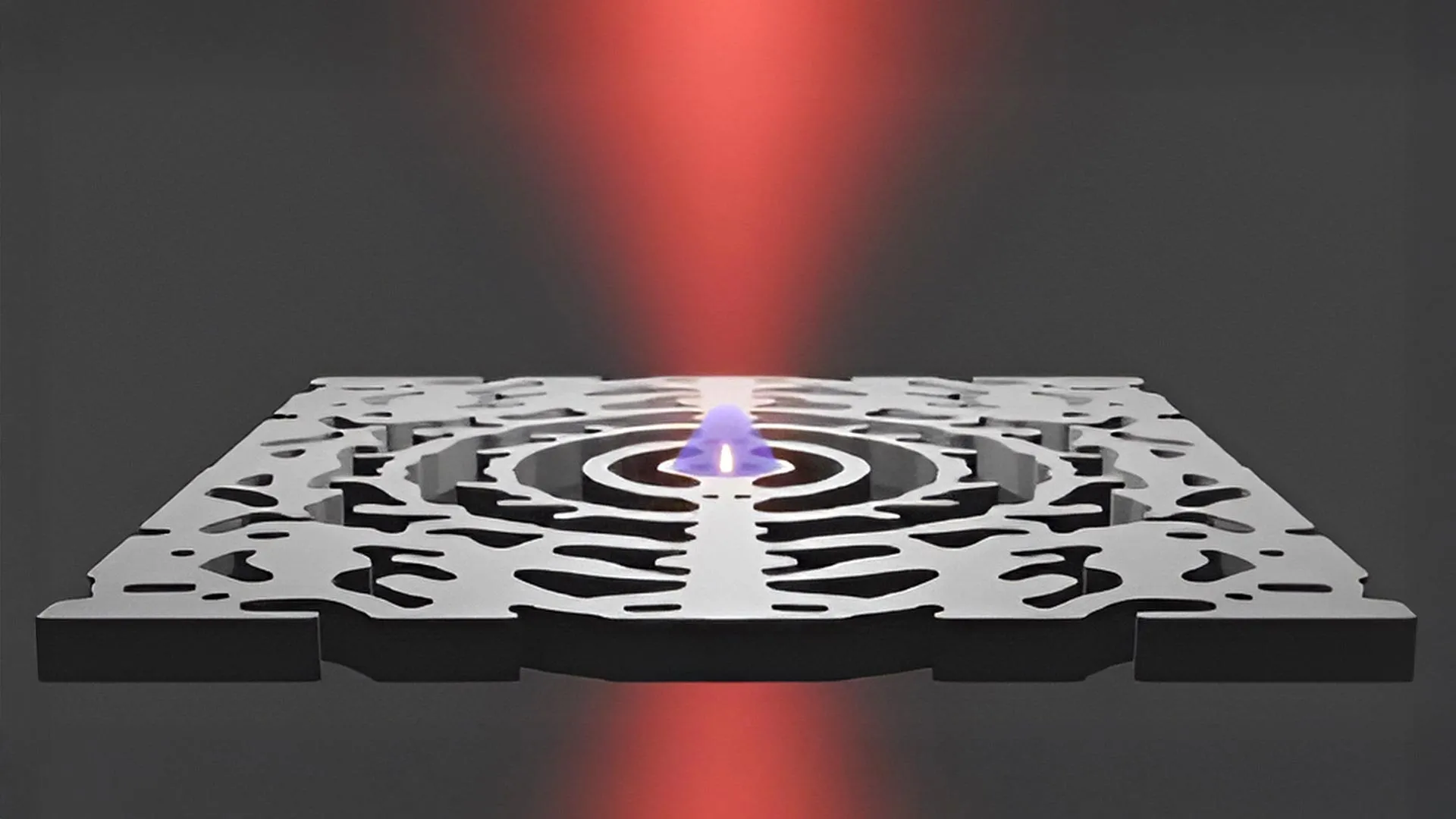
    Researchers at DTU have created a tiny nanolaser that could eventually help make computers, smartphones, and data centers faster while using much less energy. The breakthrough was published in the scientific journalScience Advances.

    In the future, thousands of these lasers could potentially be integrated onto a single microchip. Instead of moving information around a chip with electrical signals, devices could transmit data using photons, the particles that make up light.

    “The nanolaser opens up the possibility of creating a new generation of components that combine high performance with minimal size. This could be in information technology, for example, where ultra-small and energy-efficient lasers can reduce energy consumption in computers, or in the development of sensors for the healthcare sector, where the nanolaser’s extreme light concentration can deliver high-resolution images and ultrasensitive biosensors,” says DTU professor Jesper Mørk.

    Mørk co-authored the study with, among others, Drs. Meng Xiong and Yi Yu from DTU Electro.

    Using Light Inside Computer Chips

    Much of the internet already relies on light to carry information through fiber optic cables. Inside computers, however, data still moves through electronic circuits using electricity. That approach produces heat and can limit how quickly information can be transferred.

    Nanolasers could bring optical communication directly onto microchips. By generating light signals efficiently inside the chip, they could allow information to move with very little energy loss, potentially making future devices faster, cooler, and more energy efficient.

    Mørk estimates that using nanolasers in computers could reduce energy consumption by as much as half.

    The compact DTU nanolaser is an important step toward that goal. Future chips designed around light-based communication would likely require thousands of extremely small, efficient lasers working together to transmit information across the chip.

    Breaking the Size Limit for Lasers

    The new nanolaser was created in DTU’s clean room facility, DTU Nanolab. According to Mørk, the device pushes beyond the conventional limit for how small a laser can be made.

    At its core is a structure known as a nanocavity, which traps and concentrates light within an exceptionally tiny space. Until now, achieving such intense confinement at this scale had been considered extremely difficult.

    When researchers shine a beam of light onto the device, both photons and electrons become concentrated in the same microscopic region. This interaction allows the laser to function at room temperature while requiring unusually little energy.

    The light-trapping structure used in the nanolaser was originally developed by Professor Ole Sigmund’s group at DTU Construct.

    Faster Devices and Lower Energy Use

    The next major challenge is making the nanolaser operate using electrical power. If researchers can achieve that, the technology could have broad applications across computing, communications, and healthcare.

    Computers and smartphones could potentially deliver greater performance while consuming less electricity. Data centers, which require enormous amounts of power, could also see substantial reductions in energy use, potentially leading to significant climate benefits.

    In healthcare technology, the nanolaser’s ability to concentrate light into an extremely small area could support ultra-sensitive sensors and high-resolution imaging systems.

    Researchers estimate that the remaining technical challenges could be solved within the next 5-10 years.