Category: AI in Biotechnology

  • Scientists just made quantum computer operations 1,000 times faster

    Scientists just made quantum computer operations 1,000 times faster

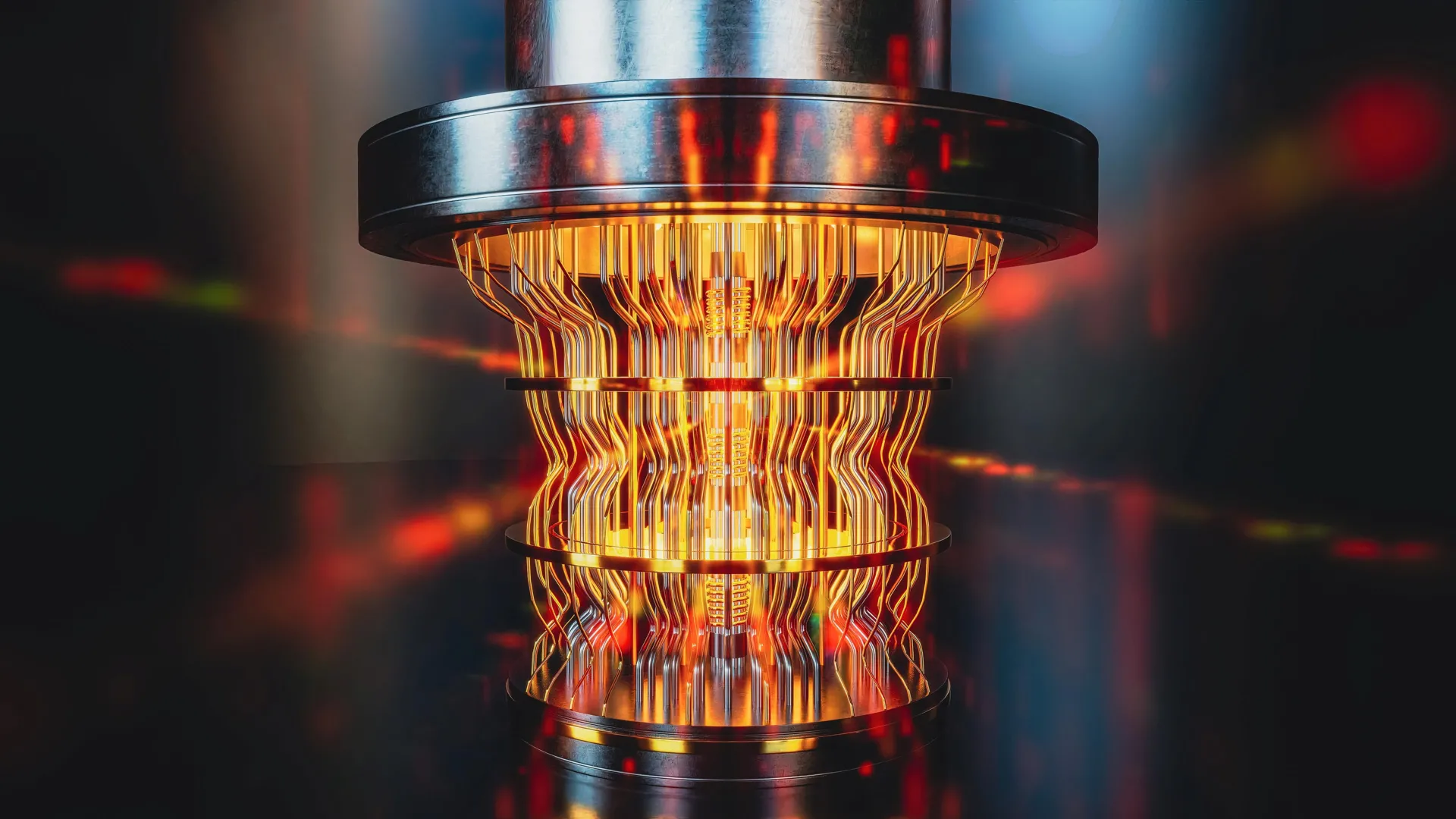
    Quantum computers remain highly vulnerable to errors and tiny disturbances from their surroundings. The longer a quantum operation takes to complete, the more time there is for those errors to build up. Researchers at Chalmers University of Technology in Sweden have now developed a method that can perform a broad range of advanced quantum operations more than a thousand times faster. The advance tackles a major obstacle in the field and could help move quantum computing closer to becoming fault-tolerant.

    Quantum computers could eventually transform areas such as drug discovery, energy technology, cryptography, artificial intelligence, and logistics. Before that can happen, however, these machines need to become much more dependable.

    Why Quantum Computers Are So Error-Prone

    A major challenge is that quantum computations can be disrupted by extremely small environmental effects. Electrical noise, cosmic radiation, and overheating can all introduce errors while information is being processed.

    Traditional computers can experience errors too, but decades of development have produced reliable error correction methods that can quickly detect and repair them. Quantum systems are much harder to protect because the information they use is extraordinarily delicate.

    “The fundamental building blocks of quantum computers, known as qubits, are so sensitive that even the smallest disturbance can cause the quantum state to deviate from the target, resulting in the loss of information. If too many errors accumulate before they can be corrected, the computation can fail,” says Lei Du, researcher in Applied Quantum Physics at Chalmers University of Technology in Sweden, and lead author of the theoretical study published in the journal Physical Review Letters.

    A Different Way to Protect Quantum Information

    To make quantum computing more resilient and eventually fault-tolerant, researchers are investigating new ways to shield quantum information from errors. One promising strategy uses so-called bosonic quantum codes*.

    Instead of assigning quantum information to individual qubits, this approach stores it in microwave fields inside superconducting circuits.

    “Rather than storing quantum information in individual qubits, bosonic codes encode information in the microwave fields found within superconducting circuits. This approach has been shown to provide stronger protection against certain types of errors,” explains Tangyou Huang, researcher in Quantum Technology at Chalmers and co-author of the study.

    Quantum Operations More Than 1,000 Times Faster

    Working with bosonic quantum codes is not simple. Creating and controlling the required quantum states has traditionally involved guiding a quantum system through thousands of repeated driving cycles.

    That process can take considerable time, and every additional cycle creates another opportunity for outside disturbances to interfere with the calculation. In quantum computing, speed is therefore closely tied to reliability.

    Chalmers researchers Lei Du and Tangyou Huang have now proposed a different strategy. Rather than constructing the desired quantum states one small piece at a time, their method can perform a wide variety of operations much faster.

    “Our method shows that a diverse range of quantum operations on bosonic states can be completed within a single driving cycle, rather than the several thousand cycles that have been required previously. This makes the operations both faster and more efficient, while reducing the risk that disturbances will corrupt the information before the process is finished. It represents an important step towards fault-tolerant quantum computers,” says Lei Du.

    Quantum Lattice Gates Provide a Shortcut

    The new approach is built around Quantum lattice gates, a recently proposed universal set of quantum gates developed by the same research team.

    These gates act somewhat like shortcuts. Instead of requiring a long sequence of repeated control steps, they can allow the intended quantum operation to be completed in just one driving cycle. That could make the process faster, simpler, and less vulnerable to errors.

    “You can think of it like building a large Lego castle. Instead of assembling it brick by brick and risking mistakes along the way, quantum lattice gates act like pre-built Lego modules that can be connected quickly and efficiently,” says Tangyou Huang.

    Designed for Superconducting Quantum Computers

    The technique is especially well suited to superconducting quantum computers, which are among the most prominent technologies being developed in the international push toward large-scale quantum computing.

    Chalmers University of Technology is also using superconducting technology as it develops a 100-qubit quantum computer.

    “A key advantage of our approach is that it can be implemented using existing superconducting quantum circuit platforms. We are already discussing possible experimental realizations with colleagues at Chalmers, and we hope to see a demonstration of the method in the near future,” says Tangyou Huang.

    The researchers say the work addresses a central problem facing the field: efficiently producing and controlling quantum states that are capable of helping correct errors.

    “Our results address one of the major bottlenecks in the field: how to quickly and reliably create and control the error-correcting quantum states that could play an important role in future quantum computers,” says Lei Du.

    More About Bosonic Codes, Quantum Lattice Gates and Floquet Control

    *Bosonic quantum codes store quantum information in the states of, for example, microwave or optical resonators rather than in individual qubits. They are considered a promising tool for quantum error correction because they can provide built-in protection against certain types of errors.

    Quantum operations are needed to process that stored information. Quantum lattice gates are a recently proposed collection of basic building blocks that can be used to control bosonic quantum states. By combining and designing these gates, researchers can carry out a wide range of more complicated quantum operations.

    One method for implementing these operations is known as Floquet control, which uses periodic control signals to drive a quantum system. Earlier Floquet-based techniques have generally depended on slower processes involving many repeated driving cycles. The approach developed at Chalmers can instead perform quantum lattice gates directly in a single driving cycle, making some operations more than a thousand times faster.

    More About the Research

    The scientific paper “Single-Period Floquet Control of Bosonic Codes with Quantum Lattice Gates” has been published in Physical Review Letters. The authors are Tangyou Huang, Lei Du, and Lingzhen Guo. The researchers are affiliated with Chalmers University of Technology in Sweden and Tianjin University in China.

    The research was funded by the National Natural Science Foundation of China (NSFC), the Wallenberg Centre for Quantum Technology (WACQT), and the Knut and Alice Wallenberg Foundation.
  • A “quantum bath” puts quantum entanglement on autopilot

    A “quantum bath” puts quantum entanglement on autopilot

    Future quantum computers may depend on the ability to connect widely separated modules through distributed entanglement. Until now, creating this kind of connection has generally required active control and repeated measurements. Physicists at the Institute of Science and Technology Austria (ISTA) have now demonstrated a fully autonomous alternative based on a “quantum bath” made from correlated particles of light.

    Published in Physical Review X, the experiment provides the first demonstration of a prediction proposed more than 20 years ago. The approach could eventually offer a new foundation for practical quantum technologies.

    Connecting Distant Quantum Bits

    Entanglement is one of the defining phenomena of quantum physics. It allows particles or systems to share correlations that cannot be explained by classical physics. Creating distributed entanglement between physically separated qubits (quantum bits) could be important for building larger quantum computers and future quantum networks.

    Previous attempts to entangle distant qubits have generally followed one of two strategies. One method sends a single, actively controlled photon from one qubit to another. Another has each qubit emit a photon, with the two photons then matched in an effort to generate entanglement.

    The second approach was recognized by the 2022 Nobel Prize in Physics. However, it still depends on repeated measurements and post-selection, and even then, the process does not always successfully produce entanglement.

    PhD student Alejandro Andrés-Juanes and professor Johannes Fink at the Institute of Science and Technology Austria (ISTA) worked with international collaborators to develop a different solution. Their system uses a quantum bath that automatically brings distant qubits into synchronization. In a prototype device, the researchers used a shared source of correlated light particles to entangle two separated qubits, experimentally realizing an idea that had remained theoretical for more than two decades.

    Fully Autonomous Quantum Entanglement

    Quantum entanglement can take several forms. Continuous-variable entangled states can be produced efficiently and are therefore relatively accessible. They can be compared with a pendulum, whose position and momentum change continuously.

    Many useful quantum technologies, however, depend on “discrete-variable” systems. These involve ‘all-or-nothing’ forms of entanglement that stationary qubits can use. The challenge for the ISTA team was finding a way to connect these readily available continuous forms of entanglement with the discrete forms needed for practical applications.

    “In this work, we aimed to overcome this mismatch between the readily available and the practically useful forms of entanglement,” says Andrés-Juanes. “By stabilizing the entangled states remotely, our approach is fully autonomous and requires no active control or measurement.”

    A Quantum Bath Powered by Correlated Light

    Maintaining both entanglement and quantum coherence is one of the major difficulties facing quantum computing.

    The researchers addressed that problem by making the qubits’ surrounding environment itself responsible for producing and stabilizing entanglement.

    “In our method, the quantum bath — meaning the qubits’ environment — is the source of entanglement. It creates a new ground state through a continuous stream of correlated photons,” says Fink. “This way, the entangled qubit state is stabilized, even beyond the qubits’ own ‘lifetime’, and remains always available as a resource for further quantum processing. This makes the approach conceptually significant.”

    Because the entangled state remains available, researchers can access it whenever it is needed. That differs from temporary entanglement, which has to be used during the brief period when it exists.

    Microwave Photons Keep Qubits Connected

    To couple the qubits with the entangled photon source, the researchers relied on microwave photons. These low-energy light particles are especially useful for manipulating quantum information and are already central to leading superconducting-qubit technology.

    Optical photons serve a different role and are commonly used in optics and atomic physics. They may also become important for carrying quantum information between distant quantum computers through fiber optics, an area that the Fink group at ISTA is also investigating.

    Measuring the Hidden Quantum State

    The researchers needed to confirm that the two qubits were actually synchronized inside the quantum bath. To do that, they used quantum tomography, a technique that reconstructs a quantum system by examining many different ‘slices’ of its behavior.

    “Qubits can be in a superposition of states, but all these states collapse when we measure them, leaving us with a 0 or 1 state,” says Andrés-Juanes.

    Quantum tomography allowed the researchers to perform measurements lasting only 20-80 nanoseconds and use those observations to investigate the qubits’ underlying states. A nanosecond is one billionth of a second.

    A 20-Year Prediction Becomes an Experiment

    By successfully entangling two isolated qubits through a quantum bath, the ISTA researchers created a proof-of-concept laboratory prototype for the long-standing theoretical proposal.

    “We present a relatively simple method that could be scaled up to synchronize multiple distant qubits,” says Andrés-Juanes.

    The new approach is promising, but it is not yet as efficient as methods that actively control qubit states. “Our method currently transfers about 10% of the bath’s available entanglement.”

    The researchers suggest that one reason the idea took more than two decades to demonstrate is that the original theory was developed under idealized conditions that are difficult to reproduce experimentally.

    “Our experiments helped us reveal several factors that may have prevented scientists from designing a functional quantum bath using a single source of correlated photons for distributed entanglement,” says Fink.

    The prototype developed at ISTA could provide new opportunities for quantum-optics experiments. It may also contribute to efforts to expand quantum processors and ultimately move them closer to fault-tolerant operation.

  • IBM quantum computer solves classically intractable problem in 15 minutes

    IBM quantum computer solves classically intractable problem in 15 minutes

    Scientists used a new error correction strategy to encode 70 logical qubits and tackle a problem considered classically intractable.

    The quantum computation was completed in about 15 minutes, while leading classical computing methods would require an impractical amount of time to perform the same task.

    IBM and researchers at the University of Chicago have announced a quantum computing demonstration that meets key criteria for quantum advantage. The experiment performed a calculation beyond the practical reach of leading classical simulation techniques while also providing evidence that the quantum computer produced a reliable result.

    In a new paper, “Sampling hard circuits with verifiably high fidelity,” the researchers describe how they achieved both goals using a newly designed form of encoded quantum circuit. The work represents one of the largest demonstrations of logical quantum computing reported so far.

    The circuits and experimental results have also been made publicly available through the Quantum Advantage Tracker.

    Why Quantum Results Are So Difficult to Verify

    Researchers have long used a benchmark called random circuit sampling (RCS) to explore whether quantum computers can outperform conventional machines.

    In simplified terms, RCS challenges a quantum computer to generate patterns that become so complicated that a classical computer cannot efficiently reproduce them. That makes the benchmark useful for testing the limits of classical simulation.

    But it also creates a major problem. Once the quantum calculation becomes too difficult for a classical computer to reproduce, verifying that the quantum machine actually produced the correct result becomes increasingly difficult as well. Eventually, checking the answer can itself become infeasible unless researchers make strong assumptions about how the quantum computer behaves internally.

    The IBM and University of Chicago team approached this verification problem by developing a more structured alternative to RCS.

    The researchers showed that their method preserves the same computational hardness criteria associated with RCS, meaning the problem remains extremely difficult for classical computers. At the same time, the added structure allows errors to be detected during the quantum computation.

    “Verification remains one of the biggest challenges in firmly establishing experimental quantum advantage,” said Bill Fefferman, Associate Professor at the University of Chicago. “This experiment develops techniques to better characterize the fidelity of hard quantum states under noise, increasing confidence that the quantum computer is solving a computationally hard problem.”

    Soumik Ghosh, PhD student in Fefferman’s group at the University of Chicago, added, “Beyond strengthening experimental validation, advances in verification have the potential to unlock practical applications for the next generation of quantum computers.”

    70 Logical Qubits With Lower Error Rates

    The experiment also included one of the world’s largest-known demonstrations of quantum error correction.

    The researchers operated 70 logical qubits. Unlike individual physical qubits, logical qubits are encoded in a way that helps protect quantum information from errors and noise.

    Using those logical qubits, the team carried out 2,415 logical two-qubit operations and 468 logical “T gates,” two measures that reflect the complexity of the quantum circuit.

    The encoded design significantly improved reliability. Effective logical error rates were 10 times lower than the underlying physical error rates, allowing the circuit to maintain unusually high fidelity even while performing a large number of quantum operations.

    IBM Says Quantum Advantage Has Entered a New Stage

    “We are now firmly in the quantum advantage era,” said Jay Gambetta, Director of IBM Research and IBM Fellow. “We have demonstrated a quantum computation beyond the practical reach of classical computers that establishes, with statistical confidence, a lower bound on how faithfully it was executed. This milestone gives scientists, developers, and businesses a new foundation for trusting quantum computers as they scale to problems far beyond what we can achieve classically.”

    The researchers found that many leading classical simulation methods would face prohibitive runtimes when attempting the same task.

    The IBM quantum computer, by comparison, completed the computation in approximately 15 minutes.

    A Step Toward Larger, More Trustworthy Quantum Computers

    Speed alone is not enough for quantum computing to become useful at larger scales. Researchers also need ways to suppress errors and establish confidence that a quantum system produced a valid result.

    This experiment advances both goals at once by combining large-scale logical quantum computing with a method for evaluating the reliability of a calculation that is already beyond practical classical simulation.

    Error correction and trustworthy verification are considered essential for scaling quantum computers toward more difficult problems, making the new demonstration an important step toward that goal.

  • NASA just used satellites and debris to navigate without GPS

    NASA just used satellites and debris to navigate without GPS

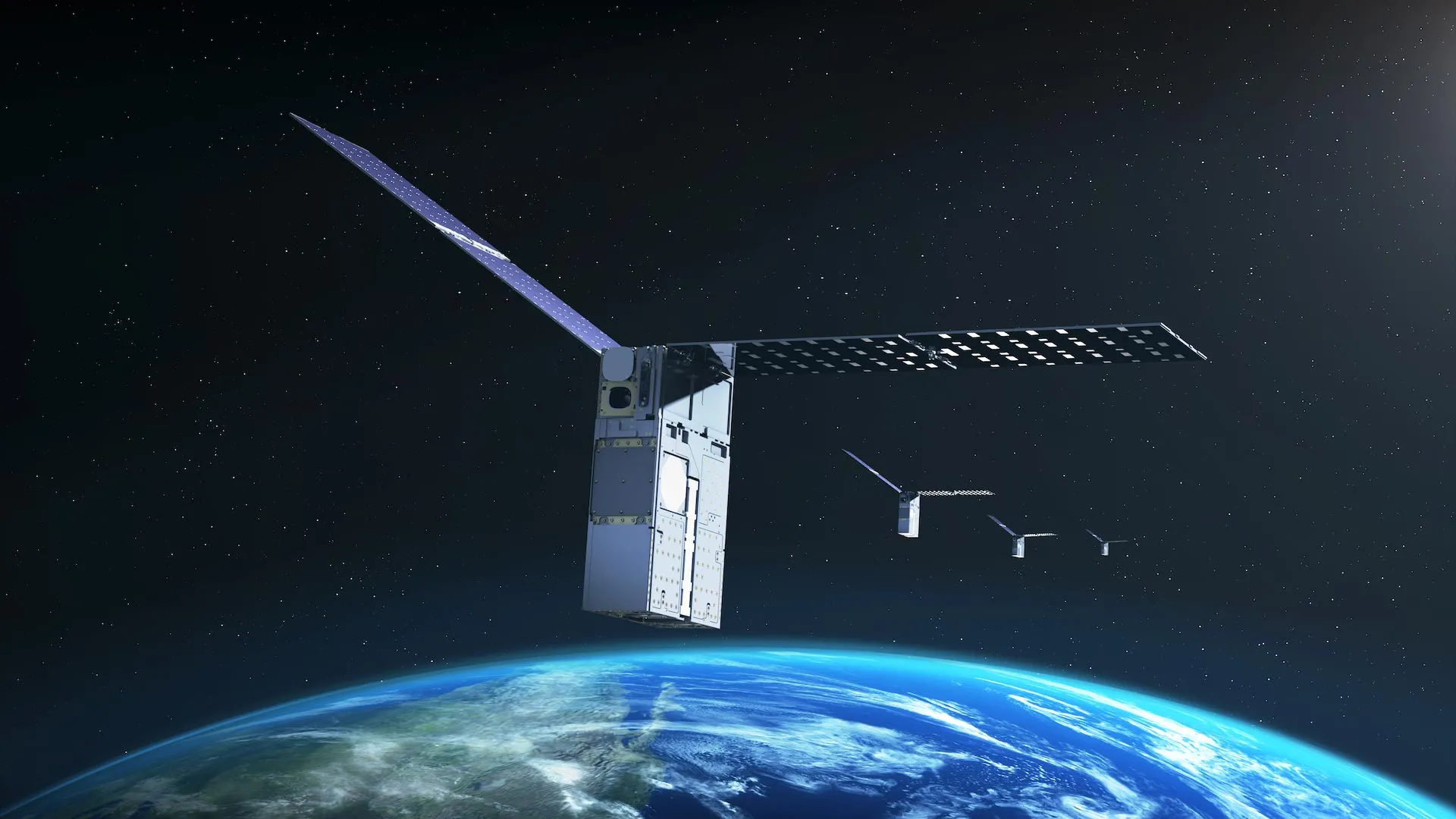
    NASA’s Starling mission has reached another milestone in autonomous spaceflight by demonstrating a system that can determine a satellite’s orbital position using other objects in space as reference points rather than depending on an external navigation network.

    The technology, called FALCON (Fast Autonomous Lost-in-space Catalog-based Optical Navigation), is designed to help spacecraft operate with greater independence. Such capabilities could become increasingly important as NASA pursues missions farther from Earth, including lunar satellite swarms, distributed science missions, and future human exploration.

    Navigating Space Without GPS

    Satellites near Earth commonly rely on GPS for navigation, but those signals may be weak, unreliable, or unavailable around the Moon and in deep space. FALCON offers an alternative by allowing spacecraft to determine where they are using what they can observe around them.

    The FALCON payload is a joint flight experiment developed by NASA and EraDrive, a startup that emerged from Stanford University. The system combines EraDrive’s Era-Core flight software and embedded algorithms with Starling’s cameras and an onboard catalog of known satellites. Together, these tools enable GPS-independent navigation while also helping the spacecraft track activity and objects in its surroundings.

    “FALCON is yet another success for the Starling demonstration mission. The results from FALCON can have far-reaching implications for on-orbit space-traffic monitoring, collision avoidance, and alternative navigation,” said Roger Hunter, program manager for NASA’s Small Spacecraft and Distributed Systems program at NASA’s Ames Research Center in California’s Silicon Valley. “The number of ‘firsts’ from Starling just keeps growing.”

    Using Satellites and Debris as Reference Points

    The FALCON demonstration evaluated two related capabilities using Starling’s onboard star tracker cameras. These cameras are standard spacecraft instruments that detect bright objects in space and help determine a spacecraft’s orientation and position.

    During position, navigation, and timing experiments, FALCON identified objects seen by Starling’s cameras, including other spacecraft and orbital debris, and compared them with a publicly available catalog of known space objects maintained by the U.S. Department of War. Once the observed objects were identified and verified, FALCON used them as reference points to calculate Starling’s orbit.

    A separate set of experiments tested whether the spacecraft could improve orbital estimates for the objects it observed. Mission controllers loaded a catalog containing approximately 20,000 space objects and their predicted orbits onto Starling.

    FALCON then compared the catalog information with observations gathered by Starling’s cameras. Using those measurements, it calculated Starling’s position while also refining the estimated locations of other objects in space. The resulting estimates were even more precise than the existing catalog data.

    Over a period of three days, FALCON improved the known orbits of more than 200 objects without any intervention from operators on the ground.

    A First for Autonomous Optical Navigation

    FALCON’s ability to determine its own orbit represents a first for a spacecraft navigating with optical cameras based on its position relative to other objects in space. In separate catalog updating tests, Starling also generated better onboard predictions of object positions than those supplied by ground stations.

    These abilities could be especially valuable for future networks of satellites operating without GPS. Coordinated satellite systems may play an important role in supporting human activities on the surfaces of the Moon or Mars.

    Precise spacecraft positioning is also essential for distributed science missions, where measurements collected from several locations in space must be accurately aligned. For space traffic management, autonomous navigation and onboard catalog updates could reduce dependence on ground-based tracking networks while improving collision avoidance.

    From University Research to Commercial Technology

    The FALCON experiment also demonstrates NASA’s role in helping university research develop into commercial technology. The work began as a University SmallSat Technology Partnerships project before developing into EraDrive, which is now commercializing its Era-Core software and related hardware for wider use.

    Starling gave the technology an opportunity to be tested under real conditions in orbit, demonstrating how advanced flight software can allow satellites to function as increasingly autonomous navigators.

    Later this year, Starling, which launched in 2023, will expand the FALCON experiment using Era-Core. The mission’s four spacecraft will share tracking information with one another and use those combined observations to refine their positions collectively.

    NASA’s Ames Research Center in California’s Silicon Valley leads the Starling mission. NASA’s Small Spacecraft and Distributed Systems program, based at Ames and within the Research and Technology Mission Directorate, funds and manages the Starling mission.

  • A hidden “on switch” in human DNA has finally been decoded

    A hidden “on switch” in human DNA has finally been decoded

    Healthy growth and development depend on tens of thousands of genes being switched on at the right time and in the right place. Specific regions of DNA help coordinate this process, guiding the production of enzymes, hormones, proteins, and other molecules that cells need to function properly. When gene activation goes wrong, cells can malfunction and contribute to diseases, including cancer.

    To better understand the DNA sequences that control this process, researchers in the laboratory of University of California San Diego Professor James T. Kadonaga focused on an important DNA element known as the “initiator.” The initiator marks the location where the information encoded in a gene begins to be converted, or expressed, into a functional product.

    AI Decodes the Initiator Sequence

    In the new study, led by graduate student researcher Torrey Rhyne-Carrigg, the team used high-throughput DNA sequencing to measure gene expression activity across approximately 500,000 different versions of the initiator.

    The researchers then used those results to train a machine learning system, a form of artificial intelligence, to identify the characteristic DNA pattern associated with the initiator. Once the model had decoded that signature, the team searched human genes for the sequence and found that roughly 60% contain the initiator.

    “These AI models were found to provide, for the first time, strong predictions of the presence or absence of the initiator in human genes, and were thus able to decode the DNA base sequence pattern of the initiator,” said Kadonaga, a professor in the UC San Diego Department of Molecular Biology, School of Biological Sciences.

    Predicting the Effects of DNA Mutations

    The findings could help researchers anticipate how mutations affecting the initiator may alter gene activity and contribute to a range of disorders. The study’s data and AI models may also support the design of synthetic promoters, sequences that can switch genes on or off, with functions tailored for specific purposes.

    More broadly, the research shows how laboratory experiments and artificial intelligence can be combined to uncover information encoded in human DNA.

    “More globally, this work is a step forward in the combined use of laboratory experiments and AI to decipher the information that is embedded in the sequence of the DNA bases in humans,” said Kadonaga. “Ultimately, within the six billion bases of DNA in each of our cells, there is a gene expression code that specifies when, where and to what extent each of our genes should be turned on or off. If we had an AI model for the entire gene expression code, we would be able to predict the activity of each of the different variants of genes in different people. The new AI model for the initiator is a small but important part of this gene expression code, and I am optimistic that we will expand our AI models of the human gene expression code in the not-too-distant future.”

  • Tiny robots powered by light can hunt down and collect bacteria

    Tiny robots powered by light can hunt down and collect bacteria

    Robots small enough to operate in the microbial world could give scientists a new way to directly handle objects that are impossible to manipulate by hand. These tiny machines are around 50 times smaller than the diameter of a human hair, bringing researchers closer to the long-pursued goal of interacting directly with the microscopic world.

    That capability could be especially useful for biological materials in water, including individual cells and bacteria. Precisely controlling and moving objects at this scale has been a persistent challenge. The newly developed nanorobots show that it is already possible to collect bacteria, transport them, and release them at selected locations.

    Light Powers and Steers the Tiny Robots

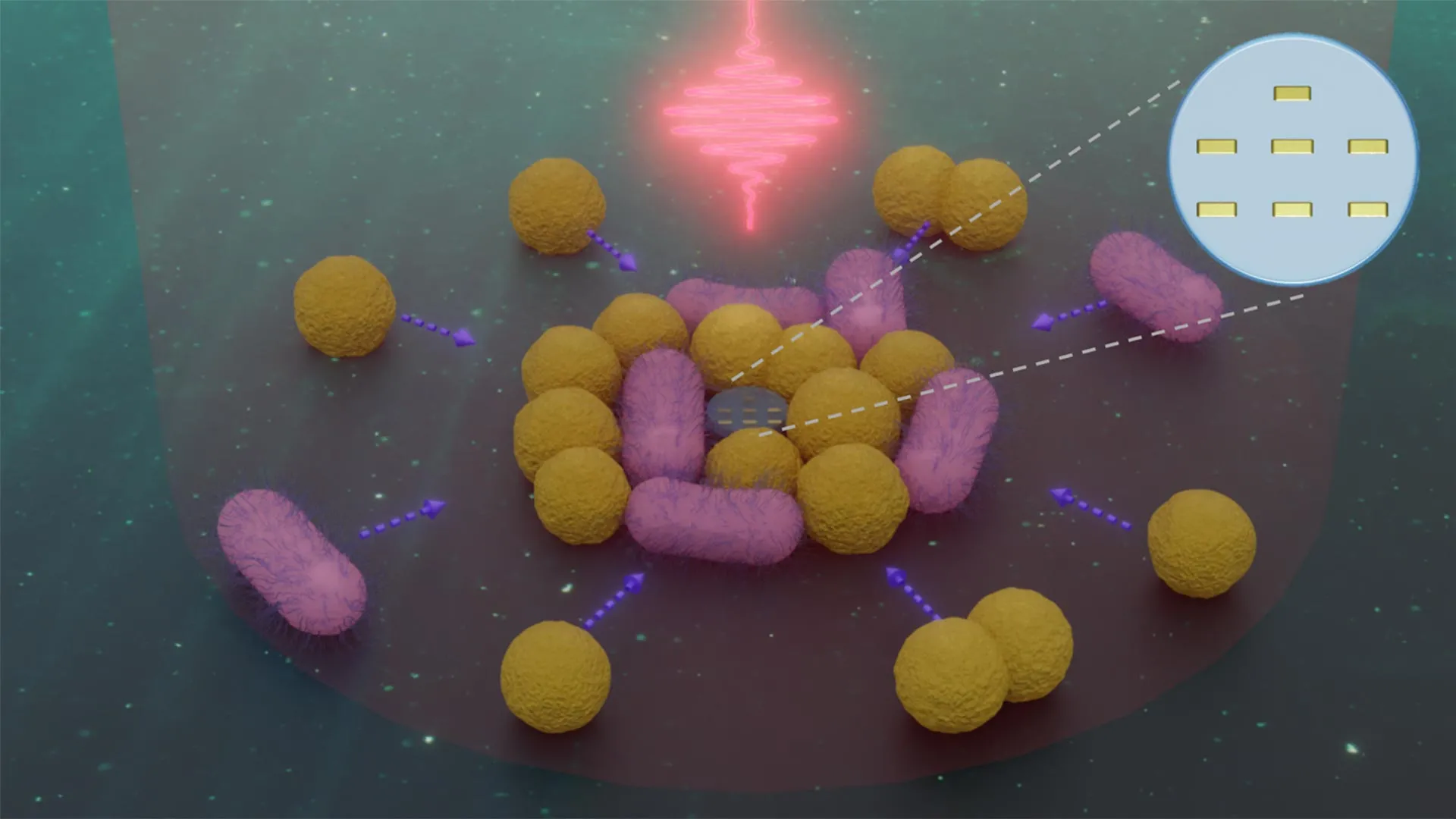
    One of the biggest obstacles in developing machines this small is finding an effective way to propel and control them. At Julius-Maximilians-Universität Würzburg (JMU), a research team led by Professor Bert Hecht has been developing a solution that uses the recoil produced by individual photons to move microscopic devices known as microdrones.

    The devices contain as many as four plasmonic nanoantennas. These antennas absorb light with a particular color and helicity, then emit that light in a specific direction. Redirecting each photon creates a tiny recoil force, similar in principle to the recoil produced when a bullet is fired. Because the microdrones have so little mass, those extremely small forces can generate substantial acceleration and speed.

    For the latest work, the researchers reduced the size of their light-powered robots even further, producing devices smaller than one micrometer. Simplifying the steering system was an important part of achieving that size while retaining propulsion based on photon recoil.

    The new control method takes advantage of nanoscale antenna wires built into the robot. These wires naturally tend to align with the polarization direction of incoming light. By changing the light’s polarization, the researchers can control which direction the nanorobot faces. At the same time, photon recoil continues to propel it forward, creating a steering system that works somewhat like the directional control used in larger vehicles.

    Nanorobots Act as “Microscopic Cleaners”

    “In essence, we have built a light-driven nanorobot that can track down and collect bacteria,” says Jin Qin, lead experimental scientist of the study. “By simplifying the design, we reached a size at which these robots can operate directly in the microbial world – almost like microscopic cleaning devices.”

    The robots are also highly maneuverable. They can make extremely fast 90° turns, helping them scan broad areas of a sample in an organized and efficient way. They can also selectively capture, carry, and release substantial numbers of bacteria.

    Under controlled laboratory conditions, this means the nanorobots can effectively “clean” microscopic environments. They gather bacteria from one area and deposit them at specifically chosen locations.

    “This is a striking example of how light can be used not only to observe the microscopic world, but also to actively shape it,” adds Bert Hecht. “The idea of tiny robotic cleaners may sound futuristic, but we are already demonstrating the physical principles that make it possible.”

    The robots remain fully maneuverable even while carrying larger groups of bacteria, although their speed decreases somewhat under the added load. That ability to keep functioning while transporting larger bacterial clusters points to possible future uses in microbiology, biomedical research, and precise manipulation of materials at the microscopic scale.

  • Scientists turn DNA into a memory device that uses 100x less power

    Scientists turn DNA into a memory device that uses 100x less power

    DNA serves as the genetic blueprint for every living organism, but it is also an extraordinarily dense way to store information. A single gram can hold about 215 million gigabytes of data. Bringing that remarkable storage capacity into electronics could lead to more efficient data centers, faster processing and systems capable of handling increasingly complex information.

    The challenge has been finding a way to make biological DNA function effectively alongside electronic materials. Penn State researchers have now developed an approach designed to overcome that incompatibility.

    The work, published in Advanced Functional Materials and the subject of a patent application, relies on two key components. One is synthetic DNA, made from commercially available, chemically engineered molecules arranged into short genetic sequences tailored for specific electronic requirements. The other is crystalline perovskite, a semiconductor already used in technologies including solar cells, lasers and data storage devices.

    “Biology and electronics are different domains,” said Kavya S. Keremane, co-corresponding author and postdoctoral researcher in materials science and engineering at Penn State. “Bridging these two fields required developing an entirely new materials platform that allows them to function seamlessly together. By combining the information storage capabilities of DNA with the exceptional electronic properties of perovskite semiconductors, we created a bio-hybrid system that fundamentally changes how low-power memory devices can be designed.”

    Building a Low Power Memory Device

    Using these materials, the team created a memory resistor, known as a “memristor,” that operates with very little energy. Unlike ordinary resistors, which maintain a set resistance to electrical current in devices ranging from cell phones to space shuttles and lose their stored information when power disappears, memristors can preserve a record of previous electrical activity. They can remember the direction in which current previously flowed even after the power source is removed.

    That ability allows information to be stored and processed in the same place, resembling the way neurons function in the brain. Such an arrangement could support more simultaneous and sophisticated forms of data processing. According to the researchers, however, practical commercial systems would still require enough storage capacity and electrical power to become costly and inefficient without DNA’s ability to pack enormous amounts of information into a very small space while consuming little energy.

    “As the demand for artificial intelligence (AI) grows, we need a new strategy for low-power, high-storage devices,” said Bed Poudel, co-corresponding author and research professor of materials science and engineering at Penn State.

    Poudel said AI and other emerging technologies are expected to depend increasingly on neuromorphic computing, which is designed to operate more like the human brain. Such systems can evaluate multiple inputs at once while making decisions informed by previous experiences and future priorities.

    “Usually, it takes more power to store more information. Our device, however, consumes 100 times less power and the storage capacity is higher than traditional storage devices, like flash drives.”

    Engineering DNA to Conduct Electricity

    To construct the device, the researchers added silver nanoparticles to a layer of customized DNA sequences — specially designed to be of certain compositions and lengths — that was integrated with thin films of perovskite.

    This technique, called “doping,” involves introducing a small amount of another material to produce specific properties. In this case, adding the silver nanoparticles allowed the DNA to conduct electricity while also helping its molecular units line up in a more orderly arrangement.

    Synthetic DNA offered another important advantage over natural DNA. Unlike natural DNA — long, entangled strands that behave like wet spaghetti when handled — short and rigid pieces of synthetic DNA can be arranged with much greater precision at extremely small scales.

    According to co-author Neela H. Yennawar, research professor and director of the Penn State Huck Institutes of the Life Sciences’ Biomolecular Interactions Core Facility, molecularly engineered DNA can provide structural organization, adjustable electrical conductivity and functional control that natural DNA cannot achieve when incorporated into thin films.

    “We can computationally determine exactly which sequences we need and how long they should be, and then we can rationally design them with synthetic DNA,” Yennawar said. “These structures can be systematically doped with silver and other ions and engineered to interface seamlessly with perovskites — transforming DNA from a biological macromolecule into a programmable, multifunctional nanomaterials platform.”

    DNA and Perovskite Work Better Together

    When combined, the silver-doped DNA and perovskite formed bio-hybrid pathways that directed the flow of electrical current through the device.

    The researchers found that electrons moved reliably when they applied less than 0.1 volt — for comparison, standard U.S. outlets have 120 volts — and the device responded predictably when the direction of the current was changed.

    The carefully designed DNA structures, combined with the perovskite, also helped make the device unusually stable. According to the team, it continued operating consistently at temperatures approaching 250 degrees Fahrenheit and remained functional at room temperature for more than six weeks, substantially exceeding the performance standards of existing perovskite-based memory storage devices.

    The researchers also reported that the new system could perform the same memory function as comparable technologies while consuming only one-tenth as much power. That level of efficiency could make the approach especially attractive for future electronics designed to handle large amounts of information with lower energy demands.

    “Using just the DNA or just perovskite alone did not produce near as robust a result as the combination,” Keremane said. “It’s this combination that enables a very high memory storage density that requires very little power.”

    A New Direction for Bio-Inspired Electronics

    The team now plans to improve the technology further and explore additional uses for bio-inspired electronic systems.

    “Nature has the solution — we just have to find it and apply it,” Poudel said. “This work of integrating DNA into electronics to do amazing things gives a glimpse into what is possible.”

    In addition to Keremane, Yennawar and Poudel, other Penn State co-authors include co-corresponding author Luyao Zheng, postdoctoral research in materials science and engineering; Haodong Wu, doctoral student in materials science and engineering; Jiamao Zheng, who was a master’s student in materials science and engineering at the time of research and has since graduated from Penn State; Shashank Priya, who was a professor of materials science and engineering at the time of research; and Chiranth C. Ravi, who was a master’s student in the Huck Institutes of the Life Sciences at the time of research and has since graduated from Penn State. Abhinav Gorthy and co-corresponding author Rashmi Jha, chemical engineering and materials science, University of Minnesota, also contributed.

    The U.S. National Science Foundation, the National Institutes of Health, Penn State and the University of Minnesota supported this research.

  • Scientists tracked kids for 8 years — the screen time result was unexpected

    Scientists tracked kids for 8 years — the screen time result was unexpected

    A Finnish study has found an unexpected association between screen use and cognitive performance. Children who accumulated more screen time as they grew up tended to show better cognitive processing during adolescence. One of the researchers cautions against viewing screen time as entirely harmful and says the goal should be to balance physical activity with screen use that encourages active thinking.

    Low levels of physical activity among adolescents remain a significant public health concern. Sedentary behavior has been associated with poorer academic achievement, while physical activity is known to support brain function, particularly in adults. Much less is known, however, about how physical activity and sedentary behavior during childhood and adolescence relate to cognitive processing later in adolescence.

    These years are especially important because the brain is still developing. Factors that shape cognitive abilities during childhood and adolescence may have lasting effects that extend into adulthood, potentially influencing education and working life.

    Researchers examined how physical activity, sedentary behavior, and screen time from childhood through adolescence were related to cognitive processing in the teenage years. They also looked for differences between girls and boys and investigated whether the intensity of physical activity played a role.

    More Screen Time Linked to Better Cognitive Processing

    The results showed that greater screen time beginning in childhood was associated with better cognitive processing in adolescence.

    “The findings suggest that screen time can support children’s and adolescents’ cognitive processing. Presumably, the essential point here is what kind of things they do in their screen time. Teachers and parents should encourage children to use devices and screens in such ways that promote active thinking, problem-solving, creativity and learning,” states Doctoral Researcher Petri Jalanko from the University of Jyväskylä.

    The findings suggest that the type of screen activity may be important. Digital activities that involve learning, creativity, problem-solving, or other forms of active mental engagement could potentially help explain the association observed in the study.

    “We should not regard screen time solely as harmful but seek balance between physical activity and screen time that promotes active thinking,” Jalanko summarizes.

    Physical Activity Showed Different Links in Girls and Boys

    The relationship between physical activity and cognition was more complicated.

    Among girls, greater amounts of light intensity physical activity since childhood were associated with better working memory during adolescence. Among boys, greater participation in guided physical activity from childhood through adolescence was linked to better working memory.

    The researchers also found an unexpected pattern involving unsupervised exercise. Lower levels of self-reported unsupervised physical activity were associated with better cognitive processing in adolescence.

    By contrast, physical activity and sedentary time measured using a device that tracked heart rate and movement were not associated with cognitive processing. One possible explanation is that these sensors can measure movement and physiological activity but cannot determine exactly what a person is doing during periods of activity or inactivity.

    “Our study indicates that the connections of physical activity and sedentary behavior to cognitive processing are complex and depend on the sex, the type and assessment method of physical activity and sedentary time. Moreover, boys and girls may benefit from different types of physical activity in view of brain health,” Jalanko adds.

    More Research Is Needed to Determine Cause and Effect

    The researchers emphasize that the findings show associations rather than proving that screen time or particular types of physical activity directly cause changes in cognitive performance.

    “However, we need more intervention studies to find out causal relations and sex differences in this respect. Moreover, it is important to examine more specifically the effects of the intensity of physical activity on changes taking place in cognitive processing.”

    The results come from an eight-year follow-up of the PANIC study on children’s physical activity and nutrition. The current analysis included 124 girls and 136 boys with an average age of 15.8 years.

    Researchers measured physical activity and sedentary behavior using both survey questionnaires and a device that combined heart rate and movement measurements. Learning, attention, and working memory were evaluated using the CogState test battery.

    The research was published in the journal Pediatric Exercise Science.

  • World’s first superconducting quantum heat engine could help unlock massive quantum computers

    World’s first superconducting quantum heat engine could help unlock massive quantum computers

    A newly developed superconducting quantum heat engine could deepen our understanding of thermodynamics while helping advance technologies needed for quantum computers with very large numbers of qubits.

    Scientists are getting a clearer picture of how thermodynamics behaves in the quantum world, and that progress could benefit both quantum technology and our understanding of familiar thermodynamic principles. Researchers at Aalto University have now taken an important step by demonstrating the first cyclic quantum heat engine built inside a superconducting circuit.

    The experiment connects two areas of physics that normally describe very different scales. Quantum mechanics explains the behavior of matter at extremely small scales, even below the size of atoms, while thermodynamics describes how heat and energy behave in much larger systems, from collections of molecules to the universe itself. Bringing the two together raises a fundamental question: what happens to familiar thermodynamic processes when quantum effects such as tunneling, entanglement, and superposition enter the picture?

    A Heat Engine Built for the Quantum World

    Conventional heat engines turn heat into useful work. James Watt’s steam engine is one famous example, but the same basic concept remains central to modern transportation and electricity production, powering cars, ships, planes and many power plants.

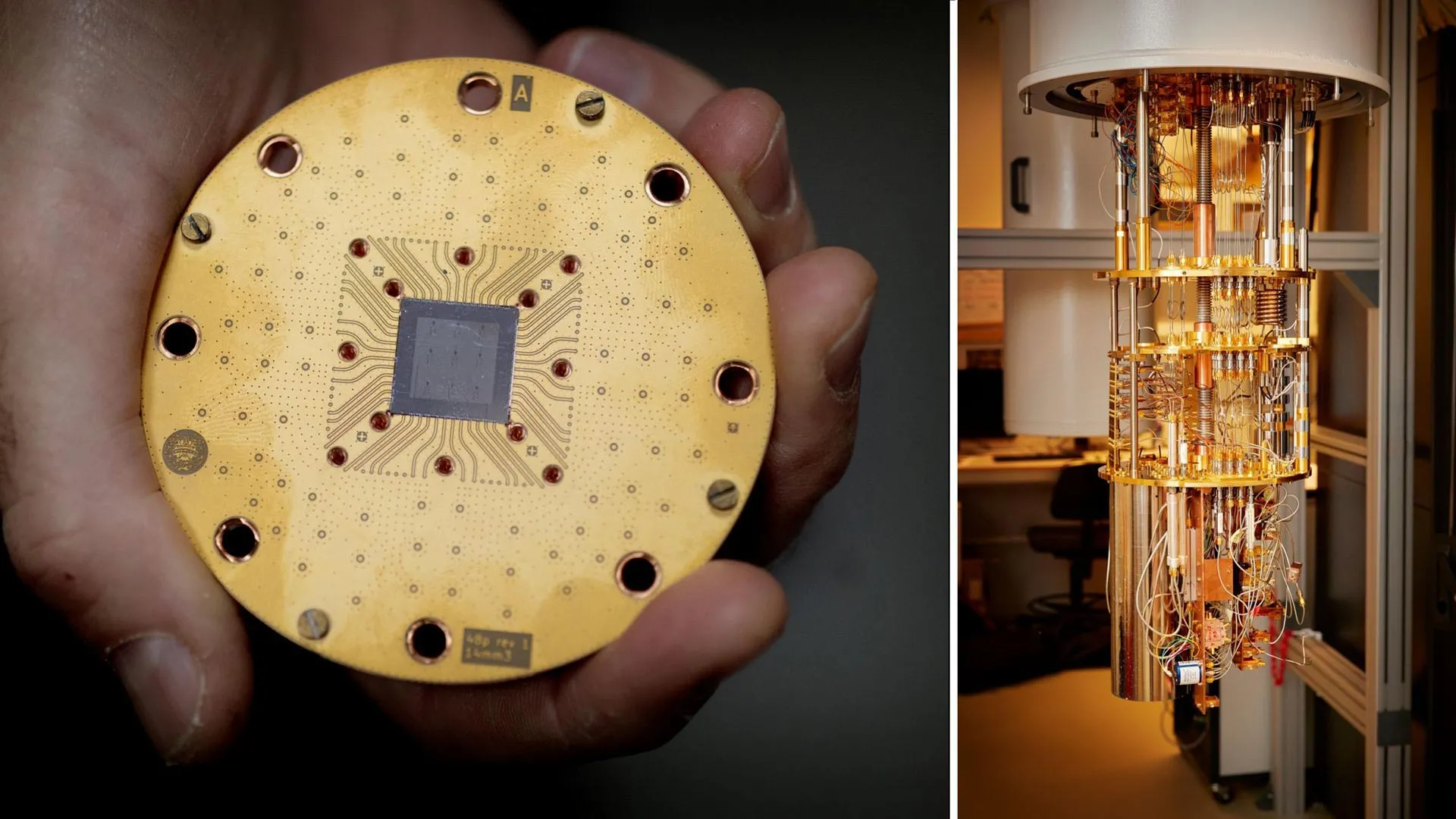
    The researchers have now created the world’s first superconducting quantum heat engine. The extremely small device combines a transmon qubit, a resonator and a quantum refrigerator.

    Operating under ultracold quantum conditions, the engine was able to use the tiny amount of available heat to repeatedly produce positive work. Achieving this kind of cyclic operation has been an important objective for researchers working on quantum heat engines. The result provides a proof of concept for superconducting heat engines that could eventually contribute to improved quantum computing technology.

    The study, led by Academy Professor Mikko Möttönen, was published in Nature Communications.

    Recreating an Otto Cycle Near Absolute Zero

    To make the engine operate, the researchers reproduced an Otto cycle inside a superconducting circuit. The Otto cycle is a thermodynamic process also used in car engines and other conventional machines.

    “In our experiment, we built a nanofabricated heat engine using superconducting circuits and operated it in a cryostat near absolute zero. At its heart is a transmon qubit, one of the basic building blocks of modern quantum technologies,” says Tuomas Uusnäkki, the study’s first author.

    The researchers connected the transmon qubit to a quantum circuit refrigerator, allowing them to control heat flow on the quantum scale and demonstrate that this heat could be transformed into measurable work. A conventional heat engine normally relies on separate hot and cold environments. In this system, however, the same quantum refrigerator can supply both heating and cooling.

    “Our quantum-circuit refrigerator can be tuned to both heat and cool the qubit on demand. Using carefully timed control pulses, we drove the engine in an Otto cycle and monitored the qubit state as the engine ran,” explains Uusnäkki.

    Measurements showed that heat passing through the qubit during the cycle was producing positive work.

    “This is the first experimental demonstration of a cyclic quantum heat engine in superconducting circuits. Using a single controllable quantum refrigerator as both the hot and cold environment of the engine makes it simpler and more versatile,” says Uusnäkki.

    Toward Autonomous Quantum Computer Hardware

    The researchers are now trying to improve the design and eventually develop a fully autonomous heat engine. One possible use would be reading out qubits without having to carry a microwave pulse from millikelvin temperatures all the way to room temperature.

    That capability could become especially valuable as quantum computers grow. Autonomous devices integrated directly into superconducting circuits could reduce both the cost and complexity of machines containing very large numbers of qubits.

    “Finland’s Quantum Technology Strategy envisions a quantum computer with one thousand logical qubits by 2035, which probably means hundreds of thousands of physical qubits. Doing that with current technology requires millions of microwave cables costing thousand euros each. The cables also introduce noise into the system. Using autonomous devices instead would mostly eliminate the need for those cables,” Möttönen says.

    Reducing the need for those microwave connections could therefore address two challenges at once: the enormous hardware requirements of large quantum computers and the unwanted noise that cables can introduce into quantum systems.

    The pioneering experiment was carried out using OtaNano, Finland’s national research infrastructure for nano, micro and quantum technology. Funding came from the Research Council of Finland and the Finnish Cultural Foundation.

  • MIT’s new lidar chip could give self-driving cars a wider view

    MIT’s new lidar chip could give self-driving cars a wider view

    Lidar technology uses pulses of infrared light to calculate distances and create detailed 3D maps of the surrounding environment. This allows autonomous vehicles to detect objects in their path and respond quickly. However, conventional lidar sensors are often large and costly, and many rely on moving components that can wear out over time. These limitations make the systems difficult to use in a wider range of settings.

    MIT researchers have now developed an approach that could lead to smaller, more durable lidar sensors that operate without any moving parts. Their advance centers on a new silicon-photonics chip, a type of semiconductor device that controls light instead of electrical signals.

    Existing lidar systems built with silicon-photonics chips usually have a narrow field of view. As a result, they struggle to scan areas located toward the edges of a scene. Previous attempts to expand this viewing range have often introduced extra noise and reduced measurement accuracy.

    The MIT team addressed those problems by creating an array of integrated antennas that greatly limits unwanted crosstalk, which occurs when neighboring antennas interfere with one another. The design allows the chip to scan across a broader field of view while producing less noise than other silicon-photonics-based methods.

    A Smaller Lidar System With a Wider View

    The advance could support the development of more capable lidar sensors for challenging uses, including autonomous vehicle navigation, aerial mapping, and the monitoring of construction sites.

    “The functionality we demonstrated in this work solves a fundamental problem for integrated optical-phased-array technology, enabling future lidar sensors that can achieve significantly higher performance than we could demonstrate previously,” says Jelena Notaros, the Robert J. Shillman Career Development Associate Professor of Electrical Engineering and Computer Science (EECS) at MIT, a member of the Research Laboratory of Electronics, and senior author of a paper on this innovation.

    The study also includes lead author and EECS graduate student Henry Crawford-Eng, along with EECS graduate students Andres Garcia Coleto, Benjamin M. Mazur, Daniel M. DeSantis, and Tal Sneh. The findings were published recently in Nature Communications.

    How Lidar Maps Its Surroundings

    Many traditional lidar systems use a large rotating unit to direct light pulses across a scene. When the light strikes nearby objects, it reflects back toward the sensor. The returning signals provide the information needed to reconstruct a detailed map of the environment.

    Silicon-photonics-based lidar works differently. Rather than rotating a mechanical device, it scans a beam of light electronically in several directions with a system known as an integrated optical phased array (OPA).

    At the heart of an OPA is a group of integrated antennas. Each antenna contains tiny, regularly spaced variations along its length. These features, known as corrugations, cause light from an input source to scatter upward and out of the photonic chip.

    Researchers can control the direction of the outgoing beam by changing the phase of the light sent to each antenna. Adjusting these phases changes the angle at which the array releases light, making it possible to steer the beam without moving any physical components.

    The Antenna Spacing Problem

    Placing the antennas close together creates a serious obstacle. Neighboring antennas can couple with one another, scrambling the light they produce. Engineers have traditionally prevented this interference by increasing the distance between antennas, but wider spacing creates a different set of problems.

    When antennas are too far apart, the array produces several copies of the same beam at different angles. The primary beam can only be moved a limited distance before it becomes difficult to distinguish from these additional copies.

    “This limits our field of view, so the autonomous vehicle now only knows what is in front of it for a certain angular range,” Garcia Coleto explains.

    The unwanted beam copies, called grating lobes, can confuse the sensor and generate false detections. They also consume energy that could otherwise be directed into the main beam.

    To overcome this tradeoff, the MIT researchers developed antennas with reduced crosstalk that can be positioned close together without strongly coupling.

    Three Antenna Shapes Reduce Interference

    In a conventional OPA, every antenna has an identical structure and uses the same pattern of corrugations. When these matching antennas are placed close together, they interact very strongly.

    The MIT team instead created a repeating set of three antennas with distinct shapes. They changed the width of the antennas as well as the size and placement of the corrugations. Because the antennas have different geometries, each one also has a different propagation coefficient, which describes how light moves through the structure.

    “Because the antennas have very different propagation coefficients, when we put them close together, essentially each antenna doesn’t ‘see’ the antenna next to it. Therefore, it won’t couple with its neighbor,” Garcia Coleto says.

    Making Different Antennas Behave the Same Way

    Reducing the coupling was only part of the challenge. Although the antennas needed different propagation coefficients, they still had to release light in the same consistent manner.

    The team designed the antennas around three essential requirements.

    Each antenna had to emit the same amount of light. Every antenna also needed to release its beam at the same angle when receiving the same wavelength. Finally, the angle of emission had to change evenly across the entire array as the beam was steered.

    “We have this challenge where we require the antennas to have different geometries to reduce the crosstalk, but we need to simultaneously design the antennas to have the same emission characteristics. While it is possible to engineer this, it is extremely difficult because, typically, when antennas are designed with different geometries, they tend to behave differently,” Crawford-Eng says.

    The researchers began by developing the basic electromagnetic theory describing how radiative modes couple. They then used this theoretical framework to guide the design and computer simulation of the antennas.

    Based on those calculations, the team manufactured an OPA containing the reduced-crosstalk antennas. The antennas were placed much closer together than those in a conventional system, and the completed device was then tested experimentally.

    Interference Falls From About 100 Percent to 1 Percent

    Under the conditions of the experiment, a typical OPA would have produced coupling of approximately 100 percent. The MIT design lowered that coupling to about 1 percent while still generating one clean and precise beam.

    The system accurately steered the beam across a broad field of view without producing any grating lobes. This combination of wide scanning, low interference, and strong beam quality addresses one of the central obstacles facing integrated lidar technology.

    The researchers now plan to refine the method so the system can cover an even broader viewing range. They are also studying another possible approach to wide field-of-view performance that emerged while they were developing the underlying theory.

    “This work addresses a longstanding challenge in integrated optical phased arrays: simultaneously achieving both a wide field of view, which requires dense antenna spacing, and high beam quality, which requires low crosstalk between neighboring antennas. The authors solve this problem with an elegant antenna design. Their innovation is an important step forward for chip-scale, solid-state beam-steering technology,” says Joyce Poon, professor of electrical and computer engineering at the University of Toronto and director of the Max Planck Institute of Microstructure Physics, who was not involved with this work.

    The Semiconductor Research Corporation, the National Science Foundation, an MIT MathWorks Fellowship, the U.S. Department of War, and the MIT Rolf G. Locher Endowed Fellowship supported the research, in part.

    Some of the work was carried out using MIT.nano facilities.