Category: AI in Biotechnology

  • ChatGPT as a therapist? New study reveals serious ethical risks

    ChatGPT as a therapist? New study reveals serious ethical risks

    As more people seek mental health advice from ChatGPT and other large language models (LLMs), new research suggests these AI chatbots may not be ready for that role. The study found that even when instructed to use established psychotherapy approaches, the systems consistently fail to meet professional ethics standards set by organizations such as the American Psychological Association.

    Researchers from Brown University, working closely with mental health professionals, identified repeated patterns of problematic behavior. In testing, chatbots mishandled crisis situations, gave responses that reinforced harmful beliefs about users or others, and used language that created the appearance of empathy without genuine understanding.

    “In this work, we present a practitioner-informed framework of 15 ethical risks to demonstrate how LLM counselors violate ethical standards in mental health practice by mapping the model’s behavior to specific ethical violations,” the researchers wrote in their study. “We call on future work to create ethical, educational and legal standards for LLM counselors — standards that are reflective of the quality and rigor of care required for human-facilitated psychotherapy.”

    The findings were presented at the AAAI/ACM Conference on Artificial Intelligence, Ethics and Society. The research team is affiliated with Brown’s Center for Technological Responsibility, Reimagination and Redesign.

    How Prompts Shape AI Therapy Responses

    Zainab Iftikhar, a Ph.D. candidate in computer science at Brown who led the study, set out to examine whether carefully worded prompts could guide AI systems to behave more ethically in mental health settings. Prompts are written instructions designed to steer a model’s output without retraining it or adding new data.

    “Prompts are instructions that are given to the model to guide its behavior for achieving a specific task,” Iftikhar said. “You don’t change the underlying model or provide new data, but the prompt helps guide the model’s output based on its pre-existing knowledge and learned patterns.

    “For example, a user might prompt the model with: ‘Act as a cognitive behavioral therapist to help me reframe my thoughts,’ or ‘Use principles of dialectical behavior therapy to assist me in understanding and managing my emotions.’ While these models do not actually perform these therapeutic techniques like a human would, they rather use their learned patterns to generate responses that align with the concepts of CBT or DBT based on the input prompt provided.”

    People regularly share these prompt strategies on platforms like TikTok, Instagram, and Reddit. Beyond individual experimentation, many consumer facing mental health chatbots are built by applying therapy related prompts to general purpose LLMs. That makes it especially important to understand whether prompting alone can make AI counseling safer.

    Testing AI Chatbots in Simulated Counseling

    To evaluate the systems, the researchers observed seven trained peer counselors who had experience with cognitive behavioral therapy. These counselors conducted self counseling sessions with AI models prompted to act as CBT therapists. The models tested included versions of OpenAI’s GPT Series, Anthropic’s Claude, and Meta’s Llama.

    The team then selected simulated chats based on real human counseling conversations. Three licensed clinical psychologists reviewed those transcripts to flag possible ethical violations.

    The analysis uncovered 15 distinct risks grouped into five broad categories:

    • Lack of contextual adaptation: Overlooking a person’s unique background and offering generic advice.
    • Poor therapeutic collaboration: Steering the conversation too forcefully and at times reinforcing incorrect or harmful beliefs.
    • Deceptive empathy: Using phrases such as “I see you” or “I understand” to suggest emotional connection without true comprehension.
    • Unfair discrimination: Displaying bias related to gender, culture, or religion.
    • Lack of safety and crisis management: Refusing to address sensitive issues, failing to direct users to appropriate help, or responding inadequately to crises, including suicidal thoughts.

    The Accountability Gap in AI Mental Health

    Iftikhar noted that human therapists can also make mistakes. The key difference is oversight.

    “For human therapists, there are governing boards and mechanisms for providers to be held professionally liable for mistreatment and malpractice,” Iftikhar said. “But when LLM counselors make these violations, there are no established regulatory frameworks.”

    The researchers emphasize that their findings do not suggest AI has no place in mental health care. Tools powered by artificial intelligence could help expand access, particularly for people who face high costs or limited availability of licensed professionals. However, the study highlights the need for clear safeguards, responsible deployment, and stronger regulatory structures before relying on these systems in high stakes situations.

    For now, Iftikhar hopes the work encourages caution.

    “If you’re talking to a chatbot about mental health, these are some things that people should be looking out for,” she said.

    Why Rigorous Evaluation Matters

    Ellie Pavlick, a Brown computer science professor who was not involved in the research, said the study underscores the importance of carefully examining AI systems used in sensitive areas like mental health. Pavlick leads ARIA, a National Science Foundation AI research institute at Brown focused on building trustworthy AI assistants.

    “The reality of AI today is that it’s far easier to build and deploy systems than to evaluate and understand them,” Pavlick said. “This paper required a team of clinical experts and a study that lasted for more than a year in order to demonstrate these risks. Most work in AI today is evaluated using automatic metrics which, by design, are static and lack a human in the loop.”

    She added that the study could serve as a model for future research aimed at improving safety in AI mental health tools.

    “There is a real opportunity for AI to play a role in combating the mental health crisis that our society is facing, but it’s of the utmost importance that we take the time to really critique and evaluate our systems every step of the way to avoid doing more harm than good,” Pavlick said. “This work offers a good example of what that can look like.”

  • Quantum computer breakthrough tracks qubit fluctuations in real time

    Quantum computer breakthrough tracks qubit fluctuations in real time

    Researchers at the Niels Bohr Institute have significantly increased how quickly changes in delicate quantum states can be detected inside a qubit. By combining commercially available hardware with new adaptive measurement techniques, the team can now observe rapid shifts in qubit behavior that were previously impossible to see.

    Qubits are the fundamental units of quantum computers, which scientists hope will one day outperform today’s most powerful machines. But qubits are extremely sensitive. The materials used to build them often contain tiny defects that scientists still do not fully understand. These microscopic imperfections can shift position hundreds of times per second. As they move, they alter how quickly a qubit loses energy and with it valuable quantum information.

    Until recently, standard testing methods took up to a minute to measure qubit performance. That was far too slow to capture these rapid fluctuations. Instead, researchers could only determine an average energy loss rate, masking the true and often unstable behavior of the qubit.

    It is somewhat like asking a strong workhorse to pull a plow while obstacles constantly appear in its path faster than anyone can react. The animal may be capable, but unpredictable disruptions make the job much harder.

    FPGA Powered Real Time Qubit Control

    A research team from the Niels Bohr Institute’s Center for Quantum Devices and the Novo Nordisk Foundation Quantum Computing Programme, led by postdoctoral researcher Dr. Fabrizio Berritta, developed a real time adaptive measurement system that tracks changes in the qubit energy loss (relaxation) rate as they occur. The project involved collaboration with scientists from the Norwegian University of Science and Technology, Leiden University, and Chalmers University.

    The new approach relies on a fast classical controller that updates its estimate of a qubit’s relaxation rate within milliseconds. This matches the natural speed of the fluctuations themselves, rather than lagging seconds or minutes behind as older methods did.

    To achieve this, the team used a Field Programmable Gate Array (FPGA), a type of classical processor designed for extremely rapid operations. By running the experiment directly on the FPGA, they could quickly generate a “best guess” of how fast the qubit was losing energy using only a few measurements. This eliminated the need for slower data transfers to a conventional computer.

    Programming FPGAs for such specialized tasks can be challenging. Even so, the researchers succeeded in updating the controller’s internal Bayesian model after every single qubit measurement. That allowed the system to continually refine its understanding of the qubit’s condition in real time.

    As a result, the controller now keeps pace with the qubit’s changing environment. Measurements and adjustments happen on nearly the same timescale as the fluctuations themselves, making the system roughly one hundred times faster than previously demonstrated.

    The work also revealed something new. Scientists did not previously know just how quickly fluctuations occur in superconducting qubits. These experiments have now provided that insight.

    Commercial Quantum Hardware Meets Advanced Control

    FPGAs have long been used in other scientific and engineering fields. In this case, the researchers used a commercially available FPGA based controller from Quantum Machines called the OPX1000. The system can be programmed in a language similar to Python, which many physicists already use, making it more accessible to research groups worldwide.

    The integration of this controller with advanced quantum hardware was made possible through close collaboration between the Niels Bohr Institute research group led by Associate Professor Morten Kjaergaard and Chalmers University, where the quantum processing unit was designed and fabricated. “The controller enables very tight integration between logic, measurements and feedforward: these components made our experiment possible,” says Morten Kjærgaard.

    Why Real Time Calibration Matters for Quantum Computers

    Quantum technologies promise powerful new capabilities, though practical large scale quantum computers are still under development. Progress often comes incrementally, but occasionally major steps forward occur.

    By uncovering these previously hidden dynamics, the findings reshape how scientists think about testing and calibrating superconducting quantum processors. With current materials and manufacturing methods, moving toward real time monitoring and adjustment appears essential for improving reliability. The results also highlight the importance of partnerships between academic research and industry, along with creative uses of available technology.

    “Nowadays, in quantum processing units in general, the overall performance is not determined by the best qubits, but by the worst ones: those are the ones we need to focus on. The surprise from our work is that a ‘good’ qubit can turn into a ‘bad’ one in fractions of a second, rather than minutes or hours.

    “With our algorithm, the fast control hardware can pinpoint which qubit is ‘good’ or ‘bad’ basically in real time. We can also gather useful statistics on the ‘bad` qubits in seconds instead of hours or days.

    “We still cannot explain a large fraction of the fluctuations we observe. Understanding and controlling the physics behind such fluctuations in qubit properties will be necessary for scaling quantum processors to a useful size,” Fabrizio says.

  • Brain inspired machines are better at math than expected

    Brain inspired machines are better at math than expected

    Computers designed to mimic the structure of the human brain are showing an unexpected strength. They can solve some of the demanding mathematical equations that lie at the heart of major scientific and engineering problems.

    In a study published in Nature Machine Intelligence, Sandia National Laboratories computational neuroscientists Brad Theilman and Brad Aimone introduced a new algorithm that allows neuromorphic hardware to solve partial differential equations, or PDEs — the mathematical foundation for modeling phenomena such as fluid dynamics, electromagnetic fields and structural mechanics.

    The results demonstrate that neuromorphic systems can handle these equations efficiently. The advance could help open the door to the first neuromorphic supercomputer, offering a new path toward energy efficient computing for national security and other critical applications.

    The research was funded by the Department of Energy’s Office of Science through the Advanced Scientific Computing Research and Basic Energy Sciences programs, as well as the National Nuclear Security Administration’s Advanced Simulation and Computing program.

    Solving Partial Differential Equations With Brain Like Hardware

    Partial differential equations are essential for simulating real world systems. They are used to forecast weather, analyze how materials respond to stress, and model complex physical processes. Traditionally, solving PDEs requires enormous computing power. Neuromorphic computers approach the problem differently by processing information in ways that resemble how the brain operates.

    “We’re just starting to have computational systems that can exhibit intelligent-like behavior. But they look nothing like the brain, and the amount of resources that they require is ridiculous, frankly,” Theilman said.

    For years, neuromorphic systems were mainly viewed as tools for pattern recognition or for speeding up artificial neural networks. Few expected them to manage mathematically rigorous problems such as PDEs, which are typically handled by large scale supercomputers.

    Aimone and Theilman were not surprised by the outcome. They argue that the human brain routinely carries out highly complex calculations, even if people are unaware of it.

    “Pick any sort of motor control task — like hitting a tennis ball or swinging a bat at a baseball,” Aimone said. “These are very sophisticated computations. They are exascale-level problems that our brains are capable of doing very cheaply.”

    Energy Efficient Computing for National Security

    The findings could have major implications for the National Nuclear Security Administration, which is responsible for maintaining the nation’s nuclear deterrent. Supercomputers used across the nuclear weapons complex consume vast amounts of electricity to simulate the physics of nuclear systems and other high stakes scenarios.

    Neuromorphic computing may provide a way to significantly cut energy use while still delivering strong computational performance. By solving PDEs in a brain inspired manner, these systems suggest that large simulations could be run using far less power than conventional supercomputers require.

    “You can solve real physics problems with brain-like computation,” Aimone said. “That’s something you wouldn’t expect because people’s intuition goes the opposite way. And in fact, that intuition is often wrong.”

    The team envisions neuromorphic supercomputers eventually becoming central to Sandia’s mission of protecting national security.

    What Neuromorphic Computing Reveals About the Brain

    Beyond engineering advances, the research also touches on deeper questions about intelligence and how the brain performs calculations. The algorithm developed by Theilman and Aimone closely mirrors the structure and behavior of cortical networks.

    “We based our circuit on a relatively well-known model in the computational neuroscience world,” Theilman said. “We’ve shown the model has a natural but non-obvious link to PDEs, and that link hasn’t been made until now — 12 years after the model was introduced.”

    The researchers believe this work could help connect neuroscience with applied mathematics, offering new understanding of how the brain processes information.

    “Diseases of the brain could be diseases of computation,” Aimone said. “But we don’t have a solid grasp on how the brain performs computations yet.”

    If that idea proves correct, neuromorphic computing might one day contribute to better understanding and treatment of neurological disorders such as Alzheimer’s and Parkinson’s.

    Building the Next Generation of Supercomputers

    Neuromorphic computing remains an emerging field, but this work represents an important step forward. The Sandia team hopes their results will encourage collaboration among mathematicians, neuroscientists and engineers to expand what this technology can achieve.

    “If we’ve already shown that we can import this relatively basic but fundamental applied math algorithm into neuromorphic — is there a corresponding neuromorphic formulation for even more advanced applied math techniques?” Theilman said.

    As development continues, the researchers are optimistic. “We have a foot in the door for understanding the scientific questions, but also we have something that solves a real problem,” Theilman said.

  • AI reads brain MRIs in seconds and flags emergencies

    AI reads brain MRIs in seconds and flags emergencies

    A newly developed artificial intelligence system from the University of Michigan can analyze brain MRI scans and deliver a diagnosis in a matter of seconds, according to a new study. The model identified neurological conditions with accuracy reaching 97.5% and was also able to assess how urgently patients needed medical care.

    Researchers say this first-of-its-kind technology has the potential to reshape how brain imaging is handled across health systems in the United States. The findings were published in Nature Biomedical Engineering.

    “As the global demand for MRI rises and places significant strain our physicians and health systems, our AI model has potential to reduce burden by improving diagnosis and treatment with fast, accurate information,” said senior author Todd Hollon, M.D., a neurosurgeon at University of Michigan Health and assistant professor of neurosurgery at U-M Medical School.

    Testing the Prima AI System

    Hollon named the new technology Prima. Over a one-year period, his research team evaluated the system using more than 30,000 MRI studies.

    Across more than 50 different radiologic diagnoses involving major neurological disorders, Prima delivered stronger diagnostic performance than other advanced AI models. In addition to identifying disease, the system also proved capable of determining which cases required higher priority.

    Certain neurological conditions, including strokes and brain hemorrhages, demand immediate medical attention. Hollon said that in these situations, Prima can automatically alert health care providers so action can be taken quickly.

    The system was designed to notify the most appropriate subspecialist, such as a stroke neurologist or neurosurgeon. Feedback becomes available immediately after a patient completes imaging.

    “Accuracy is paramount when reading a brain MRI, but quick turnaround times are critical for timely diagnosis and improved outcomes,” said Yiwei Lyu, M.S., co-first author and postdoctoral fellow of Computer Science and Engineering at U-M.

    “At key steps in the process, our results show how Prima can improve workflows and streamline clinical care without abandoning accuracy.”

    What Is Prima?

    Prima is classified as a vision language model (VLM), a type of artificial intelligence that can process images, video, and text together in real time. While artificial intelligence has been applied to MRI analysis before, researchers say Prima takes a different approach.

    Earlier models were typically trained on carefully selected subsets of MRI data and designed to perform narrow tasks, such as identifying lesions or estimating dementia risk. Prima was trained on a much broader dataset.

    Hollon’s team used every available MRI collected since radiology records were digitized at University of Michigan Health. This included more than 200,000 MRI studies and 5.6 million imaging sequences. The model also incorporated patients’ clinical histories and the reasons physicians ordered each imaging study.

    “Prima works like a radiologist by integrating information regarding the patient’s medical history and imaging data to produce a comprehensive understanding of their health,” said co-first author Samir Harake, a data scientist in Hollon’s Machine Learning in Neurosurgery Lab.

    “This enables better performance across a broad range of prediction tasks.”

    Addressing MRI Delays and Radiology Shortages

    Each year, millions of MRI scans are performed worldwide, many of them focused on neurological disease. Researchers say the demand for these scans is growing faster than the availability of neuroradiology services.

    This imbalance has contributed to staffing shortages, diagnostic delays, and errors. Depending on where a patient receives a scan, results may take days or even longer to return.

    “Whether you are receiving a scan at a larger health system that is facing increasing volume or a rural hospital with limited resources, innovative technologies are needed to improve access to radiology services,” said Vikas Gulani, M.D. Ph.D., co-author and chair of the Department of Radiology at U-M Health.

    “Our teams at University of Michigan have collaborated to develop a cutting-edge solution to this problem with tremendous, scalable potential.”

    The Future of AI in Medical Imaging

    Although Prima performed strongly, researchers emphasize that the work is still in an early evaluation phase. Future research will focus on incorporating more detailed patient information and electronic medical record data to further improve diagnostic accuracy.

    This approach mirrors how radiologists and physicians interpret MRIs and other imaging studies in real clinical settings. While artificial intelligence is already used in health care, most existing systems are limited to narrowly defined tasks.

    Hollon describes Prima as “ChatGPT for medical imaging,” noting that similar technology could eventually be adapted for other imaging types, including mammograms, chest X-rays and ultrasounds.

    “Like the way AI tools can help draft an email or provide recommendations, Prima aims to be a co-pilot for interpreting medical imaging studies,” Hollon said.

    “We believe that Prima exemplifies the transformative potential of integrating health systems and AI-driven models to improve health care through innovation.”

    Additional authors: Asadur Chowdury, M.S., Soumyanil Banerjee, M.S., Rachel Gologorsky, Shixuan Liu, Anna-Katharina Meissner, M.D., Akshay Rao, Chenhui Zhao, Akhil Kondepudi, Cheng Jiang, Xinhai Hou, Rushikesh S. Joshi, M.D., Volker Neuschmelting, M.D., Ashok Srinivasan, M.D., Dawn Kleindorfer, M.D., Brian Athey, Ph.D., Aditya Pandey, M.D., and Honglak Lee, Ph.D., all of University of Michigan.

    Funding/disclosures: This work was supported in part by the National Institute of Neurological Disorders and Stroke (K12NS080223) of the National Institutes of Health.

    The content is solely the responsibility of the authors and does not necessarily represent the official views of the NIH.

    This work was also supported by the Chan Zuckerberg Initiative (CZI), Frankel Institute for Heart and Brain Health, the Mark Trauner Brain Research Fund, the Zenkel Family Foundation, Ian’s Friends Foundation and the UM Precision Health Investigators Awards grant program.

  • Scientists create smart synthetic skin that can hide images and change shape

    Scientists create smart synthetic skin that can hide images and change shape

    Synthetic materials are widely used across science, engineering, and industry, but most are designed to perform only a narrow range of tasks. A research team at Penn State set out to change that. Led by Hongtao Sun, assistant professor of industrial and manufacturing engineering (IME), the group developed a new fabrication technique that can produce multifunctional “smart synthetic skin.” These adaptable materials can be programmed to perform a wide variety of tasks, including hiding or revealing information, enabling adaptive camouflage, and supporting soft robotic systems.

    Using this new approach, the researchers created a programmable smart skin made from hydrogel, a soft, water-rich material. Unlike conventional synthetic materials with fixed behaviors, this smart skin can be tuned to respond in multiple ways. Its appearance, mechanical behavior, surface texture, and ability to change shape can all be adjusted when the material is exposed to external triggers such as heat, solvents, or physical stress.

    The findings were published in Nature Communications, where the study was also selected for Editors’ Highlights.

    Inspired by Octopus Skin and Living Systems

    Sun, the project’s principal investigator, said the concept was inspired by cephalopods such as octopuses, which can rapidly alter the look and texture of their skin. These animals use such changes to blend into their surroundings or communicate with one another.

    “Cephalopods use a complex system of muscles and nerves to exhibit dynamic control over the appearance and texture of their skin,” Sun said. “Inspired by these soft organisms, we developed a 4D-printing system to capture that idea in a synthetic, soft material.”

    Sun also holds affiliations in biomedical engineering, material science and engineering, and the Materials Research Institute at Penn State. He described the process as 4D printing because the printed objects are not static. Instead, they can actively change in response to environmental conditions.

    Printing Digital Instructions Into Material

    To achieve this adaptability, the team used a method called halftone-encoded printing. This technique converts image or texture data into binary ones and zeros and embeds that information directly into the material. The approach is similar to how dot patterns are used in newspapers or photographs to create images.

    By encoding these digital patterns within the hydrogel, the researchers can program how the smart skin reacts to different stimuli. The printed patterns determine how various regions of the material respond. Some areas may swell, shrink, or soften more than others when exposed to temperature changes, liquids, or mechanical forces. By carefully designing these patterns, the team can control the material’s overall behavior.

    “In simple terms, we’re printing instructions into the material,” Sun explained. “Those instructions tell the skin how to react when something changes around it.”

    Hiding and Revealing Images on Demand

    One of the most eye-catching demonstrations involved the material’s ability to conceal and reveal visual information. Haoqing Yang, a doctoral candidate in IME and the paper’s first author, said this capability highlights the potential of the smart skin.

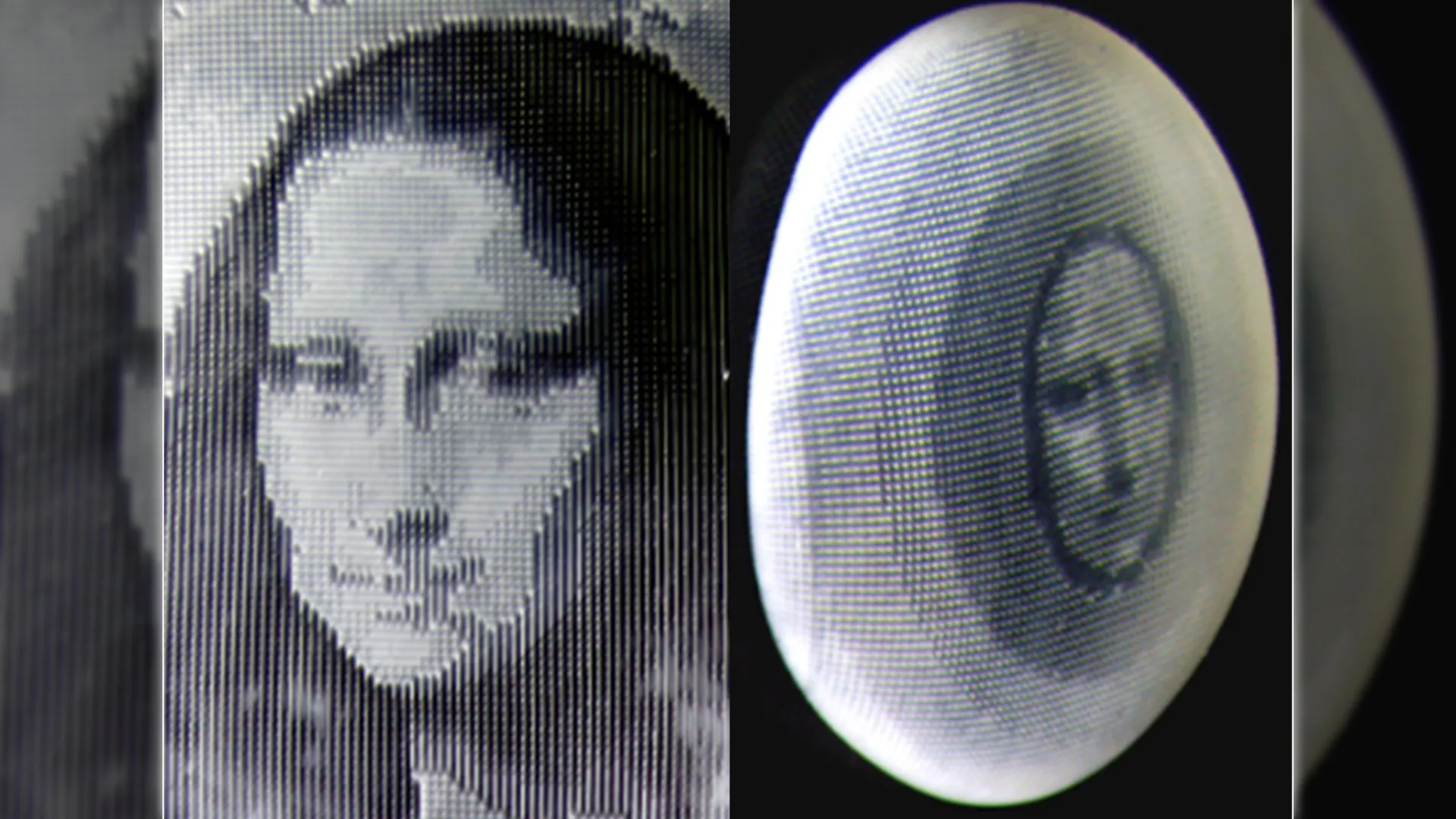
    To demonstrate the effect, the team encoded an image of the Mona Lisa into the hydrogel film. When the material was washed with ethanol, it appeared transparent and showed no visible image. The hidden image became clear only after the film was placed in ice water or gradually heated.

    Yang noted that the Mona Lisa was used only as an example. The printing technique allows virtually any image to be encoded into the hydrogel.

    “This behavior could be used for camouflage, where a surface blends into its environment, or for information encryption, where messages are hidden and only revealed under specific conditions,” Yang said.

    The researchers also showed that concealed patterns could be detected by gently stretching the material and analyzing how it deforms using digital image correlation analysis. This means information can be revealed not only visually, but also through mechanical interaction, adding an extra level of security.

    Shape Shifting Without Multiple Layers

    The smart skin also demonstrated remarkable flexibility. According to Sun, the material can easily shift from a flat sheet into complex, bio-inspired shapes with detailed surface textures. Unlike many other shape-changing materials, this transformation does not require multiple layers or different substances.

    Instead, the changes in shape and texture are controlled entirely by the digitally printed halftone patterns within a single sheet. This allows the material to replicate effects similar to those seen in cephalopod skin.

    Building on this capability, the team showed that multiple functions can be programmed to work together. By carefully designing the halftone patterns, they encoded the Mona Lisa image into flat films that later transformed into three-dimensional forms. As the sheets curved into dome-like shapes, the hidden image slowly appeared, showing that changes in shape and visual appearance can be coordinated within one material.

    “Similar to how cephalopods coordinate body shape and skin patterning, the synthetic smart skin can simultaneously control what it looks like and how it deforms, all within a single, soft material,” Sun said.

    Expanding the Potential of 4D-Printed Hydrogels

    Sun said the new work builds on earlier research by the team on 4D-printed smart hydrogels, which was also published in Nature Communications. That earlier study focused on combining mechanical properties with programmable transitions from flat to three-dimensional forms. In the current research, the team expanded the approach by using halftone-encoded 4D printing to integrate even more functions into a single hydrogel film.

    Looking ahead, the researchers aim to create a scalable and versatile platform that allows precise digital encoding of multiple functions within one adaptive material.

    “This interdisciplinary research at the intersection of advanced manufacturing, intelligent materials and mechanics opens new opportunities with broad implications for stimulus-responsive systems, biomimetic engineering, advanced encryption technologies, biomedical devices and more,” Sun said.

    The study also included Penn State co-authors Haotian Li and Juchen Zhang, both doctoral candidates in IME, and Tengxiao Liu, a lecturer in biomedical engineering. H. Jerry Qi, professor of mechanical engineering at Georgia Institute of Technology, also collaborated on the project.

  • A tiny light trap could unlock million qubit quantum computers

    A tiny light trap could unlock million qubit quantum computers

    After years of slow progress, researchers may finally be seeing a clear path forward in the quest to build powerful quantum computers. These machines are expected to dramatically shorten the time required for certain calculations, turning problems that would take classical computers thousands of years into tasks that could be completed in hours.

    A team led by physicists at Stanford University has developed a new kind of optical cavity that can efficiently capture single photons, the basic particles of light, emitted by individual atoms. Those atoms serve as the core components of a quantum computer because they store qubits, which are the quantum equivalent of the zeros and ones used in traditional computing. For the first time, this approach allows information to be collected from all qubits at once.

    Optical Cavities Enable Faster Qubit Readout

    In research published in Nature, the team describes a system made up of 40 optical cavities, each holding a single atom qubit, along with a larger prototype that contains more than 500 cavities. The results point to a realistic route toward building quantum computing networks that could one day include as many as a million qubits.

    “If we want to make a quantum computer, we need to be able to read information out of the quantum bits very quickly,” said Jon Simon, the study’s senior author and associate professor of physics and of applied physics in Stanford’s School of Humanities and Sciences. “Until now, there hasn’t been a practical way to do that at scale because atoms just don’t emit light fast enough, and on top of that, they spew it out in all directions. An optical cavity can efficiently guide emitted light toward a particular direction, and now we’ve found a way to equip each atom in a quantum computer within its own individual cavity.”

    How Optical Cavities Control Light

    An optical cavity works by trapping light between two or more reflective surfaces, causing it to bounce back and forth. The effect can be compared to standing between mirrors in a fun house, where reflections seem to stretch endlessly into the distance. In scientific settings, these cavities are far smaller and use repeated passes of a laser beam to extract information from atoms.

    Although optical cavities have been studied for decades, they have been difficult to use with atoms because atoms are extremely small and nearly transparent. Getting light to interact with them strongly enough has been a persistent challenge.

    A New Design Using Microlenses

    Rather than relying on many repeated reflections, the Stanford team introduced microlenses inside each cavity to tightly focus light onto a single atom. Even with fewer light bounces, this method proved more effective at pulling quantum information from the atom.

    “We have developed a new type of cavity architecture; it’s not just two mirrors anymore,” said Adam Shaw, a Stanford Science Fellow and first author on the study. “We hope this will enable us to build dramatically faster, distributed quantum computers that can talk to each other with much faster data rates.”

    Beyond the Binary Limits of Classical Computing

    Conventional computers process information using bits that represent either zero or one. Quantum computers operate using qubits, which are based on the quantum states of tiny particles. A qubit can represent zero, one, or both states at the same time, allowing quantum systems to handle certain calculations far more efficiently than classical machines.

    “A classical computer has to churn through possibilities one by one, looking for the correct answer,” said Simon. “But a quantum computer acts like noise-canceling headphones that compare combinations of answers, amplifying the right ones while muffling the wrong ones.”

    Scaling Toward Quantum Supercomputers

    Scientists estimate that quantum computers will need millions of qubits to outperform today’s most powerful supercomputers. According to Simon, reaching that level will likely require connecting many quantum computers into large networks. The parallel light-based interface demonstrated in this study provides an efficient foundation for scaling up to those sizes.

    The researchers showed a working 40-cavity array in the current study, along with a proof-of-concept system containing more than 500 cavities. Their next goal is to expand to tens of thousands. Looking further ahead, the team envisions quantum data centers in which individual quantum computers are linked through cavity-based network interfaces to form full-scale quantum supercomputers.

    Broader Scientific and Technological Impact

    Significant engineering hurdles remain, but the researchers believe the potential benefits are substantial. Large-scale quantum computers could lead to breakthroughs in materials design and chemical synthesis, including applications related to drug discovery, as well as advances in code breaking.

    The ability to efficiently collect light also has implications beyond computing. Cavity arrays could improve biosensing and microscopy, supporting progress in medical and biological research. Quantum networks may even contribute to astronomy by enabling optical telescopes with enhanced resolution, potentially allowing scientists to directly observe planets orbiting stars beyond our solar system.

    “As we understand more about how to manipulate light at a single particle level, I think it will transform our ability to see the world,” Shaw said.

    ​​Simon is also the Joan Reinhart Professor of Physics & Applied Physics. Shaw is also a Felix Bloch Fellow and an Urbanek-Chodorow Fellow.

    Additional Stanford co-authors include David Schuster, the Joan Reinhart Professor of Applied Physics, and doctoral students Anna Soper, Danial Shadmany, and Da-Yeon Koh.

    Other co-authors include researchers from Stony Brook University, the University of Chicago, Harvard University, and Montana State University.

    This research received support from the National Science Foundation, Air Force Office of Scientific Research, Army Research Office, Hertz Foundation, and the U.S. Department of Defense.

    Matt Jaffe of Montana State University and Simon act as consultants to and hold stock options in Atom Computing. Shadmany, Jaffe, Schuster, and Simon, as well as Aishwarya Kumar of Stony Brook, hold a patent on the resonator geometry demonstrated in this work.

  • “Existential risk” – Why scientists are racing to define consciousness

    “Existential risk” – Why scientists are racing to define consciousness

    As artificial intelligence continues to advance and ethical concerns grow alongside it, scientists say the need to understand consciousness has reached a critical point.

    In a new review published in Frontiers in Science, researchers warn that progress in AI and neurotechnology is moving faster than scientific understanding of consciousness. This gap, they argue, could lead to serious ethical problems if it is not addressed.

    The authors say explaining how consciousness emerges is now an urgent scientific and moral priority. A clearer understanding could eventually make it possible to develop scientific methods for detecting consciousness. That breakthrough would have far-reaching consequences for AI development, prenatal policy, animal welfare, medicine, mental health care, law, and emerging technologies such as brain-computer interfaces.

    “Consciousness science is no longer a purely philosophical pursuit. It has real implications for every facet of society — and for understanding what it means to be human,” said lead author Prof Axel Cleeremans from Université Libre de Bruxelles. “Understanding consciousness is one of the most substantial challenges of 21st-century science — and it’s now urgent due to advances in AI and other technologies.

    “If we become able to create consciousness — even accidentally — it would raise immense ethical challenges and even existential risk,” added Cleeremans, a European Research Council (ERC) grantee.

    The Challenge of Defining Sentience

    Consciousness, commonly described as awareness of both the world around us and ourselves, remains one of science’s most difficult puzzles. Despite decades of research, scientists still lack agreement on how subjective experience emerges from biological processes.

    Researchers have identified brain regions and neural activity linked to conscious experience, but major disagreements remain. Scientists continue to debate which brain systems are truly necessary for consciousness and how they interact to produce awareness. Some researchers even question whether this approach captures the problem correctly.

    The new review examines the current state of consciousness science, future directions for the field, and the possible consequences if humans succeed in fully explaining or even creating consciousness. This includes the possibility of consciousness emerging in machines or in lab-grown brain-like systems known as “brain organoids.”

    Testing for Consciousness

    The authors argue that developing evidence-based tests for consciousness could transform how awareness is identified across many contexts. Such tools could help detect consciousness in patients with brain injuries or dementia and determine when awareness arises in fetuses, animals, brain organoids, or even AI systems.

    While this would represent a major scientific advance, the researchers caution that it would also create difficult ethical and legal questions. Determining that a system is conscious would force society to reconsider how that system should be treated.

    “Progress in consciousness science will reshape how we see ourselves and our relationship to both artificial intelligence and the natural world,” said co-author Prof Anil Seth from the University of Sussex and ERC grantee. “The question of consciousness is ancient — but it’s never been more urgent than now.”

    Medical, Ethical, and Legal Implications

    A deeper understanding of consciousness could have wide-ranging effects across society.

    In medicine, it could improve care for patients who are unresponsive and assumed to be unconscious. Measurements inspired by integrated information theory and global workspace theory[1] have already detected signs of awareness in some individuals diagnosed with unresponsive wakefulness syndrome. Further progress could refine these tools to better assess consciousness in coma, advanced dementia, and anesthesia, and influence treatment decisions and end-of-life care.

    Mental health treatment could also benefit. Understanding the biological basis of subjective experience may help researchers develop better therapies for conditions such as depression, anxiety, and schizophrenia by narrowing the gap between animal studies and human emotional experience.

    Greater insight into consciousness could reshape how humans think about their moral responsibilities toward animals. Identifying which animals and systems are sentient could influence animal research practices, farming, food consumption, and conservation strategies. “Understanding the nature of consciousness in particular animals would transform how we treat them and emerging biological systems that are being synthetically generated by scientists,” said co-author Prof Liad Mudrik from Tel Aviv University and ERC grantee.

    Rethinking Responsibility and Technology

    Consciousness research could also affect how the legal system understands responsibility. New findings may challenge traditional legal concepts such as mens rea, the “guilty mind” required to establish intent. As neuroscience reveals how much behavior arises from unconscious processes, courts may need to reconsider where responsibility begins and ends.

    At the same time, advances in AI, brain organoids, and brain-computer interfaces raise the possibility of creating or altering awareness beyond natural biological limits. While some researchers believe consciousness might arise through computation alone, others argue that biological factors play an essential role. “Even if ‘conscious AI’ is impossible using standard digital computers, AI that gives the impression of being conscious raises many societal and ethical challenges,” said Seth.

    A Call for Coordinated Research

    The authors emphasize the need for a coordinated, evidence-based approach to studying consciousness. One proposed strategy involves adversarial collaborations, in which competing theories are tested against each other through experiments designed jointly by their supporters. “We need more team science to break theoretical silos and overcome existing biases and assumptions,” said Mudrik. “This step has the potential to move the field forward.”

    The researchers also argue that scientific work should place greater emphasis on phenomenology (what consciousness feels like) alongside studies of function (what consciousness does).

    “Cooperative efforts are essential to make progress — and to ensure society is prepared for the ethical, medical, and technological consequences of understanding, and perhaps creating, consciousness,” said Cleeremans.

    Notes

    1. Global workspace theory suggests that consciousness arises when information is made available and shared across the brain via a specialized global workspace, for use by different functions — like action and memory.
      Higher-order theories suggest that a thought or feeling represented in some brain states only becomes conscious when there is another brain state that “points at it,” signaling that “this is what I am conscious of now.” They align with the intuition that being conscious of something means being aware of one’s own mental state.
      Integrated information theory argues that a system is conscious if its parts are highly connected and integrated in very specific ways defined by the theory, in line with the idea that every conscious experience is both unified and highly informative.
      Predictive processing theory suggests that what we experience is the brain’s best guess about the world, based on predictions of what something will look or feel like, checked against sensory signals.
  • NASA’s Perseverance rover completes the first AI-planned drive on Mars

    NASA’s Perseverance rover completes the first AI-planned drive on Mars

    The team behind NASA’s six-wheeled Mars explorer tested a vision-enabled artificial intelligence system to map a safe route across the Martian surface without relying on human route planners.

    NASA’s Perseverance rover has now completed the first drives on another planet that were planned by artificial intelligence. The milestone demonstration took place on Dec. 8 and 10 and was led by NASA’s Jet Propulsion Laboratory in Southern California. During the test, generative AI was used to select waypoints for the rover, a complex planning task that is normally handled by human experts on Earth.

    “This demonstration shows how far our capabilities have advanced and broadens how we will explore other worlds,” said NASA Administrator Jared Isaacman. “Autonomous technologies like this can help missions to operate more efficiently, respond to challenging terrain, and increase science return as distance from Earth grows. It’s a strong example of teams applying new technology carefully and responsibly in real operations.”

    How Vision AI Helped Navigate the Martian Surface

    For the demonstration, engineers used a form of generative AI known as vision-language models to examine existing data from JPL’s surface mission dataset. The system analyzed the same images and information that human planners typically use, then identified waypoint locations so Perseverance could travel safely across difficult Martian terrain.

    The work was coordinated from JPL’s Rover Operations Center (ROC) and carried out in collaboration with Anthropic, using the company’s Claude AI models.

    Why Mars Rover Routes Are Hard to Plan

    Mars sits an average of about 140 million miles (225 million kilometers) from Earth. That distance creates long communication delays, making real-time control of a rover impossible. For nearly three decades, rover navigation has depended on human drivers who carefully study terrain data and plan routes in advance.

    These planners design paths made up of waypoints, usually spaced no more than 330 feet (100 meters) apart, to reduce the risk of encountering hazards. The completed plans are sent through NASA’s Deep Space Network, and the rover carries out the instructions on its own.

    AI Takes Over Route Planning for Perseverance

    During Perseverance’s drives on the 1,707 and 1,709 Martian days, known as sols, the mission team shifted that responsibility to generative AI. The system examined high-resolution orbital images captured by the HiRISE (High Resolution Imaging Science Experiment) camera aboard NASA’s Mars Reconnaissance Orbiter, along with terrain slope data from digital elevation models.

    Using this information, the AI identified important surface features such as bedrock, outcrops, boulder fields, and sand ripples. It then produced a continuous driving path that included all necessary waypoints.

    Before sending the commands to Mars, engineers ran the AI-generated instructions through JPL’s digital twin (virtual replica of the rover). This step checked more than 500,000 telemetry variables to ensure the plan would work safely with Perseverance’s flight software.

    On Dec. 8, Perseverance traveled 689 feet (210 meters) using the AI-generated plan. Two days later, it drove another 807 feet (246 meters).

    What This Means for Future Space Exploration

    “The fundamental elements of generative AI are showing a lot of promise in streamlining the pillars of autonomous navigation for off-planet driving: perception (seeing the rocks and ripples), localization (knowing where we are), and planning and control (deciding and executing the safest path),” said Vandi Verma, a space roboticist at JPL and a member of the Perseverance engineering team. “We are moving towards a day where generative AI and other smart tools will help our surface rovers handle kilometer-scale drives while minimizing operator workload, and flag interesting surface features for our science team by scouring huge volumes of rover images.”

    “Imagine intelligent systems not only on the ground at Earth, but also in edge applications in our rovers, helicopters, drones, and other surface elements trained with the collective wisdom of our NASA engineers, scientists, and astronauts,” said Matt Wallace, manager of JPL’s Exploration Systems Office. “That is the game-changing technology we need to establish the infrastructure and systems required for a permanent human presence on the Moon and take the U.S. to Mars and beyond.”

    More About Perseverance

    Managed for NASA by Caltech, JPL is home to the Rover Operations Center (ROC). The laboratory also oversees daily operations of the Perseverance rover for NASA’s Science Mission Directorate as part of the agency’s Mars Exploration Program portfolio.

  • Scientists found a way to cool quantum computers using noise

    Scientists found a way to cool quantum computers using noise

    Quantum computers only work when they are kept extremely cold. The problem is that today’s cooling systems also create noise, which can interfere with the fragile quantum information they are supposed to protect. Researchers at Chalmers University of Technology in Sweden have now introduced a new type of minimal quantum “refrigerator” that turns this challenge into an advantage. Instead of fighting noise, the device partially relies on it to operate. The result is highly precise control over heat and energy flow, which could help make large scale quantum technology possible.

    Quantum technology is widely expected to reshape major areas of society. Potential applications include drug discovery, artificial intelligence, logistics optimization, and secure communications. Despite this promise, serious technical barriers still stand in the way of real world use. One of the most difficult challenges is maintaining and controlling the delicate quantum states that make these systems work.

    Why Quantum Computers Must Be Near Absolute Zero

    Quantum computers built with superconducting circuits must be cooled to temperatures very close to absolute zero (around — 273 °C). At these temperatures, materials become superconducting, allowing electrons to move without resistance. Only under these extreme conditions can stable quantum states form inside qubits, the basic units of quantum information.

    These quantum states are extremely sensitive. Small changes in temperature, electromagnetic interference, or background noise can quickly erase stored information. This sensitivity makes quantum systems difficult to operate and even harder to expand.

    As researchers attempt to scale up quantum computers to solve practical problems, heat and noise become harder to control. Larger and more complex systems create more opportunities for unwanted energy to spread and disrupt fragile quantum states.

    “Many quantum devices are ultimately limited by how energy is transported and dissipated. Understanding these pathways and being able to measure them allows us to design quantum devices in which heat flows are predictable, controllable and even useful,” says Simon Sundelin, doctoral student of quantum technology at Chalmers University of Technology and the study’s lead author.

    Using Noise as a Cooling Tool

    In a study published in Nature Communications, the Chalmers team describes a fundamentally different kind of quantum refrigerator. Instead of trying to eliminate noise, the system uses it as the driving force behind cooling.

    “Physicists have long speculated about a phenomenon called Brownian refrigeration; the idea that random thermal fluctuations could be harnessed to produce a cooling effect. Our work represents the closest realisation of this concept to date,” says Simone Gasparinetti, associate professor at Chalmers and senior author of the study.

    At the core of the refrigerator is a superconducting artificial molecule created in Chalmers’ nanofabrication laboratory. It behaves much like a natural molecule, but instead of atoms, it is built from tiny superconducting electrical circuits.

    The artificial molecule is connected to multiple microwave channels. By adding carefully controlled microwave noise in the form of random signal fluctuations within a narrow frequency range, the researchers can guide how heat and energy move through the system with remarkable precision.

    “The two microwave channels serve as hot and cold reservoirs, but the key point is that they are only effectively connected when we inject controlled noise through a third port. This injected noise enables and drives heat transport between the reservoirs via the artificial molecule. We were able to measure extremely small heat currents, down to powers in the order of attowatts, or 10-18 watt. If such a small heat flow were used to warm a drop of water, it would take the age of the universe to see its temperature rise one degree Celsius,” explains Sundelin.

    New Paths Toward Scalable Quantum Technology

    By carefully adjusting reservoir temperatures and tracking minuscule heat flows, the quantum refrigerator can operate in multiple ways. Depending on conditions, it can function as a refrigerator, act as a heat engine, or amplify thermal transport.

    This level of control is especially important in larger quantum systems, where heat is produced locally during qubit operation and measurement. Managing that heat directly inside quantum circuits could improve stability and performance in ways conventional cooling systems cannot.

    “We see this as an important step towards controlling heat directly inside quantum circuits, at a scale that conventional cooling systems can’t reach. Being able to remove or redirect heat at this tiny scale opens the door to more reliable and robust quantum technologies,” says Aamir Ali, a researcher in quantum technology at Chalmers and co-author of the study.

    More Information

    The study Quantum refrigeration powered by noise in a superconducting circuit was published in the scientific journal Nature Communications. The authors are Simon Sundelin, Mohammed Ali Aamir, Vyom Manish Kulkarni, Claudia Castillo-Moreno, and Simone Gasparinetti from the Department of Microtechnology and Nanoscience at Chalmers University of Technology.

    The quantum refrigerator was fabricated at the Nanofabrication Laboratory, Myfab, at Chalmers University of Technology.

    Funding for the research was provided by the Swedish Research Council, the Knut and Alice Wallenberg Foundation through the Wallenberg Centre for Quantum Technology (WACQT), the European Research Council, and the European Union.

  • AI that talks to itself learns faster and smarter

    AI that talks to itself learns faster and smarter

    Talking to yourself may feel uniquely human, but it turns out this habit can also help machines learn. Internal dialogue helps people organize ideas, weigh choices, and make sense of emotions. New research shows that a similar process can improve how artificial intelligence learns and adapts. In a study published in Neural Computation, researchers from the Okinawa Institute of Science and Technology (OIST) found that AI systems perform better across many tasks when they are trained to use inner speech alongside short-term memory.

    The findings suggest that learning is shaped not only by the structure of an AI system, but also by how it interacts with itself during training. As first author Dr. Jeffrey Queißer, Staff Scientist in OIST’s Cognitive Neurorobotics Research Unit, explains, “This study highlights the importance of self-interactions in how we learn. By structuring training data in a way that teaches our system to talk to itself, we show that learning is shaped not only by the architecture of our AI systems, but by the interaction dynamics embedded within our training procedures.”

    How Self Talk Improves AI Performance

    To test this idea, the researchers combined self-directed internal speech, described as quiet “mumbling,” with a specialized working memory system. This approach allowed their AI models to learn more efficiently, adjust to unfamiliar situations, and handle multiple tasks at once. The results showed clear gains in flexibility and overall performance compared with systems that relied on memory alone.

    Building AI That Can Generalize

    A central goal of the team’s work is content agnostic information processing. This refers to the ability to apply learned skills beyond the exact situations encountered during training, using general rules rather than memorized examples.

    “Rapid task switching and solving unfamiliar problems is something we humans do easily every day. But for AI, it’s much more challenging,” says Dr. Queißer. “That’s why we take an interdisciplinary approach, blending developmental neuroscience and psychology with machine learning and robotics amongst other fields, to find new ways to think about learning and inform the future of AI.”

    Why Working Memory Matters

    The researchers began by examining memory design in AI models, focusing on working memory and its role in generalization. Working memory is the short-term ability to hold and use information, whether that means following instructions or doing quick mental calculations. By testing tasks with different levels of difficulty, the team compared various memory structures.

    They found that models with multiple working memory slots (temporary containers for pieces of information) performed better on challenging problems, such as reversing sequences or recreating patterns. These tasks require holding several pieces of information at once and manipulating them in the correct order.

    When the team added targets that encouraged the system to talk to itself a specific number of times, performance improved even further. The biggest gains appeared during multitasking and in tasks that required many steps.

    “Our combined system is particularly exciting because it can work with sparse data instead of the extensive data sets usually required to train such models for generalization. It provides a complementary, lightweight alternative,” Dr. Queißer says.

    Learning to Learn in the Real World

    The researchers now plan to move beyond clean, controlled tests and explore more realistic conditions. “In the real world, we’re making decisions and solving problems in complex, noisy, dynamic environments. To better mirror human developmental learning, we need to account for these external factors,” says Dr. Queißer.

    This direction supports the team’s broader aim of understanding how human learning works at a neural level. “By exploring phenomena like inner speech, and understanding the mechanisms of such processes, we gain fundamental new insights into human biology and behavior,” Dr. Queißer concludes. “We can also apply this knowledge, for example in developing household or agricultural robots which can function in our complex, dynamic worlds.”