Category: AI in Biotechnology

  • New programmable photonic chip can control how fast light moves

    New programmable photonic chip can control how fast light moves

    Researchers at Seoul National University and the University of Seoul have developed a programmable photonic integrated circuit that can slow light whenever needed.

    The team was led by Professors Namkyoo Park and Sunkyu Yu of the Department of Electrical and Computer Engineering at Seoul National University, working with Professor Xianji Piao of the School of Electrical and Computer Engineering at the University of Seoul.

    Slowing Light Could Help Solve a Computing Bottleneck

    The rapid growth of generative AI and large scale AI models has sharply increased the amount of computing power required by data centers and servers. Conventional electronic semiconductors are struggling to keep pace because they consume large amounts of energy and face limits in how quickly they can transmit data.

    These challenges have intensified interest in optical computing, which uses light rather than electrical signals to process information. Optical systems could potentially move data at extremely high speeds while using less power.

    However, light also presents a major challenge. Because it naturally moves at a fixed speed, it is difficult to delay optical signals or temporarily hold them in place. Those capabilities are essential for creating buffers and memory functions in optical computers.

    To address this problem, the researchers designed a programmable photonic circuit that can control both the speed and shape of optical signals. Their approach provides more flexibility over “slow light” than previously proposed methods.

    The study was published in the renowned international journal Advanced Science.

    Why Optical Signals Sometimes Need To Wait

    Photonic integrated circuits are emerging as a promising technology for processing information quickly and efficiently with light. In data centers, optical communication networks, and future computing systems, moving signals rapidly is only part of the challenge.

    Systems must also ensure that different signals arrive at the correct time. In some cases, a light signal must be delayed so it can remain synchronized with other information moving through the system.

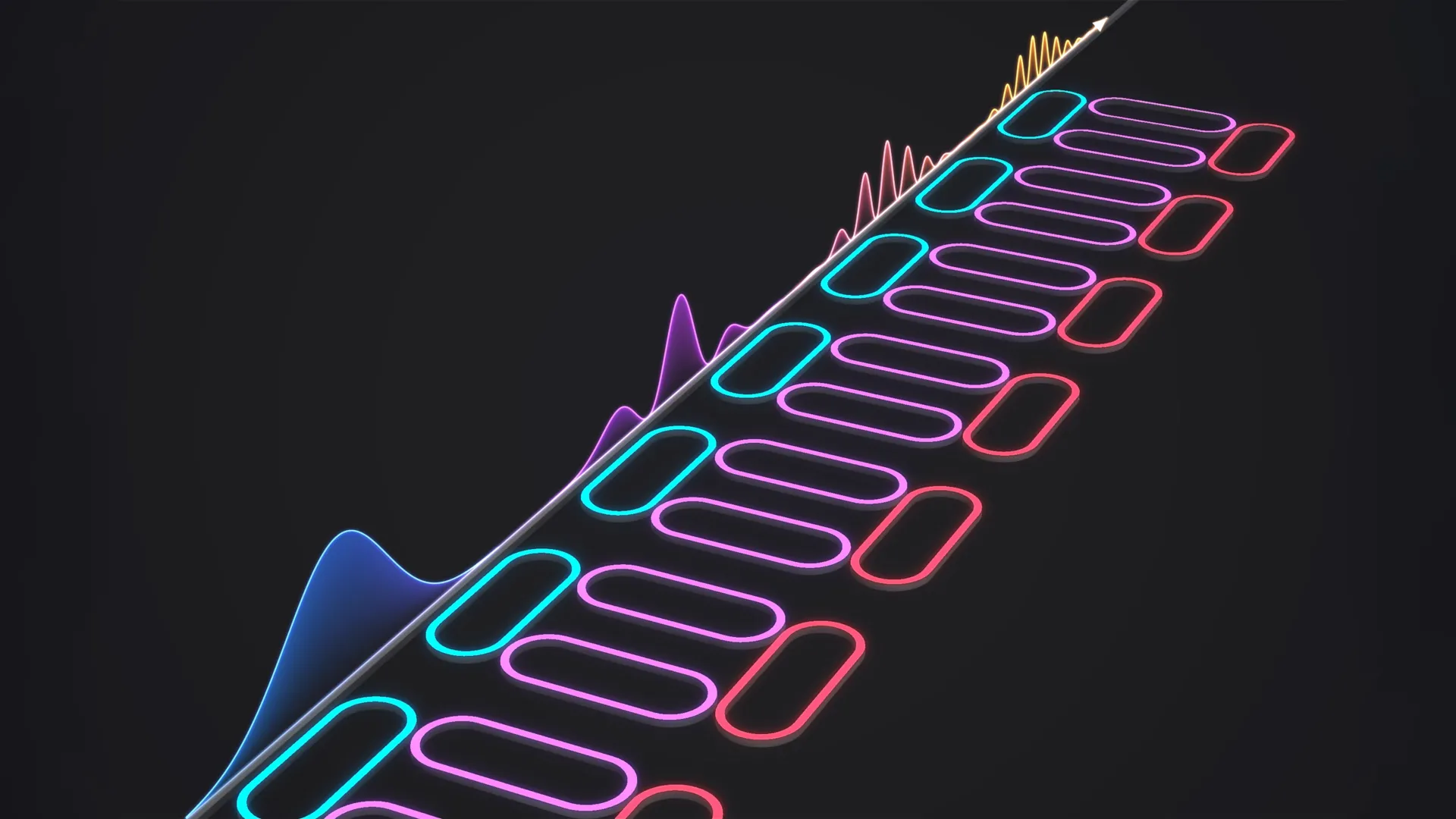
    One method for creating these delays relies on coupled-resonator-induced transparency (CRIT), which uses interference among several optical resonators.

    CRIT allows light within a selected frequency range to pass through a device while also reducing the speed at which the optical signal travels.

    • Coupled-resonator-induced transparency (CRIT): An optical phenomenon that selectively transmits and delays light within a specific frequency range through interference among multiple resonators.
    • Optical resonator: A photonic device that confines or circulates light of a specific frequency for a certain period; used in signal delay, filtering, and modulation.

    Fixed Optical Devices Limit Flexibility

    Traditional CRIT devices usually have operating characteristics that become permanent once they are manufactured. This makes it difficult to change how they function after fabrication.

    For example, engineers who want to create a longer signal delay or work with a different frequency range often need to design and manufacture an entirely new photonic device.

    That lack of adaptability increases the complexity of optical communication hardware and data center infrastructure. It can also raise costs and extend development schedules whenever new capabilities are needed.

    The problem is especially important for AI servers and next-generation data centers, where enormous amounts of information must be processed in real time. Fixed optical components have therefore remained a major obstacle to more practical optical computing systems.

    A Programmable Design for Controlling Light

    The research team developed a different strategy by treating two optical states in CRIT systems, known as the bright mode and dark mode, as one unified degree of freedom. The researchers also added two controllable loop couplers.

    Together, these changes created a new design principle for programmable photonic integrated circuits. Resonator arrangements that were previously locked into one configuration after fabrication could instead be adjusted for different purposes.

    Using the new CRIT structure, the researchers showed that the movement of light could be delayed and controlled as needed. They also demonstrated that interference between the bright and dark modes could be handled as a single integrated design parameter.

    This approach greatly expanded the flexibility of photonic resonator circuits that had previously been limited by fixed designs.

    Controlling Delay, Bandwidth, and Signal Shape

    The researchers theoretically demonstrated that the two loop couplers could be used to adjust the bandwidth and shape of the passband. They could also control how long signals were delayed and how efficiently those signals traveled through the circuit.

    This means that both the speed and transmission behavior of optical signals could be reconfigured across entire systems containing multiple resonators, rather than only within a single resonator.

    Numerical simulations also showed that the speed of optical pulses could be adjusted dynamically while the circuit was operating.

    The results indicated that signal delay times could be changed without reducing processing performance. The system could also convert the frequency of light without requiring additional specialized components.

    • Optical pulse: A short burst of light used as a basic unit for transmitting information in optical communication and computing systems.

    Simulations Suggest the Chip Could Be Practical

    The researchers used three-dimensional electromagnetic simulations to test whether the CRIT device could be built on a silicon nitride (Si3N4) photonic integrated circuit platform.

    They also evaluated a range of real-world issues that could affect the device during manufacturing and operation. These included material losses, differences in resonator quality, backscattering, coupling fluctuations, phase errors in the loop couplers, and thermal crosstalk.

    The simulations indicated that the proposed structure could continue to operate reliably under realistic conditions.

    • Silicon nitride (Si3N4) photonic integrated circuit: A low-loss and highly stable waveguide platform widely used for optical signal processing and integrated photonic devices.
    • Thermal crosstalk: A phenomenon in which heat generated in one part of a circuit affects neighboring components, potentially altering device performance.

    One Chip Could Perform Several Optical Functions

    The study introduces a programmable photonic platform that can control both the timing and frequency properties of light signals in real time.

    The design could overcome the limitations of conventional optical delay devices, which typically perform only fixed functions. It also suggests that several important capabilities could eventually be combined within one photonic circuit.

    These functions include signal synchronization, adjustable delay lines, optical buffers, and frequency conversion.

    The same design principles may also be useful beyond CRIT systems. The researchers believe the approach could be applied to a broad range of photonic circuits based on resonators, potentially providing a foundation for more adaptable optical signal processing technologies.

    Potential Benefits for AI and Data Centers

    If the technology is commercialized, a single programmable optical chip could perform several tasks, including controlling signal speed and switching between different functions.

    In that sense, the chip could operate in a way similar to a software-defined system, with its behavior adjusted according to changing needs.

    This flexibility could help data centers and AI servers process information more efficiently while reducing energy consumption.

    Combining several signal processing functions on one chip could also make optical communication equipment and sensor systems smaller and less expensive.

    Over the longer term, the technology could support industries that depend on extremely fast information processing, including autonomous driving, next-generation communications, and quantum technologies.

    Researchers Plan Larger Programmable Photonic Systems

    Professor Namkyoo Park, co-corresponding author of the study from Seoul National University, stated, “This research is significant in that it proposes a new design principle that allows the flow of light within photonic integrated circuits to be reconfigured as needed, greatly enhancing design flexibility. We plan to expand this technology toward large-scale programmable photonic integrated circuits based on silicon photonics and photonic AI technologies.”

    Co-first authors Dr. Seungkyun Park and Ph.D. student Beomjoon Chae, who led the theoretical framework and numerical analysis, added, “Through this study, we realized that reinterpreting conventional photonic resonator physics from a different perspective can serve as a starting point for discovering new functionalities in photonic integrated circuits. We plan to further develop this research toward practical device implementation and experimental validation.”

    Dr. Seungkyun Park is affiliated with the InnoCORE PICORE Center at KAIST and is currently conducting research on photonic AI and quantum optics at the Photonic Systems Laboratory, Seoul National University.

    Ph.D. student Beomjoon Chae is conducting research on programmable photonic integrated circuits at the Intelligent Wave Systems Laboratory, SNU.

    The research received support from the Ministry of Science and ICT through the Innovative Research Center (IRC) program, the Basic Research Laboratory (BRL) program, and the Young Researcher Program.

    Dr. Seungkyun Park also participated in the study with support from the InnoCORE program (PICORE Center).
  • Alan Turing’s biggest AI assumption may have been wrong

    Alan Turing’s biggest AI assumption may have been wrong

    Alan Turing’s famous ideas about artificial intelligence may have sent AI research down the wrong path for the past 75 years, according to prominent computer scientist Peter J. Denning.

    In his new book, Turing’s Mistake: Escaping the Yoke of Unintelligent Machines, Denning argues that two foundational assumptions made by Turing in 1950 continue to shape AI research today. The first is that intelligence can exist independently of a physical body and therefore be recreated in computer software. The second is that a machine can demonstrate intelligence by successfully imitating a human in conversation, an idea that later became known as the Turing test.

    “These two claims have shaped much of AI research and development,” Denning writes. “My premise is that our acquiescence to these claims has led to the AI mess in which we find ourselves today.”

    Denning argues that pursuing artificial general intelligence (AGI), or machines with human level intelligence, is unlikely to succeed. Instead, he warns, the technologies society is building could introduce significant new risks.

    The Tacit Knowledge Problem

    At the heart of Denning’s argument is the idea of tacit knowledge, the vast amount of human understanding that cannot easily be put into words or represented in a form that computers can process.

    He says machine learning cannot capture five major categories of tacit knowledge: common sense, everyday interactions with people and the environment, emotions and perception, practical performance skills, and the social and historical knowledge embedded in culture.

    Researchers have long attempted to organize common sense into databases. One of the best known efforts was Douglas Lenat’s Cyc project, which began in the 1980s with the goal of creating an extensive collection of common sense facts. After four decades of work, the project contained roughly 25 million entries.

    “Yet even this treasury could not add up to a background of common sense sufficient to make expert systems smart enough to be experts,” Denning notes. “Cyc validated that much of the knowledge that makes people experts cannot be articulated as propositions.”

    Denning believes practical skills present an even greater challenge.

    “Our performance skills in thousands of domains cannot be communicated to machines,” he explains. “Whereas descriptions of skillful outcomes (‘know what’) can often be represented as bits and stored in a machine, we do not know how to encode the embodied knowledge for skillful performance (‘know how’).”

    He points to accomplished musicians as an example.

    “A virtuoso violinist can play beautiful music yet cannot describe to an acolyte how to produce it.

    “Even if a robot could observe and imitate skilled humans, having no biological body, a robot cannot grasp how the musician feels when playing beautiful music or how an audience feels when hearing it.”

    Denning also includes intuition, gut feelings, imagination, and spontaneous creativity among the forms of tacit knowledge that remain beyond the reach of machines.

    Why Human Knowledge Resists Encoding

    Denning argues that all of these limitations stem from what he calls the “representation problem.”

    Computers can only perform calculations using data and instructions that have been encoded into physical forms they can recognize and process. Tacit knowledge, however, does not naturally fit into that framework.

    “Behind every word is a deep well of tacit knowledge that gives it meaning,” Denning says. “Words are but symbolic representations of meanings, not the meanings themselves. Commonly used Large Language Models, such as ChatGPT, Claude and Gemini only manipulate words, they cannot know or understand the meaning of what they are saying.”

    According to Denning, this creates a fundamental divide. Because scientists still cannot fully explain how tacit knowledge works in humans, they also cannot translate it into a form machines can use.

    “How we host tacit knowledge is largely a mystery,” Denning admits. “All we know is that it is embodied. We have no idea what we might observe and measure in our bodies to reveal it.”

    Context and Culture Shape Intelligence

    Denning also argues that intelligence depends heavily on context, the surrounding circumstances that give words, actions, and decisions their meaning.

    Context allows people to recognize sarcasm, humor, sincerity, and emotion. It helps determine when to be diplomatic, when to joke, and how to interpret countless social cues.

    “When you inquire into where an assumption of the current context came from, you discover it rests on previous conversations from previous contexts. Each of those in turn rests on further previous conversations and their contexts. This pattern is endless and fractal,” Denning explains.

    Culture presents another major obstacle for AI.

    Denning describes culture as encompassing values, norms, judgments, history, communities, moods, and even relationships involving power and care.

    “Human conversations are imbued with background assumptions that give meaning and relevance to the words being used,” Denning explains.

    “Scaling up LLMs with ever larger neural networks will not enable them to acquire the embodied human knowledge we call culture. LLMs will not attain the objective of the Turing test: to demonstrate machine thought indistinguishable from human thought.”

    AI Safety and the Limits of Human Understanding

    Denning concludes that humans and AI systems may ultimately develop different forms of tacit knowledge that neither can fully understand.

    “Machines cannot read our tacit knowledge and we cannot read theirs,” he writes. “We are aliens across an uncrossable divide.”

    He argues this gap raises serious concerns about AI safety. If machines cannot interpret the unspoken context behind human intentions, reliably aligning advanced AI systems with human goals may prove impossible.

    “Through AI automation, agentic networks of machines are likely to develop their own machine intelligence that does not reach the level of human general intelligence but is still quite capable of creating severe problems for humans. This threat is a greater than a take-over by superintelligent machines,” he explains.

    “Machine intelligence has different concerns from us and does not appear to care about us. Its ways of thinking and problem-solving look alien to us. We do not yet know how to live safely with these machines.

    “Pulling back from an AI automation singularity will demand much from us. We start by accepting that the familiar culture is fading away as intelligent machines appear in our society and we do not know what is coming. We decline to think like machines or be subservient to machines. We refuse to submit to a yoke imposed by low-intelligence machines. Most importantly, we reassert our humanity, declare once again what makes us different from machines, and celebrate those differences.”

  • Scientists discovered the brain doesn’t make decisions the way we thought

    Scientists discovered the brain doesn’t make decisions the way we thought

    Scientists at the University of Illinois Urbana Champaign have uncovered evidence that could reshape how researchers think about both the brain and artificial intelligence. Their findings suggest that decision making begins much earlier in the brain than traditional theories propose, offering fresh ideas for designing future AI systems that are more capable and far more energy efficient.

    Led by electrical and computer engineering professor Yurii Vlasov at The Grainger College of Engineering, the research was published in Proceedings of the National Academy of Science (PNAS). The study points to an unexpected role for early sensory brain regions in decision making, challenging the long accepted view that decisions emerge only after information moves through a strict hierarchy of brain regions.

    Rethinking How the Brain Makes Decisions

    The human brain is widely regarded as the most complex structure in the known universe. Scientists still do not fully understand how it works, which is why reverse engineering the brain was identified by the National Academy of Engineering in 2008 as one of the 14 grand challenges for engineering in the 21st century.

    For decades, many artificial intelligence systems, including convolutional neural networks, have been inspired by the idea that the brain processes information in a one way sequence. According to this traditional model, sensory information travels upward through increasingly complex brain regions until it reaches the frontal cortex, where decisions are made.

    Vlasov and other researchers have increasingly questioned whether that picture is complete.

    Instead, they are exploring a model based on natural intelligence, which has been refined through evolution over hundreds of millions of years. In this framework, the brain does not rely only on a step by step flow of information. Decision making also depends on interconnected feedback loops that allow information to move in both directions between brain regions.

    Because biological intelligence performs remarkably complex tasks while using far less energy than today’s AI systems, understanding this architecture could help guide the development of future artificial intelligence.

    “We want to learn from a billion years of evolution,” Vlasov said. “How is that biological intelligence organized architecturally? Can we learn from the architectural side of the brain and emulate that to make AI more effective, less power hungry, and more intelligent than it currently is? In the level of decision-making, that’s where current AI is lacking.”

    Early Brain Regions Show Decision Making Activity

    To investigate how these processes work, the research team focused on the brain’s earliest stages of sensing and perception.

    The scientists recorded neural activity in mice as they navigated a virtual reality corridor and made perceptual decisions. They found evidence of decision related activity in the primary somatosensory cortex (S1), one of the brain’s earliest sensory processing areas.

    Rather than simply passing information forward, S1 appeared to be influenced by higher brain regions through feedback loops. This top down regulation suggests that decision making involves continuous communication across multiple brain areas instead of a simple one direction flow of information.

    “The neural code of the brain is still mostly an unknown language,” Vlasov said. “But this systems-level understanding can be viewed as a potential impact on how more efficient artificial neural networks can be built — how the next generation of AI can be thought through. Maybe with these analogies that we learn from real brains, we can improve AI further.”

    What the Findings Could Mean for Future AI

    The researchers emphasize that the study does not provide a blueprint for building better artificial intelligence. Instead, it offers new insights into how the brain organizes decision making that could eventually inspire future AI architectures.

    Next, Vlasov and his team plan to investigate the timing of these brain signals in greater detail. They also intend to develop new technologies for measuring neural activity to better understand how feedback loops emerge and coordinate different levels of brain processing.

    “By looking at the fast temporal dynamics of neural activity, maybe we can understand better how these feedback loops are engaged in making decisions,” Vlasov said. “Maybe that’s the approach that potentially uncovers these currently unknown mechanisms — how these feedback loops are organized dynamically and how they form and shape different levels of processing. Maybe that can be implemented in new architectures for AI.”

  • Harvard scientists turn a silicon chip into a DNA writing machine

    Harvard scientists turn a silicon chip into a DNA writing machine

    Silicon chips have been the foundation of modern computing for decades. Now, researchers are giving them an entirely new role in biotechnology. In addition to processing information, these chips are increasingly being used to study living systems by recording activity from neurons, reading DNA, and now even creating DNA.

    In a new study published in Nature Electronics, a Harvard led research team unveiled a silicon chip capable of synthesizing 64 different DNA sequences at the same time. Instead of relying on the solvent intensive chemical process commonly used to manufacture synthetic DNA, the device uses a water based enzymatic approach. Carefully controlled electrical currents trigger DNA building reactions at specific locations across the chip.

    The research was led by Donhee Ham, the John A. and Elizabeth S. Armstrong Professor of Engineering and Applied Sciences at the John A. Paulson School of Engineering and Applied Sciences (SEAS).

    A Cleaner Way To Manufacture DNA

    Synthetic DNA is essential for many areas of modern science and medicine, including diagnostics, genome engineering, and cancer research. Today, most custom DNA is produced using phosphoramidite chemistry, a well established method that can manufacture millions of DNA sequences in parallel. However, that process depends on hazardous organic solvents and typically requires specialized centralized facilities.

    Scientists have been exploring enzymatic DNA synthesis as a gentler alternative because it uses water and more closely resembles the way living cells naturally build DNA. The approach could eventually enable smaller, safer, and more widely available DNA synthesis systems.

    Until now, though, enzymatic methods have lagged far behind conventional manufacturing in the number of DNA sequences they can produce simultaneously. Previous demonstrations had been limited to about a dozen sequences at once. The Harvard team’s chip successfully synthesized 64 different DNA sequences in parallel, each as long as 39 nucleotides, establishing a new milestone for the technology.

    How the Silicon Chip Writes DNA

    DNA is assembled one nucleotide at a time. After each nucleotide is added, a temporary blocking group prevents additional growth. Before the next nucleotide can be attached, that blocking group must be removed through a process called deprotection, which is triggered by acidic conditions, or low pH, in water.

    Producing many different DNA sequences at the same time requires lowering the pH only at selected locations during each synthesis cycle. The Harvard chip accomplishes this using tiny electrical currents.

    Its surface contains 64 synthesis sites. Each site features two concentric ring electrodes surrounding DNA molecules anchored at the center. When a specific location is activated, the inner electrode generates protons that lower the local pH and allow the DNA strand to grow. At the same time, the outer electrode removes protons that spread outward, keeping the acidic region confined to that single site.

    By repeating this process through multiple cycles, the chip independently builds 64 unique DNA sequences across its surface.

    From Brain Research to DNA Synthesis

    Interestingly, the chip was not originally designed to manufacture DNA.

    Jeffrey Abbott, a former PhD student in Ham’s laboratory, initially developed the silicon electronics for recording electrical activity inside large populations of neurons. After redesigning the surface electrodes, the researchers discovered that the same underlying technology could precisely control the chemical conditions needed for DNA synthesis.

    “A defining feature of the chip was precision current injection, which we used to permeabilize neuronal membranes for intracellular access,” Ham said. “At a certain point, we wondered whether that same current control could be redirected from cells to molecules, replacing the neuron-facing electrodes with ring-electrode pairs that could localize pH for DNA synthesis. It worked.”

    DNA Data Storage Could Be a Future Application

    Beyond potential applications in synthetic biology and medical diagnostics, the team demonstrated another possibility by using the 64 synthesized DNA sequences to encode a 169-byte text.

    Although DNA based data storage remains a long term goal because it would require manufacturing DNA at an enormous scale, the researchers believe water based enzymatic synthesis could become increasingly attractive as production volumes grow. Reducing solvent use could significantly lower the environmental impact of large scale DNA manufacturing.

    “DNA data storage asks DNA synthesis to operate at a scale far beyond today’s needs,” said Woo-Bin Jung, co-first author of the study and now an assistant professor of chemical engineering at the Pohang University of Science and Technology (POSTECH), who carried out the work as a postdoctoral researcher in Ham’s lab. “That is why enzymatic synthesis in water can matter. If far more than 64 sequences can be synthesized in parallel, it could offer an environmentally friendly route toward writing DNA at very large scale.”

    Chemistry Is the Next Obstacle

    The researchers also wanted to learn how much further the chip could be scaled. They fabricated chips with synthesis sites placed closer together, hoping to increase the number of DNA sequences produced simultaneously.

    The experiment did not succeed, but it revealed an important insight. The chip itself accurately confined low pH to the intended locations. The real limitation came from the chemistry used during deprotection.

    Rather than directly removing the blocking groups, low pH generates intermediate molecules that perform the deprotection step. Those intermediate molecules can drift into neighboring synthesis sites, reducing the separation between reactions even though the pH remains tightly controlled.

    “The chip did what we asked it to do: it localized low pH at selected sites,” said Han Sae Jung, co-first author of the study and a former graduate student and current postdoctoral researcher at Harvard. “The limitation came from the deprotection chemistry, not from the silicon. That leaves a clear next step for the field — develop a more direct acid-driven deprotection chemistry that can keep pace with the chip.”

    Collaboration and Research Support

    The project was a collaboration among researchers at Harvard, the Broad Institute, DNA Script, and later POSTECH. Harvard’s Office of Technology Development has filed intellectual property related to the platform. The study is titled “Parallel enzymatic DNA synthesis using a semiconductor chip.”

    The research was supported in part by the Office of the Director of National Intelligence (ODNI), Intelligence Advanced Research Projects Activity (IARPA), via 2019-19081900002, Horizon Europe, Hyperion project ID: 101115253, and Samsung Research Funding & Incubation Center for Future Technology of Samsung Electronics under Project Number SRFC-IT2402-09.

  • Quantum mechanics once baffled scientists. Now it’s changing the world

    Quantum mechanics once baffled scientists. Now it’s changing the world

    For much of the early 20th century, quantum mechanics was one of the most puzzling ideas in science. The theory challenged conventional thinking and left even leading physicists struggling to make sense of its implications. A century later, it has become the foundation of technologies that influence daily life, including lasers, microchips, secure communications, and emerging quantum computers.

    In a new perspective article published in Science, Dr. Marlan Scully of Texas A&M University reflects on the remarkable evolution of quantum mechanics, from an abstract theory about tiny particles to a powerful framework helping researchers tackle some of the most difficult questions in science.

    “Quantum mechanics started as a way to explain the behavior of tiny particles,” said Scully, who is also affiliated with Princeton University. “Now it’s driving innovations that were unimaginable just a generation ago.”

    Scully has played a major role in advancing the field. He co-authored the influential textbook Quantum Optics, a resource that has educated generations of physicists. His research in coherent nanoscale laser spectroscopy helped make it possible to study molecules with atomic-scale precision. He has also developed groundbreaking concepts involving quantum heat engines, which challenge traditional assumptions about thermodynamic efficiency and may one day lead to new energy technologies.

    From Schrödinger’s Cat to Quantum Technology

    One of the most famous illustrations of quantum mechanics came in 1935, when Erwin Schrödinger proposed his cat paradox. The thought experiment suggested that a cat could exist in a state that is both alive and dead until it is observed. Schrödinger introduced the idea to highlight how strange quantum theory appeared.

    Today, those once-bizarre concepts have moved far beyond philosophical debates.

    “That ‘quantum weirdness’ is no longer just a philosophical puzzle,” said Scully. “It’s the foundation of quantum computing, quantum cryptography and even gravitational wave detection.”

    The foundations of quantum mechanics were built by pioneers including Schrödinger and Werner Heisenberg. They developed two different mathematical approaches, wave mechanics and matrix mechanics, to describe quantum systems. Over time, these approaches were unified and contributed to the development of quantum field theory, which explains how particles interact through electromagnetic and nuclear forces.

    Their work expanded on Niels Bohr’s early atomic model, which pictured electrons orbiting the nucleus much like planets orbit the sun. While later discoveries refined that picture, Bohr’s model helped pave the way for modern quantum theory.

    Quantum Coherence and the Rise of Lasers

    Among the most important concepts in quantum mechanics is quantum coherence. This phenomenon allows particles such as atoms and photons to remain linked in a coordinated state, even across significant distances.

    Quantum coherence led directly to the development of the laser, a technology that many once believed could never work. Today, lasers are used throughout modern society, from supermarket barcode scanners to vision correction procedures and advanced scientific instruments.

    Coherence is also closely tied to quantum entanglement, the phenomenon that prompted Albert Einstein to describe it as “spooky action at a distance.”

    Entanglement enables particles to share information through uniquely quantum properties. These effects form the basis of quantum encryption systems and improve the sensitivity of sophisticated instruments such as the Laser Interferometer Gravitational-Wave Observatory (LIGO), which detects tiny ripples in spacetime.

    Quantum Heat Engines Challenge Classical Limits

    One of the more surprising applications of quantum physics involves quantum heat engines.

    Traditional engines are constrained by the Carnot Limit, which defines the maximum efficiency allowed by classical thermodynamics. Researchers have found that by exploiting quantum coherence, it may be possible to create engines that exceed those classical limits.

    “It’s a striking example of how quantum principles can rewrite the rules of classical physics,” Scully said.

    Quantum Biology, Gravity, and Turbulence

    The influence of quantum mechanics now extends far beyond physics.

    In biology, techniques such as coherent Raman spectroscopy allow researchers to examine viruses and other structures at the nanoscale, providing valuable insights into the microscopic world.

    Quantum ideas are also shaping efforts to understand the universe itself. Scientists working on concepts such as string theory and quantum gravity are attempting to reconcile quantum mechanics with Einstein’s theory of relativity, one of the biggest unsolved problems in modern physics.

    Researchers are even applying quantum concepts to the long-standing challenge of understanding turbulence. The chaotic motion of air and fluids affects weather patterns, climate systems, and aircraft performance. By studying superfluid helium, a substance that displays unusual quantum behavior, scientists are uncovering patterns that could improve climate modeling, storm prediction, and aviation safety.

    The Next Century of Quantum Discovery

    Despite a century of success, quantum mechanics continues to raise profound questions.

    Can gravity be quantized (i.e., does gravity behave like other forces at the quantum level)? Could quantum computers transform medicine and materials science? What new insights about the universe might emerge from future quantum technologies?

    Scully believes the search for answers is only beginning.

    “At the start of the 20th century, many thought physics was complete,” he said. “Now, in the 21st century, we know the adventure is just beginning.”

    Five Ways Quantum Mechanics Affects Everyday Life

    1. Lasers From grocery store scanners to eye surgery, lasers depend on quantum principles that amplify light.
    2. Secure communication Quantum cryptography can create highly secure codes that help protect sensitive information.
    3. Faster computing Quantum computers have the potential to solve certain problems in seconds that could take classical computers thousands of years.
    4. Better measurements Gravitational wave observatories use quantum techniques such as “squeezed light” to detect tiny distortions in spacetime and reveal new details about the universe.
    5. Medical breakthroughs Quantum imaging methods help scientists study viruses, molecules, and other biological structures at the atomic scale.
  • Millions of exploding stars could soon reveal dark energy’s secrets

    Millions of exploding stars could soon reveal dark energy’s secrets

    Researchers led by the Institute of Cosmos Sciences of the University of Barcelona (ICCUB) have developed a new technique that could greatly improve how scientists study the expansion of the Universe and investigate the mysterious force known as dark energy.

    Published in Nature Astronomy, the research introduces a framework called CIGaRS that can extract far more information from Type Ia supernovae, the powerful stellar explosions used to measure vast cosmic distances. Unlike many current approaches, the method relies mainly on imaging data rather than expensive spectroscopic observations. The advance is expected to help astronomers take full advantage of the enormous datasets that will soon arrive from next generation sky surveys, particularly those conducted by the Vera C. Rubin Observatory.

    Why Type Ia Supernovae Matter

    Type Ia supernovae occur when white dwarf stars explode. Because these explosions reach nearly the same intrinsic brightness, astronomers use them as “standard candles”: by comparing their actual brightness with how bright they appear from Earth, researchers can calculate their distance.

    These measurements played a crucial role in the discovery that the Universe is expanding at an accelerating rate. Scientists attribute that acceleration to dark energy, one of the most significant unsolved questions in modern physics.

    However, there is an important complication. Type Ia supernovae are not perfectly identical.

    How Host Galaxies Affect Supernova Measurements

    Over the past 20 years, astronomers have found that a supernova’s observed brightness is influenced by the galaxy where it occurs. Supernovae found in older or more massive galaxies can appear slightly different from those occurring in younger or less massive galaxies.

    Researchers have typically accounted for these differences using relatively simple correction methods. While useful, these approximations can limit the accuracy of distance measurements and, in turn, the precision of cosmological studies.

    A Unified Model of Supernovae and the Universe

    The new framework addresses this challenge by modeling multiple factors simultaneously. Rather than treating each component independently, the researchers built a single, integrated model that includes the supernova explosions themselves, their host galaxies, the dust that alters their light, changes in supernova rates throughout cosmic history, and even the expansion of the Universe.

    By connecting all of these ingredients within one statistical and physical framework, the team can capture relationships that are often overlooked when the pieces are analyzed separately.

    “A powerful way of modelling the Universe is to simulate it ab initio in the computer using Bayesian inference,” says Raúl Jiménez (ICREA-ICCUB), co-author of the study. “This provides a way to vary all possible parameters at the same time to predict what Universe we live in. Furthermore, by having this capacity, one can look into possible ‘unknown unknown’ systematics to understand their effect. The impact of these systematics in our inference is arguably the most important missing ingredient in current approaches to model the Universe.”

    Using Artificial Intelligence To Analyze the Cosmos

    Building such a comprehensive model would normally require enormous computing power. To make the approach practical, the researchers turned to a modern technique called simulation-based inference.

    The process begins with scientists generating large numbers of simulated universes based on physical models. A neural network (a type of artificial intelligence) then learns how the simulated observations relate to the physical properties that produced them. Once trained, the system can compare real astronomical observations with its simulations and determine the most likely underlying parameters.

    This strategy makes it possible to analyze tens of thousands of supernovae simultaneously, a task that would be impractical using traditional techniques.

    Accurate Galaxy Distances From Images Alone

    One of the study’s most significant findings is that the framework can determine galaxy distances (redshifts) with high accuracy using only imaging data.

    Redshift measures how much a galaxy’s light has been stretched as the Universe expands. It provides information about both the galaxy’s distance and how far back in time we are observing it.

    According to the researchers, the new method delivers redshift estimates with precision comparable to spectroscopic measurements, but without requiring spectra. This capability is especially important because upcoming surveys are expected to identify millions of supernova candidates, while only a small percentage can realistically receive spectroscopic follow-up observations.

    Ready for the Rubin Observatory Data Deluge

    The Vera C. Rubin Observatory, currently being built in Chile, is expected to begin a decade long survey of the sky in the near future. During that mission, it will discover an unprecedented number of supernovae. Roughly 99% of those objects will be observed only photometrically, meaning through images taken in different colors rather than detailed spectra.

    The CIGaRS framework was specifically developed with this challenge in mind.

    “Unlike other frameworks, which require analytic simplifications, our no-compromise end-to-end simulation-based inference approach is uniquely capable of extracting the full cosmological and astrophysical information from the Rubin Observatory’s hard-earned data, while avoiding the pitfalls of selection and modelling biases,” says Konstantin Karchev (ICCUB-SISSA Trieste), lead author of the study.

    Insights Into How Supernovae Form

    The benefits extend beyond measuring dark energy. The framework also provides new information about the origins of Type Ia supernovae themselves.

    By reconstructing how supernova occurrence rates vary with the ages of stars in different galaxies, the model helps scientists investigate long standing questions about the systems that eventually produce these explosions.

    The researchers found that combining physics based simulations with artificial intelligence can overcome several limitations of current cosmological methods. They estimate that the approach could improve cosmological constraints by as much as a factor of four compared with traditional techniques that depend only on a relatively small sample of spectroscopically observed supernovae.

    As the Rubin Observatory prepares to usher in a new era of astronomical discovery, tools such as CIGaRS could help scientists extract the maximum amount of information from its observations and gain a deeper understanding of the Universe.

  • SpaceX wants to build AI data centers in space. Will it work?

    SpaceX wants to build AI data centers in space. Will it work?

    Imagine if one company could become the railroad, electric utility and cloud-computing provider of the emerging space economy. That potential fueled excitement around the long-anticipated initial public offering of SpaceX. Investors are not simply betting on rockets anymore. They are betting on an entire orbital ecosystem.

    Among the most ambitious and challenging ideas riding this wave of enthusiasm is something that sounds almost like science fiction: orbital data centers. SpaceX may be one of the most well-known companies seeking to build them, but it is not the only one.

    The logic is seductive: Launch the data centers into orbit, where solar energy is abundant and land, water and local power grids are no longer constraints. As artificial intelligence drives an explosion in computing demand, companies are pitching orbital data centers as a way to escape the growing environmental and infrastructure pressures of Earth-based computing. Data centers often also face backlash from the public at having these centers located in their communities.

    But there is a vast difference between launching satellites and operating an industrial-scale computing infrastructure in orbit. Space is unforgiving. Radiation damages electronics. The electronics generate enormous amounts of heat, and getting rid of that heat is surprisingly difficult in space. Repairs are extraordinarily expensive, and every pound launched into orbit still carries a significant cost.

    We are engineering professors who study data center design and space systems engineering. Building a space-based data center will involve considerations from both sides.

    What goes into a data center on Earth

    First off, consider what goes into an Earth-based data center, like those that you’ve probably begun to see pop up everywhere. These facilities power cloud computing, video streaming, online banking, scientific computing and, increasingly, artificial intelligence. But a data center is much more than a room full of servers.

    A data center needs several things to operate reliably. The first is electric power. Servers, networking equipment and storage devices consume large amounts of electricity, and that power demand is growing rapidly with AI.

    The second is cooling. Almost all the electricity consumed by servers eventually becomes heat. If that heat is not removed quickly and reliably, equipment performance drops, failures increase and the data center can shut down. Cooling systems often include air handling units, chillers, cooling towers, pumps and, increasingly, liquid-cooling equipment. In many facilities, cooling is the largest energy consumer after the computing equipment itself.

    The third is physical infrastructure, including the necessary land, buildings, structural support, backup power, water systems, communication networks and maintenance access. Data centers also need to be close enough to users and network backbones to provide fast digital services.

    In short, Earth-based data centers are large electrical and thermal infrastructure systems built around computing hardware.

    Placing them in space

    So what would it take to build these data centers in space, and why are companies finding this possibility such an interesting business proposition?

    As on Earth, these data centers would require massive amounts of power. In space, this power would come from solar panels. The Sun always shines in space and can’t be blocked by clouds. However, depending on the orbit the solar panels are put in, the Earth may shadow them for some portion of the orbit.

    And even the best solar cells available today can convert only about half the sunlight that hits them to electricity.

    Another potential advantage found in space is cooling. The cold background of space (near minus 455 degrees Fahrenheit, or minus 270 degrees Celsius) creates an opportunity: waste heat from the data center could escape into space through radiators, keeping the electronics cool.

    In principle, that design could eliminate some of the bulky and water-intensive cooling infrastructure used on Earth. However, those thermal radiators would require a large amount of surface area, and that would be in addition to the area required by the solar panels.

    In space, there is no air to blow across hot equipment and help heat escape. The heat has to leave as infrared radiation, which is a relatively slow process. As a result, removing 10 megawatts of waste heat can require radiator surfaces comparable to the size of two football fields.

    Space-based data centers could also avoid some of the local conflicts that come with building large data centers on the ground. Many communities resist new data center developments because of their land use, energy and water demand, and noise and environmental impact.

    A space-based system would avoid competing for local land and water resources, and it would not generate neighborhood noise or require local zoning approval in the same way.

    However, space is already getting crowded, and launching thousands of large orbital data centers would accelerate this issue. Orbital debris and micrometeorites are hazards because they can puncture the space data center, and a worst-case collision could destroy it and create even more space debris.

    The frequency of space launches necessary to send all the equipment to orbit may also become a concern for some communities. SpaceX has had protests at its launch complex in Boca Chica, Texas, from local activists who argue that its rocket testing and launches damage the surrounding environment.

    All that data would need to be sent between Earth and these data centers – and between the data centers themselves – using radio waves or laser communications systems. Although satellite constellations such as Starlink and Amazon Leo have demonstrated that doing this is possible, the amount of data sent to and from space would balloon.

    Additional challenges

    These data centers, along with their solar panels and radiators, cannot be launched in one piece and would need to be assembled in space. This process would require new equipment for in-space servicing, assembly and manufacturing.

    Another key challenge is the refresh cycle of computing hardware. Data center servers are not built to last forever. Operators on Earth usually replace or upgrade hardware every three to five years as chips improve, workloads change and equipment ages.

    And equipment failures can require replacing components. The refresh and repair processes are relatively straightforward on Earth, where workers can physically remove and replace servers.

    In space, refresh and repair becomes much harder. Hardware sent to orbit may be difficult or too expensive to upgrade. If the computing platform cannot be updated, or too many components fail, it may become obsolete long before the surrounding infrastructure reaches the end of its useful life.

    In a field where performance improves so rapidly and demand from computing continues to increase, this hurdle could prove a major economic and operational challenge.

    Then there is the harshness of space. These data centers would be in a near vacuum, with constant radiation hitting them. And depending on their orbit, they would go from hot when in the sunlight to cold in Earth’s shadow many times a day. All of these challenges, and more, are issues that will need to be addressed.

    So, do they still make sense?

    Despite these challenges, companies are moving forward with designing space-based data centers. SpaceX just announced the design for its AI1 Compute Satellite, which it hopes to use as an orbital data center spacecraft. However, this satellite is 100 to 1,000 times less capable than current Earth-based data centers.

    Not every computing task makes sense to do in space. Many data center applications depend on fast response times and close connections to users on Earth. Financial transactions, interactive AI services and most cloud applications are extremely sensitive to delay.

    More feasible early applications may be those that are less latency-sensitive and more tightly connected to space operations. Examples could include processing Earth observation data from satellites, military or intelligence data processing, scientific computing related to space missions, or specialized computing for satellites and other space assets.

    In other words, the first viable space data centers may serve space-based customers before they compete with mainstream cloud data centers on Earth.The Conversation

  • Brain-inspired chip runs near absolute zero and could transform quantum computing

    Brain-inspired chip runs near absolute zero and could transform quantum computing

    Researchers at the University of Hong Kong (HKU) have unveiled a significant advance in cryogenic electronics that could help overcome key challenges in quantum computing and support future deep space missions. The team, from HKU’s Department of Electrical and Computer Engineering and the Centre for Advanced Semiconductors and Integrated Circuits (CASIC), developed a programmable neuromorphic hardware platform capable of operating at temperatures near absolute zero.

    The research was led by Professor Yuhao Zhang and PhD student Xin Yang. Their work introduces a new method for generating and controlling negative differential resistance (NDR) in industry standard Silicon Carbide (SiC) MOSFETs. Using this approach, the researchers demonstrated for the first time that a single transistor can reproduce the energy efficient “spiking” activity of biological neurons at temperatures as low as 10mK.

    Brain-Inspired Hardware for Quantum Computing

    Quantum computers depend on sophisticated control electronics to manage qubits, which are highly sensitive and must be kept at millikelvin temperatures. Existing silicon based control systems consume considerable power and produce unwanted heat, making it necessary to position them away from the qubits themselves. That distance creates extensive wiring requirements that can hinder performance and make large scale quantum computers more difficult to build.

    “Our work introduces a hardware platform that can be integrated alongside quantum processors,” said Professor Zhang. “By using the unique carrier dynamics in silicon carbide, we can create circuits that are thousands of times more energy-efficient than conventional electronics, significantly reducing the thermal load on cryogenic systems.”

    Silicon Carbide Reveals Unique Cryogenic Behavior

    The team found that SiC MOSFETs display a strong “S-shape” NDR effect when cooled below 2K. This behavior is driven by electron-donor impact ionization (EDII). Unlike other technologies that depend on heat generated within a device, the newly observed mechanism arises directly from the material’s atomic properties. As a result, it remains highly stable and can be reproduced consistently across different manufacturing batches.

    “This is a robust and scalable approach,” said Mr. Yang. “Because SiC is already used globally in electric vehicles and power grids, we can leverage existing industrial foundries to manufacture these cryogenic chips on 300-mm wafers.”

    From Artificial Neurons to Deep Space Missions

    The study also demonstrated that these artificial neurons can be linked together, or “cascaded,” into larger networks. This capability could enable advanced local data processing at cryogenic temperatures and improve important quantum computing functions such as quantum error correction and real time quantum control.

    The potential applications extend well beyond quantum computing. Because the circuits are designed to operate reliably in extremely cold environments, they could also be valuable for deep space exploration. Future systems may be able to function in the harsh conditions found on the Moon’s surface or in the distant regions of our solar system.

    The findings were published in Nature Communications in a paper titled “Cryogenic neuromorphic circuits using gate-controlled negative differential resistance in silicon carbide.”

  • A classic brain test exposed AI’s biggest weakness

    A classic brain test exposed AI’s biggest weakness

    Artificial intelligence systems can write essays, answer questions, and solve complex problems. But new research suggests they may struggle with something humans do every day: staying focused on the task at hand when distractions get in the way.

    Researchers led by Suketu Patel put several leading AI models through a well-known psychology experiment called the Stroop task. The results revealed a significant difference between how AI systems process information and how the human brain manages attention.

    What Is the Stroop Task?

    The Stroop task is a classic psychological test that has been used for decades to study attention, concentration, and self-control.

    In the test, color words such as “red,” “blue,” or “green” are displayed in colored ink. Sometimes the word and the ink color match. For example, the word “red” might appear in red ink. Other times they conflict, such as the word “red” printed in blue ink.

    Participants are asked to name the color of the ink rather than read the word itself.

    That sounds simple, but it creates a challenge because reading words is an automatic habit for most people. The brain must suppress the urge to read the word and instead focus on identifying the ink color.

    Psychologists often use the task to measure what is known as executive control, a set of mental processes that helps people regulate attention, resist distractions, and stay focused on goals.

    Testing AI Attention

    The researchers wanted to see whether modern large language models (LLMs) handle this challenge in the same way humans do.

    LLMs are the AI systems behind tools such as ChatGPT, Claude, and Gemini. They are trained on enormous amounts of text and learn patterns in language, allowing them to generate responses that often appear remarkably human.

    When given short lists containing five color words, the AI systems generally performed well, even when the words and colors did not match.

    However, the picture changed dramatically as the lists became longer.

    GPT-4o achieved 91% accuracy when working with five words. At ten words, its accuracy fell to 57%. When the list expanded to forty words, accuracy dropped to just 15%.

    Claude 3.5 Sonnet maintained stable performance through lists of twenty words but then experienced a sharp decline, falling to 24% accuracy with forty-word lists.

    The researchers observed similar patterns in GPT-5, Claude Opus 4.1, and Gemini 2.5.

    When AI Loses Focus

    The challenge became even more difficult when matching and mismatched color words appeared together in the same list.

    Under those conditions, performance deteriorated further. Accuracy for the mismatched items dropped to nearly zero in some cases.

    According to the researchers, the AI models had trouble maintaining the instruction to identify ink colors. Instead, they increasingly defaulted to reading the words themselves.

    In other words, the systems appeared unable to consistently suppress the response they had been most heavily trained to produce.

    This finding is particularly interesting because humans face a similar conflict. People are generally much better at reading words than naming ink colors. Yet despite this bias, most individuals can maintain high accuracy and stable performance even when confronted with long lists of conflicting words and colors.

    Human Attention vs. Machine Attention

    The study highlights an important distinction between human and artificial intelligence.

    Although modern AI systems can produce impressive language and reasoning capabilities, their underlying mechanisms differ from the attention processes found in biological brains.

    Humans can often sustain focus on a specific goal while filtering out competing information. The results suggest that current AI models may struggle with this type of cognitive control when tasks become increasingly demanding.

    The researchers argue that the performance collapse seen in these experiments points to fundamental limitations in today’s large language models. While AI can sometimes mimic human behavior, its ability to maintain attention appears to operate very differently from the way people do.

    The findings offer a reminder that even the most advanced AI systems still have weaknesses, particularly when tasks require them to resist distractions and stay focused over extended sequences of information.

  • Scientists are seriously asking if bees and ChatGPT are conscious

    Scientists are seriously asking if bees and ChatGPT are conscious

    You might think a honey bee foraging in your garden and a browser window running ChatGPT have nothing in common. But recent scientific research has been seriously considering the possibility that either, or both, might be conscious.

    There are many different ways of studying consciousness. One of the most common is to measure how an animal – or artificial intelligence (AI) – acts.

    But two new papers on the possibility of consciousness in animals and AI suggest new theories for how to test this – one that strikes a middle ground between sensationalism and knee-jerk skepticism about whether humans are the only conscious beings on Earth.

    A fierce debate

    Questions around consciousness have long sparked fierce debate.

    That’s in part because conscious beings might matter morally in a way that unconscious things don’t. Expanding the sphere of consciousness means expanding our ethical horizons. Even if we can’t be sure something is conscious, we might err on the side of caution by assuming it is – what philosopher Jonathan Birch calls the precautionary principle for sentience.

    The recent trend has been one of expansion.

    For example, in April 2024 a group of 40 scientists at a conference in New York proposed the New York Declaration on Animal Consciousness. Subsequently signed by over 500 scientists and philosophers, this declaration says consciousness is realistically possible in all vertebrates (including reptiles, amphibians and fishes) as well as many invertebrates, including cephalopods (octopus and squid), crustaceans (crabs and lobsters) and insects.

    In parallel with this, the incredible rise of large language models, such as ChatGPT, has raised the serious possibility that machines may be conscious.

    Five years ago, a seemingly ironclad test of whether something was conscious was to see if you could have a conversation with it. Philosopher Susan Schneider suggested if we had an AI that convincingly mused on the metaphysics of consciousness, it may well be conscious.

    By those standards, today we would be surrounded by conscious machines. Many have gone so far as to apply the precautionary principle here too: the burgeoning field of AI welfare is devoted to figuring out if and when we must care about machines.

    Yet all of these arguments depend, in large part, on surface-level behavior. But that behavior can be deceptive. What matters for consciousness is not what you do, but how you do it.

    Looking at the machinery of AI

    A new paper in Trends in Cognitive Sciences that one of us (Colin Klein) coauthored, drawing on previous work, looks to the machinery rather than the behavior of AI.

    It also draws on the cognitive science tradition to identify a plausible list of indicators of consciousness based on the structure of information processing. This means one can draw up a useful list of indicators of consciousness without having to agree on which of the current cognitive theories of consciousness is correct.

    Some indicators (such as the need to resolve trade-offs between competing goals in contextually appropriate ways) are shared by many theories. Most other indicators (such as the presence of informational feedback) are only required by one theory but indicative in others.

    Importantly, the useful indicators are all structural. They all have to do with how brains and computers process and combine information.

    The verdict? No existing AI system (including ChatGPT) is conscious. The appearance of consciousness in large language models is not achieved in a way that is sufficiently similar to us to warrant attribution of conscious states.

    Yet at the same time, there is no bar to AI systems – perhaps ones with a very different architecture to today’s systems – becoming conscious.

    The lesson? It’s possible for AI to behave as if conscious without being conscious.

    Measuring consciousness in insects

    Biologists are also turning to mechanisms – how brains work – to recognize consciousness in non-human animals.

    In a new paper in Philosophical Transactions B, we propose a neural model for minimal consciousness in insects. This is a model that abstracts away from anatomical detail to focus on the core computations done by simple brains.

    Our key insight is to identify the kind of computation our brains perform that gives rise to experience.

    This computation solves ancient problems from our evolutionary history that arise from having a mobile, complex body with many senses and conflicting needs.

    Importantly, we don’t identify the computation itself – there is science yet to be done. But we show that if you could identify it, you’d have a level playing field to compare humans, invertebrates, and computers.

    The same lesson

    The problem of consciousness in animals and in computers appear to pull in different directions.

    For animals, the question is often how to interpret whether ambiguous behavior (like a crab tending its wounds) indicates consciousness.

    For computers, we have to decide whether apparently unambiguous behavior (a chatbot musing with you on the purpose of existence) is a true indicator of consciousness or mere roleplay.

    Yet as the fields of neuroscience and AI progress, both are converging on the same lesson: when making judgement about whether something is consciousness, how it works is proving more informative than what it does.The Conversation