
Category: Ozempic

  • Ozempic and Wegovy may raise hair loss risk in some men

    Ozempic and Wegovy may raise hair loss risk in some men

    Men who are already genetically predisposed to the most common type of hair loss may face an additional 7 percent risk of losing hair when using drugs such as Ozempic, Wegovy, and Zepbound for type 2 diabetes and obesity, according to a new study.

    Researchers at NYU Langone Health examined the GLP1R gene, which naturally influences levels of glucagon-like peptide-1 (GLP-1) receptor proteins in the body. They used activity involving this gene as an indicator of GLP-1 agonist activity. Greater GLP1R activity is associated with higher levels of GLP-1 receptor proteins.

    The team compared genetic patterns associated with GLP1R activity with genes found in men who have androgenetic alopecia, the inherited form of hair loss that typically affects the top and front of the scalp. Because male hair loss has been studied far more extensively than hair loss in women, the researchers were only able to investigate a possible causal connection in men.

    Hair Loss Has Already Been Reported by GLP-1 Users

    Hair thinning has been reported by both men and women taking GLP-1 drugs. Until now, researchers have generally attributed much of that shedding to rapid weight loss, since these medications lower blood sugar and reduce appetite.

    In many cases, people taking GLP-1 drugs have reported that their hair begins growing again several months after their weight stabilizes. However, scientists have also suspected that genetics might play a role in the hair loss associated with these medications.

    The new findings, published online Sept. 3 in the Journal of Investigative Dermatology, provide evidence supporting that possibility.

    Researchers found that genetic variants associated with naturally higher levels of GLP-1 receptor proteins were more common in men with androgenetic alopecia.

    The team then adjusted its analysis to account for hypertension, a known risk factor for hair loss. High blood pressure is thought to interfere with blood flow to the scalp, potentially damaging the ability of hair follicles to grow normally. Even after accounting for hypertension, the additional 7 percent risk remained.

    Other Hair Loss Risk Factors Did Not Explain the Link

    The researchers also examined whether other conditions might account for the association, including insulin resistance (a cause of type 2 diabetes) and reduced testosterone levels.

    Neither factor explained the result. The increased hair loss risk associated with GLP-1 activity remained at 7 percent.

    Because the study examined genetic activity related both to GLP-1 use and to hair loss, the researchers say the overlapping genetic risk suggests that the two may share an underlying biological connection.

    “Our study provides the first genetic link between GLP-1 use and an increased risk of male- pattern hair loss from androgenetic alopecia, an association long suspected but until now not shown scientifically,” said study senior investigator Lynn Petukhova, PhD, an assistant professor in the Ronald O. Perelman Department of Dermatology and the Department of Population Health at NYU Grossman School of Medicine.

    Genetic Screening Could Eventually Identify Higher Risk

    The findings could eventually help doctors identify people who may be especially vulnerable to hair loss before they begin taking GLP-1 medications.

    “Our findings suggest that, if future experiments prove successful, some men, and possibly women too, could be screened and benchmarked for their risk of hair loss before being prescribed GLP-1 medications,” said Dr. Petukhova. “We could also envision these findings leading to some GLP-1 users being prescribed combination treatments to prevent hair loss, such as minoxidil or some other drug.”

    Dr. Petukhova said more research will be necessary to determine exactly how GLP-1 activity might interfere with hair follicle growth. She also plans to investigate whether the same genetic connection found in men is present in women.

    Large Genetic Databases Provided the Evidence

    For the analysis, the researchers drew on large publicly available genetic databases. These included the eQTLGen database, which contains information from 31,684 mostly White men and women, and the Complex Traits Genetics group database, which includes 205,327 mostly White men.

    Androgenetic alopecia is estimated to affect about half of White American males over age 50. Nearly the same proportion of White American females over age 50 are affected, particularly those who are postmenopausal.

    GLP-1 medications have also become increasingly common. Surveys indicate that an estimated 12 percent of Americans have used GLP-1 drugs solely for weight loss, including one-fifth of women ages 50 to 64. Since the first GLP-1 drug (Ozempic) was approved by the Food and Drug Administration in 2020, prescriptions for the medication have more than tripled.

    Funding support for this study was provided by National Institutes of Health grants R01AR080796 and K01AR075111.

    Besides Dr. Petukhova, NYU Langone researchers involved in the study were co-investigators Jerry Shapiro, MD, and Kristen Lo Sicco, MD. Other study co-investigators were Derek Mass, MBA; Mary Casagrande, MPH; and Poppy Gould, PhD; and co-lead investigator Archie Spindler.

    Drs. Shapiro and Lo Sicco have in the past served as study investigators for hair loss drugs and devices manufactured by Pfizer and Regen Labs. Dr. Lo Sicco is a paid consultant for Pfizer, Lilly, Ro, Priovant, Veradermics, and Aquis. The terms and conditions of all these relationships are being managed in accordance with the policies of NYU Langone.

    Additional study authors are co-lead investigator Ravi Ramesur, MD, PhD, at the University of Pennsylvania and King’s College London, and co-investigator Atlas Khan, PhD, at Columbia University.
  • The Ozempic and Wegovy mistake sending thousands to poison control

    The Ozempic and Wegovy mistake sending thousands to poison control

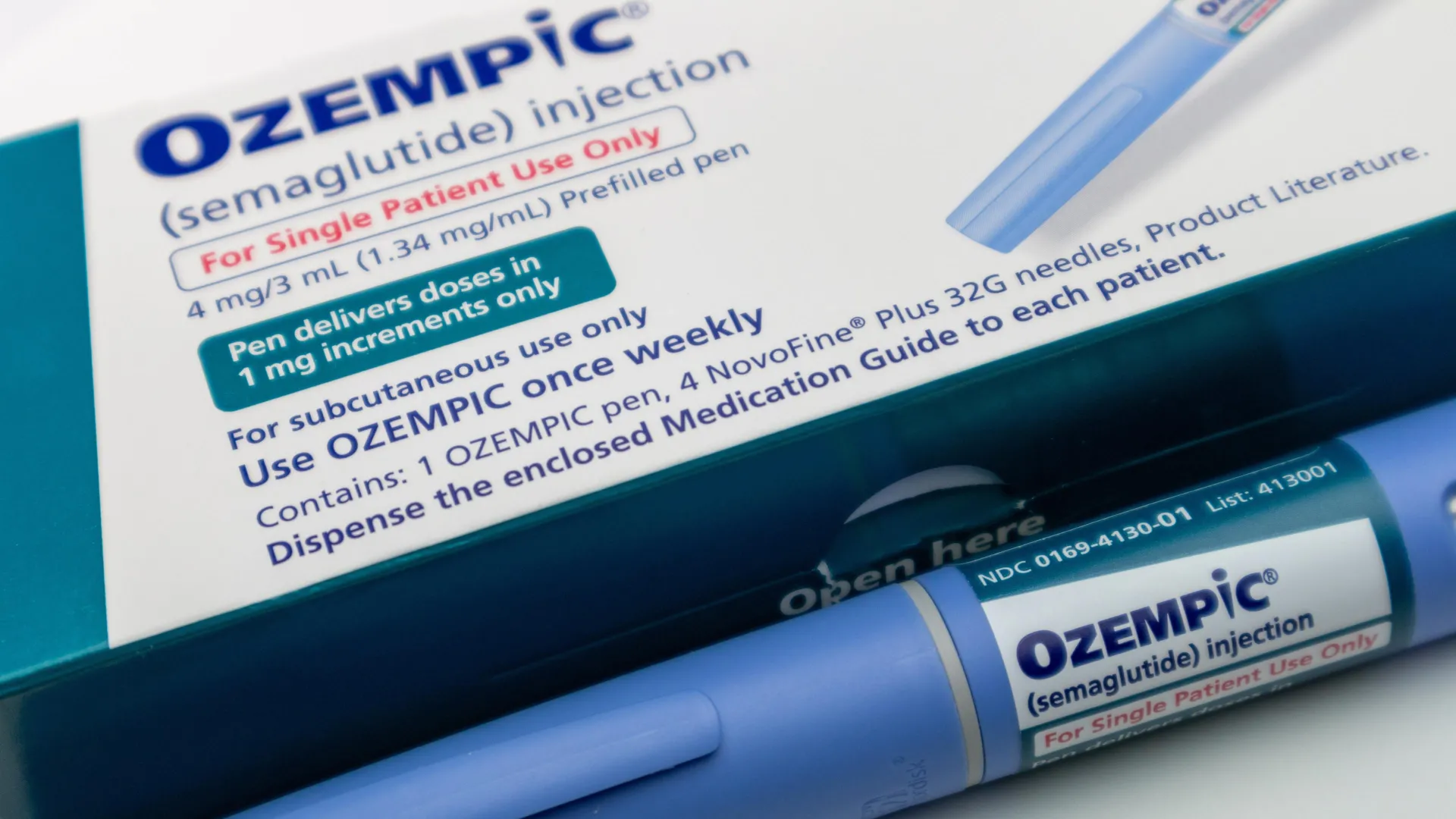
    The explosive growth in semaglutide (Ozempic and Wegovy) We use after its FDA approval for chronic weight management in 2021 was accompanied by another trend that drew researchers’ attention: a dramatic increase in calls to poison control centers across the United States.

    Jordan Miller, then an undergraduate student at UT San Antonio, wanted to find out whether the surge in poison control cases was directly connected to the FDA’s expanded approval of semaglutide or if the timing was merely coincidental.

    Originally introduced as a treatment for type 2 diabetes, Glucagon-Like Peptide-1 Receptor Agonists (GLP-1RAs) quickly gained widespread popularity after the FDA approved semaglutide for weight management. As demand for the drug accelerated, poison control centers also began reporting a steep increase in calls, with semaglutide standing out far above other medications.

    “One of them was this quite odd category of semaglutide,” said David Han, Miller’s research mentor and Romo Endowed Professor in the UT San Antonio Department of Statistics & Data Science. “We suspected that the call volume was skyrocketing because of the misuse and mishandling of this drug and that it may be attributed to the FDA approval of this drug for weight management.”

    Working with Han through the Provost’s Undergraduate Research Fellowship, Miller collaborated with Long School of Medicine researchers Robert S. Miller, Pharm.D, senior specialist in poison information, and Shawn M. Varney, MD, professor in the Department of Emergency Medicine and medical director of the South Texas Poison Center, to analyze national poison control data.

    Miller later presented the research at UT San Antonio’s Los Datos conference, where the project earned first place.

    Poison Control Calls Climbed Dramatically

    Before 2021, poison control centers nationwide typically handled between 1,000 and 1,500 GLP-1RA related cases each year. After the middle of 2021, that number nearly doubled, and by 2023 poison centers had recorded more than 8,000 GLP-1RA related calls.

    Although most incidents involved accidental dosing or therapeutic mistakes rather than intentional misuse, the sheer size of the increase surprised the research team.

    “In that figure that tracks the increase by specific drug, I wasn’t expecting semaglutide to be so incredibly dominant,” Jordan Miller recalled. “I figured that it would lead the pack, but it was staggering. On the other hand, it makes sense with all the media attention.”

    Han said the project illustrates how data science can uncover meaningful public health trends instead of simply producing statistics.

    “This work demonstrates the quantified impact of these drugs on public health,” he said. “Statistics, data science, analytics, machine learning and AI are meant to help people. We use them to transform data from any field into meaningful insight and informed action. Without that focus, it becomes hollow — numbers without real impact.”

    A Research Question That Paid Off

    The project began after Miller decided to ask a professor about possible research opportunities, a step she nearly skipped.

    “You lose nothing by asking,” she said. “If you have a professor, you really get along with or admire, you lose nothing by asking them what they’re working on or if they have space for a research assistant. I got really lucky with Dr. Han saying, ‘I’m here to help — you pick what you want to work on.’”

    The team’s analysis showed that the FDA’s approval of semaglutide for weight management marked a clear turning point. Both the number and type of poison control calls changed significantly after approval, reflecting the rapid expansion of semaglutide use beyond people with diabetes to a much larger population seeking weight loss.

    “When the GLP-1[RA] drugs are being sold to diabetic patients, that’s a completely different story versus when the drug is used for weight management,” Han explained. “So, we had to quantify this evidence to show that it stemmed from the FDA approval and how to contain the risk. We need to better educate the public because how this drug behaves in our body and its long-term safety are not yet fully understood.”

    Preventable Dosing Mistakes Drove Many Cases

    The researchers found that many of the poison control cases could have been avoided with better patient education. Semaglutide is designed to be injected once a week, not every day. Patients also begin treatment with a low dose that is gradually increased over time.

    The data showed that two of the most common mistakes were taking the medication daily instead of weekly and starting immediately with the highest dose instead of following the recommended step by step schedule.

    “Can you imagine something you’re supposed to trickle up to, and you’re going full blast and seven times more often than you’re supposed to?” Jordan Miller said.

    According to both Miller and Han, improving education at every step of the prescribing process, from the doctor’s office to the pharmacy counter, could help prevent many of these medication errors.

    The research was featured as the cover story in Significance, the flagship magazine of the Royal Statistical Society and the American Statistical Association. The findings were also published in the Journal of Medical Toxicology, the official journal of the American College of Medical Toxicology.